

Breathable materials in children's shoes: a guide for parents
Breathable materials in children's slippers are fabrics and leathers that allow air circulation between the foot and the environment, preventing excessive moisture. A child's breathing foot develops healthily. Cotton, wool, and chrome-free leather are now standard choices recommended by experts, and Copa-cop incorporates them into every pair of their slippers. This guide explains which materials truly make a difference, how to recognize them, and how to properly care for slippers.
Which materials are the most breathable in children's slippers?
Natural materials are the best choice for breathable children's footwear. Cotton and wool absorb moisture and release it into the environment, keeping the foot dry and fresh. Wool has an additional advantage: it naturally regulates temperature, meaning the foot won’t get too cold in winter or too sweaty in summer.
Chrome-free leather is the second pillar of quality children's slippers. Naturally tanned chrome-free leather provides exceptional breathability and contains no harmful chemicals. This is especially important for children with sensitive skin or allergies, as children's foot skin absorbs substances from the material faster than adults.

Synthetic materials are not automatically a bad choice. Mesh fabrics and quality microfiber allow good ventilation, are lightweight, and dry quickly. The downside is that they do not absorb moisture as effectively as natural fibers. Slippers with antibacterial fabric, often found in synthetic materials, reduce bacterial growth and thus unpleasant odors.
The importance of lightweight construction
The slipper's lightness directly affects comfort. Children's sports slippers size 34.5 weigh only about 190 g. Such a slipper does not burden the foot and reduces fatigue during prolonged wear. A heavy slipper, even if made of good material, drains the child's foot of the energy needed for play and learning.
Expert advice: When buying, check if the slipper bends easily by hand. A good children's slipper bends at one-third of the length from the toes, not at the heel. This is a reliable sign of a flexible and lightweight construction.
| Material | Main advantage | Suitable for |
|---|---|---|
| Cotton | Absorbs moisture, soft on the skin | Everyday indoor use |
| Wool | Regulates temperature | Winter and transitional slippers |
| Chrome-free leather | Durable, safe, breathable | School and outdoor slippers |
| Mesh fabric | Maximum breathability, lightness | Summer and sports slippers |
| Microfiber | Quick drying, easy care | Active children, sports |
How to choose slippers made of breathable materials for different needs?
The child's age determines which type of slipper is right. For first steps, a thin and flexible sole is crucial. A 4 mm thick rubber sole with high flexibility activates foot muscles while providing good ventilation. Such a sole does not take away the child's sense of the ground, which is invaluable for balance development.

Kindergarten slippers must be easy to put on and take off. Children in kindergarten change shoes themselves, so wide openings, elastic bands, or Velcro fastenings are key. The material must be soft and breathable because the child wears slippers most of the day indoors.
School slippers require slightly more durable material to withstand intensive use. Leather slippers with good breathability and safety standards are an excellent choice here. Leather molds to the foot and becomes even more comfortable over time while maintaining shape and protecting toes.
For outdoor activities, choose slippers with a mesh or combined upper and a rubber sole with grip. Such slippers allow air circulation during running and playing, and the sole prevents slipping on wet surfaces.
- Check age and developmental stage. For babies and first steps, choose slippers with a soft, thin sole and natural materials.
- Consider the wearing environment. Indoor slippers need a soft, flexible sole, while outdoor ones require more durable protection.
- Choose material according to the season. In summer, prefer mesh or cotton slippers; in winter, wool or leather.
- Check the fastening. Younger children need Velcro or elastic that simplifies putting on and encourages independent dressing.
- Measure the foot before every purchase. A child's foot grows quickly. Slippers that are too tight harm toe development regardless of material quality.
Expert advice: Buy slippers with one centimeter of space in front of the big toe. The toe needs room to spread naturally while walking, which prevents deformities and pain.
How do breathable materials prevent foot problems?
Ventilation reduces moisture retention and thus creates an environment unfavorable to fungi and bacteria. Fungal infections in children are more common than parents think, and a damp, warm environment in non-breathable slippers is an ideal condition for their development. Slippers made from breathable materials eliminate this condition.
Excessive foot sweating is natural in children, as their sweat glands are more active than adults'. Anti-sweat slippers work by wicking moisture away from the skin and releasing it into the environment. The result is a dry foot, less friction, and fewer blisters.
Unpleasant odor is caused by bacterial decomposition of sweat, not the sweat itself. Slippers with antibacterial fabric or natural materials like wool reduce the number of bacteria and thus the odor. This is especially noticeable in children who are active all day.
Proper foot growth requires space and movement. Slippers made from stiff or non-breathable material restrict the natural spreading of toes and foot bending. EU standards for children's footwear require that materials do not contain chromium and are safe for skin contact. These standards are a minimum threshold; quality manufacturers often go further.
- You can recognize breathable footwear by the fact that the material does not heat up immediately when pressed by hand.
- Slippers for allergic children must be free of chromium, formaldehyde, and azo dyes.
- The inner sole made of natural materials absorbs sweat directly from the skin and releases it gradually.
- Lightweight, breathable slippers prevent premature foot fatigue and support better daily temperature control.
Maintenance of children's slippers made from breathable materials
Proper care maintains the breathable structure of the material for longer. Wash cotton and textile slippers at 30 °C with a gentle detergent. Higher temperatures shrink fibers and destroy the structure that ensures ventilation.
Air drying without direct sunlight exposure is the recommended method for all slippers made from natural and synthetic breathable materials. Sunlight breaks down fibers and causes discoloration. A high-temperature dryer compresses the material and reduces its breathability.
- Remove dirt before washing. Shake off or brush off dry mud or sand before putting the slipper in the washing machine.
- Wash in a mesh bag. The bag protects the slipper’s shape and prevents damage in the drum.
- Avoid fabric softeners. Softeners close fibers and reduce absorbency and ventilation.
- Dry on a flat surface. Hanging on a line deforms the sole and stitched joints.
- Care for leather slippers with natural cream. The cream maintains leather flexibility and prevents cracks that reduce breathability.
Leather slippers require special care. Never dry wet leather with direct heat because it shrinks and hardens. Apply natural leather cream once a month to keep the material soft and breathable.
Key findings
Natural, breathable materials are the most important factor when choosing children's slippers because they directly affect foot health, comfort, and proper development.
| Point | Details |
|---|---|
| Best natural materials | Cotton, wool, and chrome-free leather provide optimal ventilation and safety. |
| Slipper lightness | A slipper under 200 g reduces fatigue and supports the natural movement of a child's foot. |
| Problem prevention | Breathable materials reduce the risk of fungus, excessive sweating, and unpleasant odors. |
| Choice based on age | Babies need a thin sole, while schoolchildren need more durable leather with good breathability. |
| Slipper care | Washing at 30 °C and air drying preserve the breathable structure of the material. |
Why material choice is an underestimated decision by parents
When I first started seriously thinking about what a child's foot really needs, I was surprised by one fact: most parents choose slippers by color and price, not by material. I understand that. Children quickly outgrow slippers, the purchase seems short-term, and why pay more for a material you don’t see?
But it is precisely the material that the foot feels all day long. A child wearing non-breathable slippers for eight hours has a damp, warm foot almost the entire time they are awake. This is not just a matter of smell or comfort. Moisture softens the skin, causes chafing, and creates conditions for infections. I have seen parents come for advice because their child had recurring fungal infections, and the solution was simple: changing the material.
The second mistake I notice is buying slippers "in stock" in too large a quantity. A slipper that is too big does not support the foot properly. The material does not mold to the foot but wrinkles and slips. This is just as harmful as a slipper that is too tight, only less obvious.
My advice is simple: feel the material before buying. A good slipper does not heat up immediately under pressure, is soft but not limp, and bends without force. If you cannot check this in the store, choose a trusted manufacturer who clearly states the material composition. For example, Copa-cop lists materials for each model separately, making it easier for parents to decide.
— Črt
Copa-cop slippers made from natural, breathable materials
Copa-cop is a Slovenian company that sews slippers from natural and breathable materials with one goal: to ensure the child's foot develops healthily and comfortably.
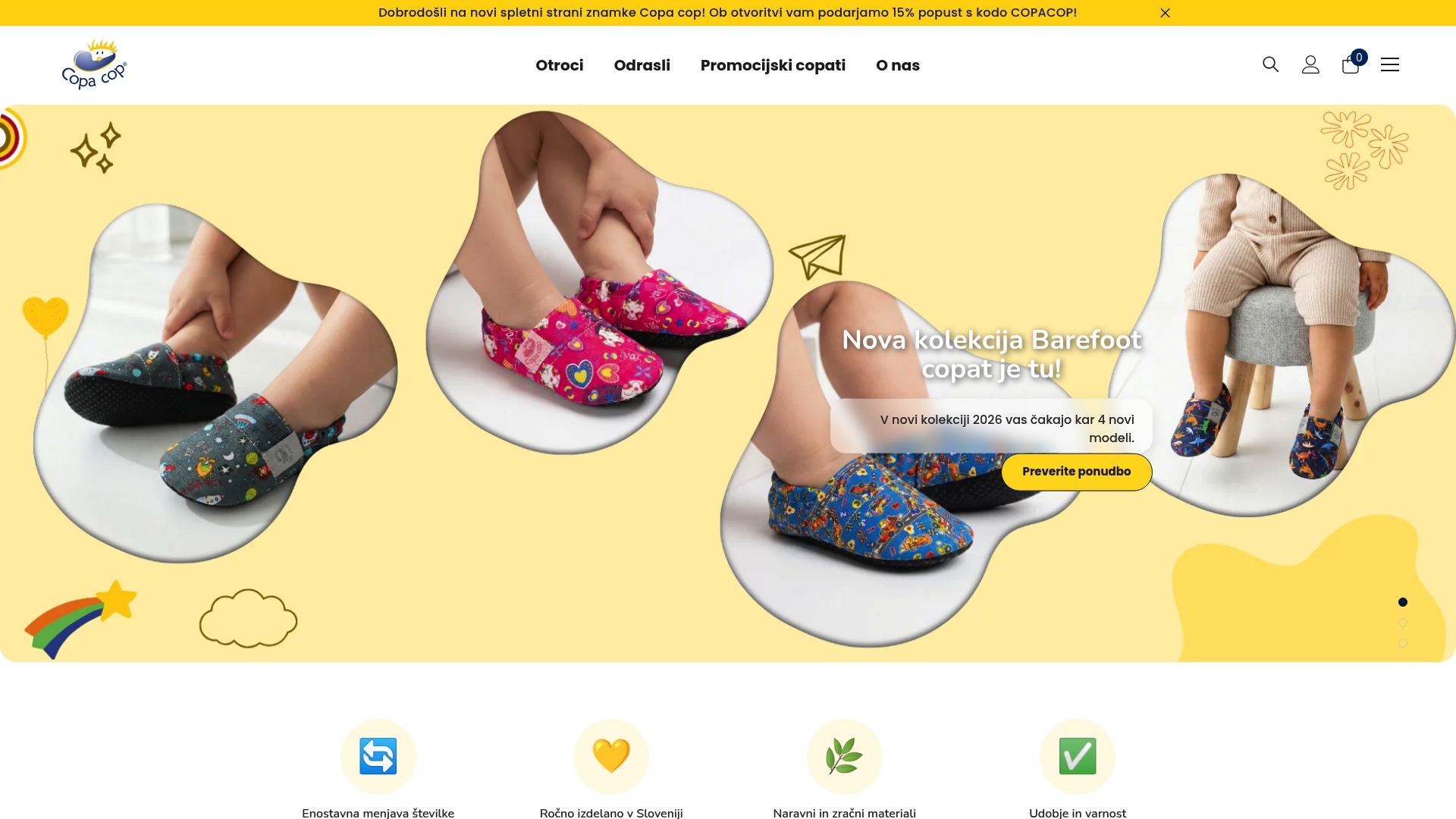
Barefoot models are made from cotton and textile materials that allow air to pass and fit softly to the foot. Children's slippers with protection are suitable for active children who need both ventilation and toe protection. Leather slippers are available for schoolchildren, which mold to the foot and breathe all day. All models come in various colors and patterns, and shipping is free for orders over €50.
Frequently asked questions
What are breathable materials in children's slippers?
Breathable materials are fabrics and leathers that allow air to pass and wick moisture away from the foot. The most common are cotton, wool, and chrome-free leather.
Which material is best for slippers against foot sweating?
Wool and cotton are the best natural choices because they absorb moisture and release it into the environment. Synthetic mesh fabrics are a good alternative for summer and sports slippers.
How do I recognize slippers for allergic children?
Look for labels "chrome-free," "formaldehyde-free," and "azo dye-free." EU standards require material safety, and quality manufacturers clearly state this on packaging or websites.
Are synthetic materials suitable for children's slippers?
High-quality synthetic mesh fabric provides good ventilation and is lightweight but does not absorb moisture as effectively as natural fibers. The best slippers often combine both types of materials.
How often should I replace children's slippers?
A child's foot grows one size every 3–4 months in younger children. Replace slippers as soon as there is less than one centimeter of space in front of the big toe, regardless of the material condition.


