

Children's Foot Health: Tips for Healthy Feet
The health of children's feet is the foundation for proper development of walking, balance, and overall motor skills from the very first step. A child's foot is not a smaller version of an adult's. The bones are soft, cartilaginous, and develop until the child is twelve years old, so any mistake in care or footwear choice leaves a mark. Only 60% of parents regularly check the condition of their child's feet and nails, and only a third maintain hygiene daily. This gap between awareness and practice is exactly what this guide aims to fill with concrete, proven advice.
How to properly care for children's feet?
Daily foot care is a habit that a child internalizes through repetition. Parents who introduce it early prevent most common problems before they even appear.
Washing: don’t forget between the toes
Washing feet seems simple, but only 17% of children always wash between their toes. This is a critical area because moisture and dirt accumulate there. The moist environment between toes is ideal for fungal infections, which are more common in children than most parents think. Teach your child to gently pull between toes with a finger or cloth and include this in the evening bath routine.
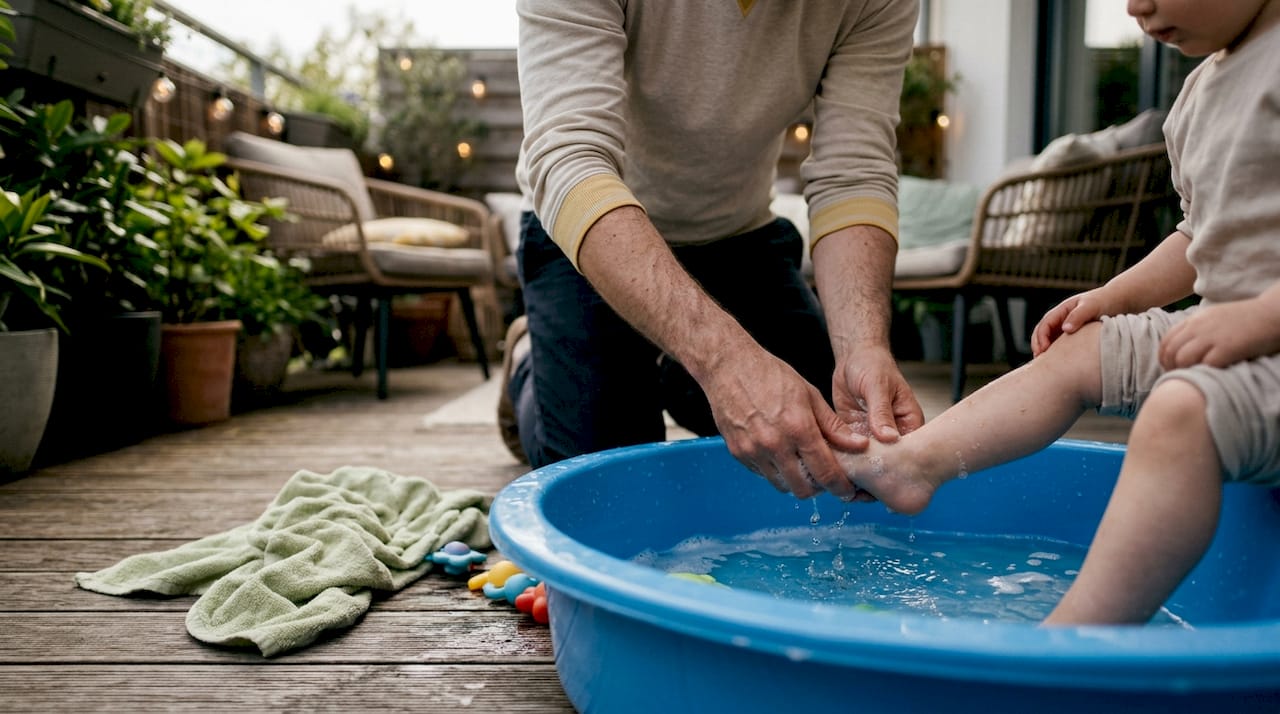
Wiping after washing is just as important as washing itself. 38% of children do not wipe their feet at all after washing. Wet feet in socks or slippers create a warm and moist environment that promotes fungi. Use a soft towel and show your child how to gently wipe between each toe separately.
Nail trimming: correct and safe
Trim toenails straight across, not rounded. Rounded trimming is the most common cause of ingrown nails, which are painful and quickly become inflamed. Only 10% of children trim their nails weekly, meaning most walk with long nails that bend inside shoes and cause pressure on toes. Trim nails once a week or every two weeks, depending on growth rate.
For younger children who resist nail trimming, choose a time after bathing when nails are softer. Use scissors with rounded tips designed for children. Never cut too close to the skin, as it increases the risk of infection.
Regular foot inspection
Take time once a month to carefully examine your child's feet. Look for red spots, calluses, changes in nail color, cracks, or swelling. Early detection of problems means easier and faster solutions. Check children who walk barefoot on grass or sand more often, as they are more exposed to external injuries and infections.

Expert advice: Podiatrist Kim Furlan emphasizes that a consistent care routine is key to preventing chronic problems. Knowledge without practice does not protect children's feet.
Common care mistakes include forgetting to wipe between toes, cutting nails round, and irregular check-ups. All three mistakes can be corrected with one decision: to establish a short but consistent routine.
How to choose the right footwear for children's feet?
Proper footwear for children is not a matter of taste or price. It is a matter of anatomy and the developmental needs of the child's foot, which change rapidly.
Five qualities that quality children's footwear must have
- Flexible sole. The sole must be soft enough to bend easily by hand. A stiff sole prevents natural foot movement and hinders muscle development. Orthopedists recommend soft and flexible shoes to encourage natural walking.
- Soft upper. Orthopedic experts recommend that the first children's shoes do not go above the ankle and that the upper part of the shoe is very soft. A stiff upper restricts ankle movement and slows muscle development.
- Breathable materials. Synthetic materials retain moisture and heat. Natural materials like cotton, leather, or textile allow air circulation and reduce the risk of fungal foot infections.
- Proper width. The shoe must be wide enough so the toes are not squeezed together. Narrow shoes are a major cause of hallux valgus and toe deformities.
- Enough space at the toes. There should be at least one centimeter of space between the longest toe and the tip of the shoe. Too little space causes pressure, which over time results in pain and deformity.
How often should children's feet be measured?
Children's feet grow quickly and unpredictably. Measuring feet every 3–4 months is crucial to ensure footwear always fits the actual foot size. Measure when the child is standing because the foot expands under body weight. Measure both feet and consider the longer one.
| Child's age | Recommended measurement frequency | Average foot growth |
|---|---|---|
| 0–2 years | Every 6–8 weeks | Very fast |
| 2–5 years | Every 2–3 months | Fast |
| 5–10 years | Every 3–4 months | Moderate |
| 10+ years | Every 4–6 months | Slow |
A mistake most parents make
Used shoes negatively affect the development of children's feet. Each shoe is shaped according to the foot of the previous owner. When another child wears it, it forces them into a walking pattern that is not their own. Quality footwear must be adapted to the unique shape of the child's foot. Saving money on shoes is not worth the risk to healthy development.
What are the most common problems with children's feet?
Parents who recognize early signs of foot problems act in time. Delays in recognition often mean longer and more demanding treatment.
Flat feet and hallux valgus
Flat feet are normal in young children up to the age of three. The foot arch gradually forms as the child walks and strengthens muscles. If the arch is not developed by age five, consulting an orthopedic specialist is advisable. Hallux valgus, known as a "bunion" or protruding big toe, develops due to prolonged wearing of too-tight shoes. Proper preventive care and shoe selection significantly reduce the risk of these problems.
Calluses and corns
A callus is a thickening of the skin that forms as protection against repeated pressure. A corn is a smaller, deeper version with a core that presses on nerves and causes pain. Pedicurist Sabina Ivanušič emphasizes that eliminating the causes of calluses is more important than just relieving symptoms. Improper footwear is one of the most common causes. Calluses and corns cannot be solved only by removing the skin. As long as the child wears shoes that are too tight, they will return.
Fungal infections
Fungi develop in warm and moist environments. Children who walk barefoot in shared spaces such as pools or locker rooms are more exposed. Signs of infection include itching, red spots, skin peeling, or nail discoloration. Prevention is simple: dry feet, breathable shoes, and personal socks.
- Always dry feet after bathing, especially between the toes.
- Change socks every day.
- Avoid walking barefoot on shared wet surfaces.
- At the first signs of infection, seek advice from a doctor or podiatrist.
- Regularly air out children's shoes and do not leave them wet.
When to seek professional help?
See an orthopedist or podiatrist when the child:
- walks on tiptoes after the age of three,
- complains of leg pain after short walks,
- shows asymmetry in walking or posture,
- has a visible deformity of the toe or foot.
Early treatment is always easier than late. Parents who act at the first signs save their children months of discomfort.
Why is barefoot walking good for children's feet?
Barefoot walking is not just a summer pastime. For children's feet, it is one of the best ways to strengthen muscles and shape the natural arch.
What happens to the foot during barefoot walking?
When a child walks barefoot, the foot feels the surface and responds to it. The muscles that stabilize the ankle and arch activate with every step. In shoes, this motivation is not as intense because the sole takes over part of the task. Barefoot walking promotes muscle development and arch formation and positively affects children’s motor skills. This is not just theory. Orthopedic experts recommend it as part of a healthy developmental routine.
How to safely introduce barefoot walking?
At home, barefoot walking is safe on most surfaces. Parquet, ceramic, and grass are excellent bases. Outdoors, caution is needed: check that the grass is free of glass, nails, or sharp stones. On public surfaces like pools or playgrounds, protection is advisable.
Expert advice: For children just getting used to barefoot walking, start with barefoot shoes that mimic the feeling of walking barefoot but protect the foot from injuries. This is an ideal intermediate step between classic shoes and completely barefoot walking.
Barefoot walking is not recommended on wet floors in shared spaces, on surfaces with injury risks, or for children with existing orthopedic issues without consulting a specialist. A combination of barefoot walking at home and appropriate footwear outside gives the child’s foot the best of both worlds.
Key findings
Healthy children's feet require three things: consistent daily care, proper footwear choice, and regular check-ups that detect problems before they become chronic.
| Point | Details |
|---|---|
| Foot hygiene | Wash and dry feet well every day, especially between the toes, to prevent fungal infections. |
| Nail trimming | Cut nails straight once a week after bathing when nails are softer. |
| Choosing footwear | A flexible sole, soft upper, and breathable material are essential for healthy development. |
| Foot measurement | Measure the child’s feet every 3–4 months and always consider the longer foot. |
| Barefoot walking | Encourage barefoot walking at home every day to strengthen muscles and shape the foot arch. |
My observation after years of conversations with parents
Parents in Slovenia are aware that foot care is important. But when it comes to practice, most admit that the routine has disappeared somewhere along the way. Children go to bed with wet feet, nails are cut “when you remember,” and shoes are bought because they look nice, not because they fit.
What really surprises me is how often parents get the shoe size wrong. The child doesn’t say the shoe is tight. They get used to the discomfort and keep walking. Only when a blister or pain appears do parents realize the shoe is two sizes too small. Two sizes too big or too small show on a child’s foot over months, not weeks.
My advice is simple: establish a routine that takes five minutes. Every evening after bathing, wipe between the toes, take a quick look at the nails and feet. Once a month, do a more thorough check. Every three months, measure the feet. It’s not demanding. But it is consistent, and consistency is what makes the difference between healthy and problematic feet in adulthood.
Children who are used to foot care from an early age make it part of their daily routine. They grow up with the awareness that feet deserve attention. This is a habit they carry with them for life.
— Črt
Copa-cop slippers that grow with your child
Good footwear is an investment in a child's health, not an expense. At Copa-cop, we deeply understand this because we are parents ourselves and know how quickly children outgrow a pair of shoes and how important it is that every pair supports healthy development.
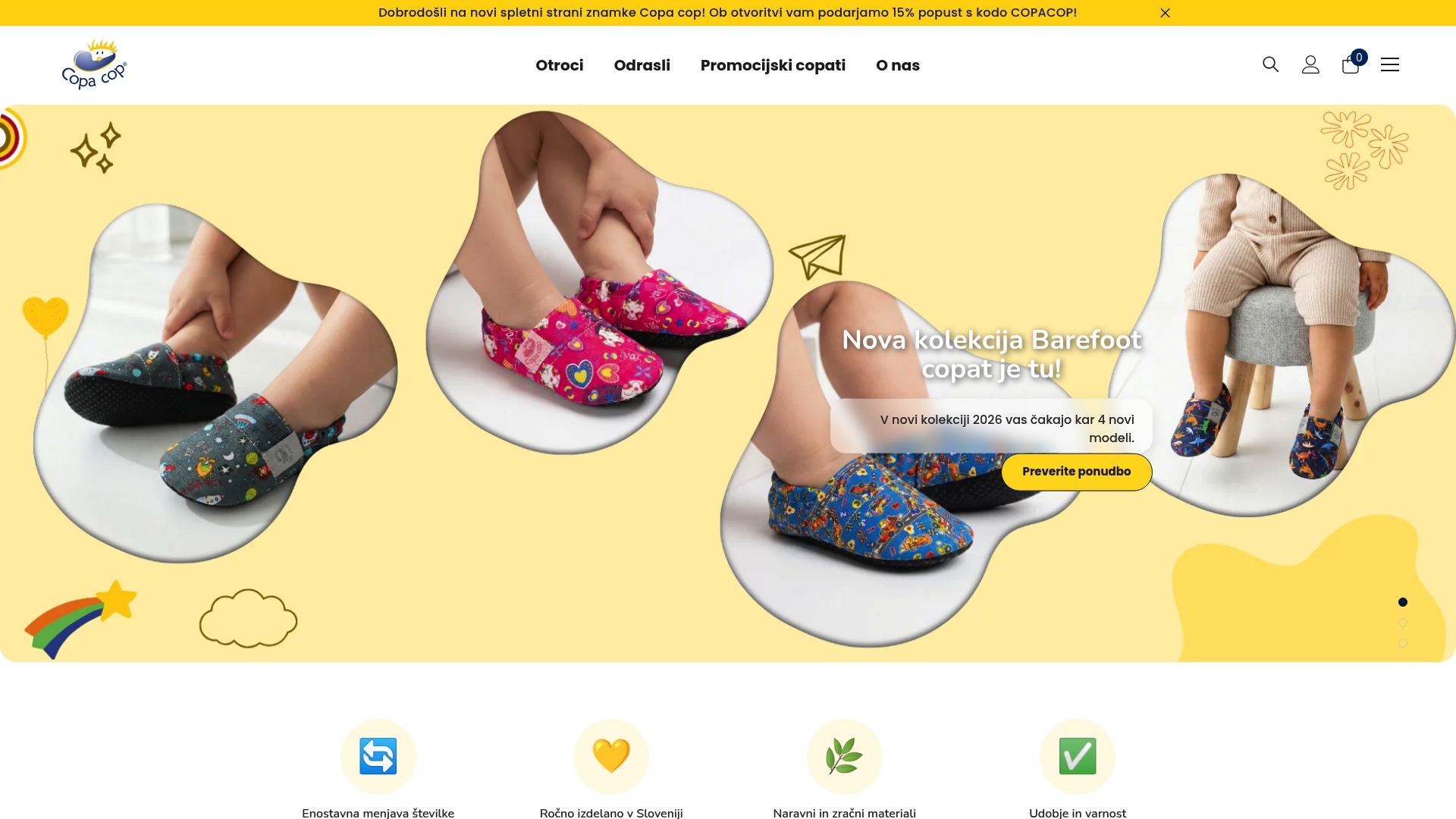
Our children's Barefoot slippers with protection are designed with a soft and flexible sole that mimics the feeling of barefoot walking. Natural breathable materials prevent moisture buildup and keep feet fresh all day long. The slippers are lightweight, easy to put on, and available in colors and patterns that children love. Free shipping on orders over €50 and the option to exchange or return make the purchase risk-free. Check out the full range of children's slippers and choose a pair that will truly benefit your child's feet.
Frequently asked questions
When should a child get their first shoes?
A child needs shoes when they start walking outside. Barefoot walking at home is recommended because it strengthens foot muscles.
How do I know if my child's shoes are right?
There should be at least one centimeter of space between the longest toe and the tip of the shoe. The sole should be flexible, and the upper part soft.
How often should I change children's shoes?
Measure feet every 3–4 months and replace shoes as soon as the child outgrows the current size. Don’t wait for pain to appear.
What to do if you suspect a fungal foot infection?
If you notice itching, peeling, or changes in nail color, seek advice from a doctor or podiatrist. Self-treatment without diagnosis often does not eliminate the cause.
Are flat feet normal in children?
Flat feet are normal until the age of three. The arch develops gradually. If the arch is not developed by the age of five, consult an orthopedic specialist.


