

Healthy footwear for children: a guide for parents
Healthy footwear for children is footwear that allows natural foot development, does not restrict toe movement, and supports muscle activity throughout childhood. The child's foot develops until around 6 or 7 years old, so every pair of shoes during this period leaves a mark. Incorrect footwear not only spoils walking but also affects balance, posture, and overall body health. Experts, including physiotherapist Špela Gorenc Jazbec, warn that parents often underestimate the impact of footwear on motor development. The right choice is not just a matter of comfort but a foundation for lifelong health.
How healthy footwear affects the development of feet and the musculoskeletal system
The foot is not an isolated part of the body. The force generated with each step travels upward through the ankle, knee, hip, and spine. Poor footwear disrupts this force transfer and causes irregularities in the knees, hips, and spine. The body adapts, but not always in a healthy way.
Walking barefoot strengthens the intrinsic foot muscles, improves balance, and protects the joints. These muscles are small but crucial for ankle stability and proper knee loading. When footwear does not activate them, they become weak and the ankle becomes unstable.
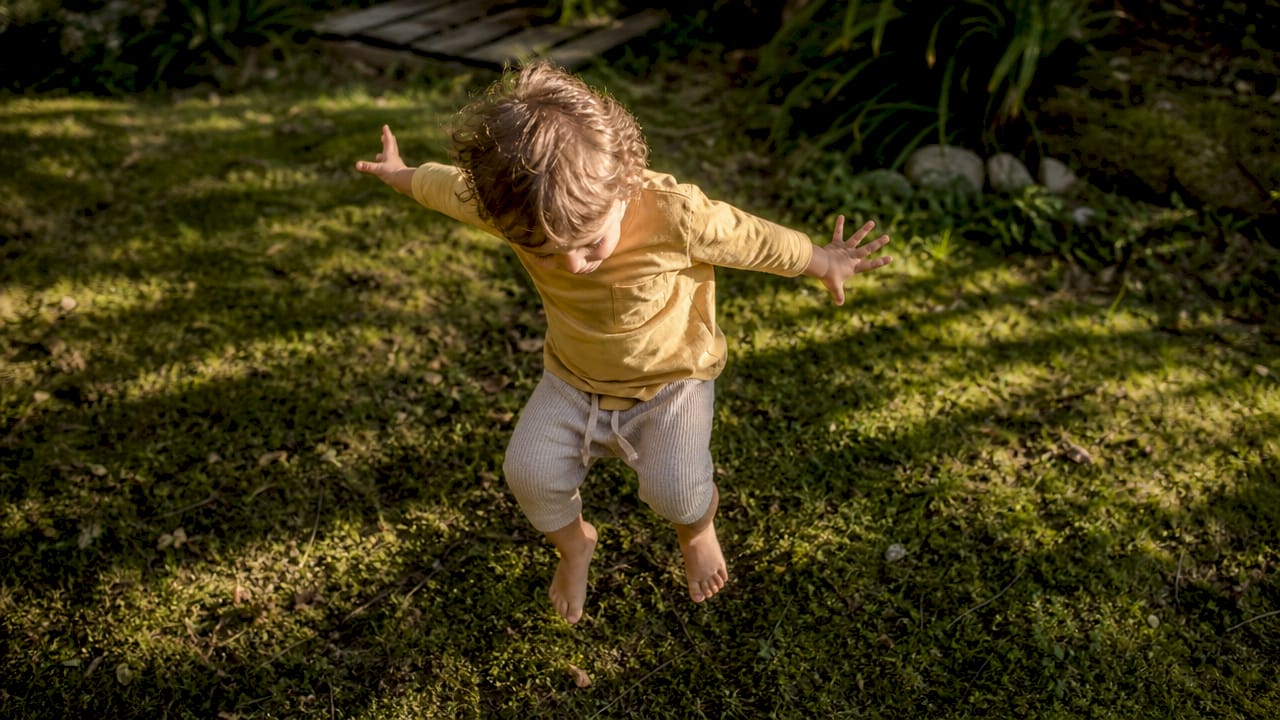
Proprioception is the body's ability to sense the position and movement of joints. A thick, stiff sole reduces this sensation. The child does not feel the ground and cannot adjust properly. A thin, flexible sole maintains this contact and encourages natural movement.
A stiff, inflexible shoe weakens foot muscles and leads to posture and walking problems. This is not just theory but an observation by physiotherapists who work with children every day. A shoe that does the work instead of the muscle gradually spoils the muscle.
- Muscle activation: A flexible sole forces the foot to stabilize the step on its own.
- Balance: A thin sole increases ground sensation and improves balance.
- Posture: Proper foot loading reduces compensations in the knees and spine.
- Proprioception: Continuous contact with the ground supports movement coordination.
Expert advice: Whenever possible, let the child walk barefoot on grass, sand, or parquet. Just 15–20 minutes of barefoot walking a day strengthens foot muscles more than any shoe.
What features quality children's footwear must have
Quality and healthy footwear for children has clearly defined features. It’s not enough for a shoe to look nice or for the child to like wearing it. Each feature has its function and affects foot development.
Key features of healthy children's footwear:
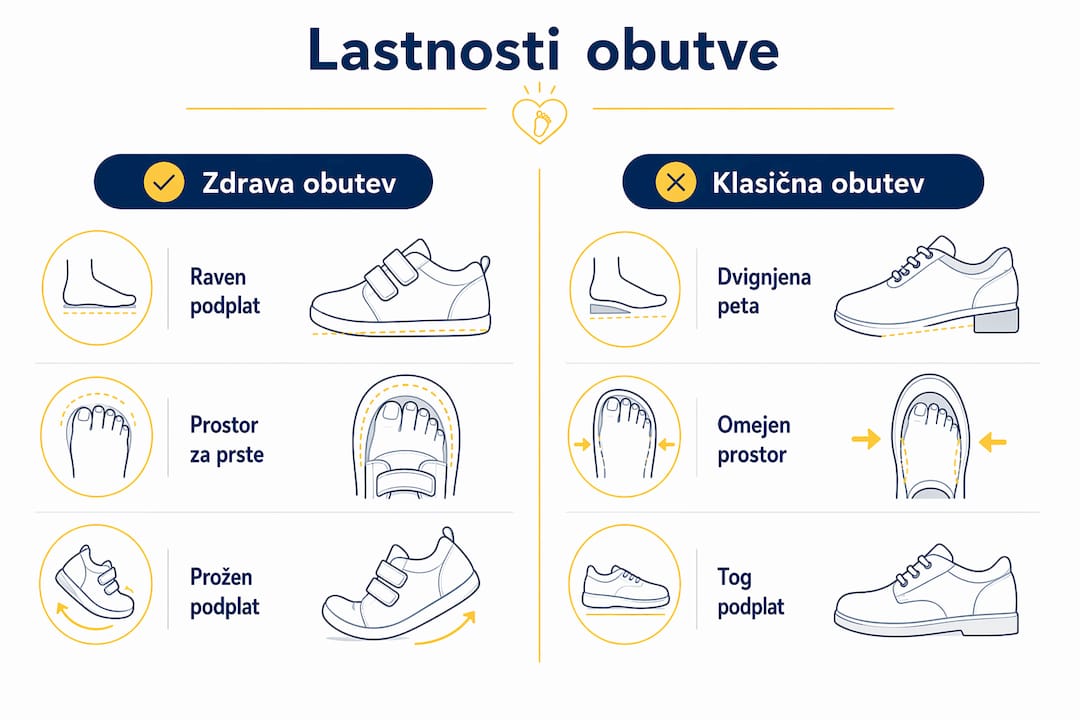
- Flat sole (zero-drop): The heel and toes are at the same height. A raised heel shortens the Achilles tendon and disrupts natural posture.
- Flexibility in all directions: The sole must be flexible and bend with the foot’s movement, not restrict it.
- Enough toe room: About 12 mm of extra space in front of the big toe is recommended. Toes need space to spread with every step.
- Lightweight: An overly heavy shoe tires muscles and causes the child to walk differently to compensate for the weight.
- Natural materials: Leather and textiles breathe and adapt to the shape of the foot. Synthetics often do not.
- No stiff arch supports: A healthy arch develops on its own when muscles work. Artificial support prevents this.
For winter, barefoot shoes with waterproof membrane and warm lining are available, which maintain natural movement even in the cold. This means parents don’t have to choose between warmth and foot health.
| Feature | Healthy footwear | Classic footwear |
|---|---|---|
| Heel height | Flat sole (zero-drop) | Often raised heel |
| Sole flexibility | High, bends in all directions | Limited, stiff construction |
| Toe room | Wide, min. 12 mm extra space | Often narrow or standardized |
| Weight | Lightweight | Often heavier |
| Arch support | No artificial support | Often built-in support |
Expert advice: When checking the flexibility of a shoe, take it in your hands and bend it. A good shoe bends easily. If it resists, it will also resist your child's foot.
How to choose footwear for children based on age and season
Choosing the right footwear starts with measuring. A child's foot grows quickly, and the size that fit three months ago may no longer be right today. Measure the foot in the evening when it is slightly swollen from walking during the day. This gives a realistic picture.
- Measure the foot on paper: Place the child on a sheet of paper and trace the foot. Measure the distance from the heel to the tip of the longest toe.
- Add 12 mm: This space is recommended for natural toe splay when walking. Without this space, toes press against the shoe.
- Check the width: The foot should not be squeezed on the sides. Toes need space to spread out.
- Repeat every 6–8 weeks: Children's feet grow quickly, especially between ages 1 and 3.
For first steps, the best footwear is light, flexible, and flat-soled. Children just starting to walk do not need stiff shoes for "support." On the contrary, stiff shoes inhibit balance development. The child learns to walk with their own muscles, not the shoe.
The transition to barefoot-style footwear must be gradual. Muscles and tendons need time to adjust to different stress. Start at home where the surface is safe and familiar. Gradually increase walking time in such footwear. A rapid transition increases the risk of heel or foot pain.
In winter, a child needs warm and waterproof footwear that still maintains sole flexibility. Summer footwear is light and breathable. Open-toe sandals are an excellent choice in summer as they allow toe movement and ventilation. Just make sure they have enough grip and are not slippery.
For healthy children's feet, it is also crucial that each child wears their own shoes. Used shoes take the shape and walking patterns of the previous child. This means the new child walks with the foot shape of someone else, which hinders healthy development.
When is orthopedic footwear necessary?
Orthopedic footwear is not the same as healthy footwear. Orthopedic footwear is a medical device designed for specific health conditions. It provides biomechanical support, pressure distribution, and ankle stabilization for children with diagnosed problems.
Conditions for which orthopedic footwear is justified:
- Hallux valgus: Inward deviation of the big toe that requires a special type of shoe to redistribute pressure differently.
- Flat foot: When the arch of the foot does not develop normally and causes pain or walking difficulties.
- Plantar fasciitis: Inflammation of the connective tissue on the sole of the foot that requires heel relief.
- Diabetic foot: Special footwear protects against wounds and pressure in children with diabetes.
Proper orthopedic footwear actively supports the foot arch and stabilizes the heel. This is crucial to prevent chronic pain. Without professional assessment, orthopedic footwear is not meaningful and can even harm by preventing natural muscle development.
Orthopedic footwear for children requires an examination by an orthopedist or physiotherapist. The specialist assesses walking, foot shape, and any compensations in the knees or spine. Only after this assessment is the footwear or insole custom adjusted. Parents should not decide on orthopedic footwear based on the appearance of the foot alone.
Key findings
Healthy footwear for children must have a flat sole, enough toe space, and a flexible sole that activates muscles and supports natural foot development until the age of 6 or 7.
| Point | Details |
|---|---|
| Foot development | The foot develops until the 6th or 7th year, so every pair of shoes during this period is important. |
| Key features | A flat sole, flexibility, at least 12 mm of toe space, and lightness are essential conditions. |
| Transition to barefoot footwear | The transition must be gradual, start at home and gradually increase walking time. |
| Used footwear | Used shoes take the shape of the previous foot and hinder healthy development. |
| Orthopedic footwear | Orthopedic footwear is a medical device and requires professional assessment, not a personal decision. |
Why I am convinced that footwear is not a trivial matter
Lines, Copa-cop
When I observe children walking, I often see the same pattern. A child in stiff, heavy shoes walks differently than a child in light, flexible footwear. The difference is visible already at three or four years old. Stiff shoes make walking mechanical. Light footwear lets the body do what it knows.
Parents often think that more support means more protection. This is understandable but wrong. The foot develops through activity, not immobilization. A shoe that does everything instead of the foot takes away the opportunity for growth.
What really worries me is fashion. High heels, narrow models, and decorative boots often look nice but do not benefit the foot. A child cannot say when a shoe is too tight. The parent must know this in advance.
My advice is simple. When you buy shoes, bend them with your hands. Check if the sole is flat. Measure the foot and add some space. And don’t buy used shoes, no matter how little they have been worn. Every shoe carries the story of the previous foot. Your child needs their own.
Quality footwear is not a luxury. It is an investment in the foundation on which a child will walk their whole life. I am aware of this with every pair we make at Copa-cop.
— Črt
Copa-cop Barefoot slippers for healthy foot development
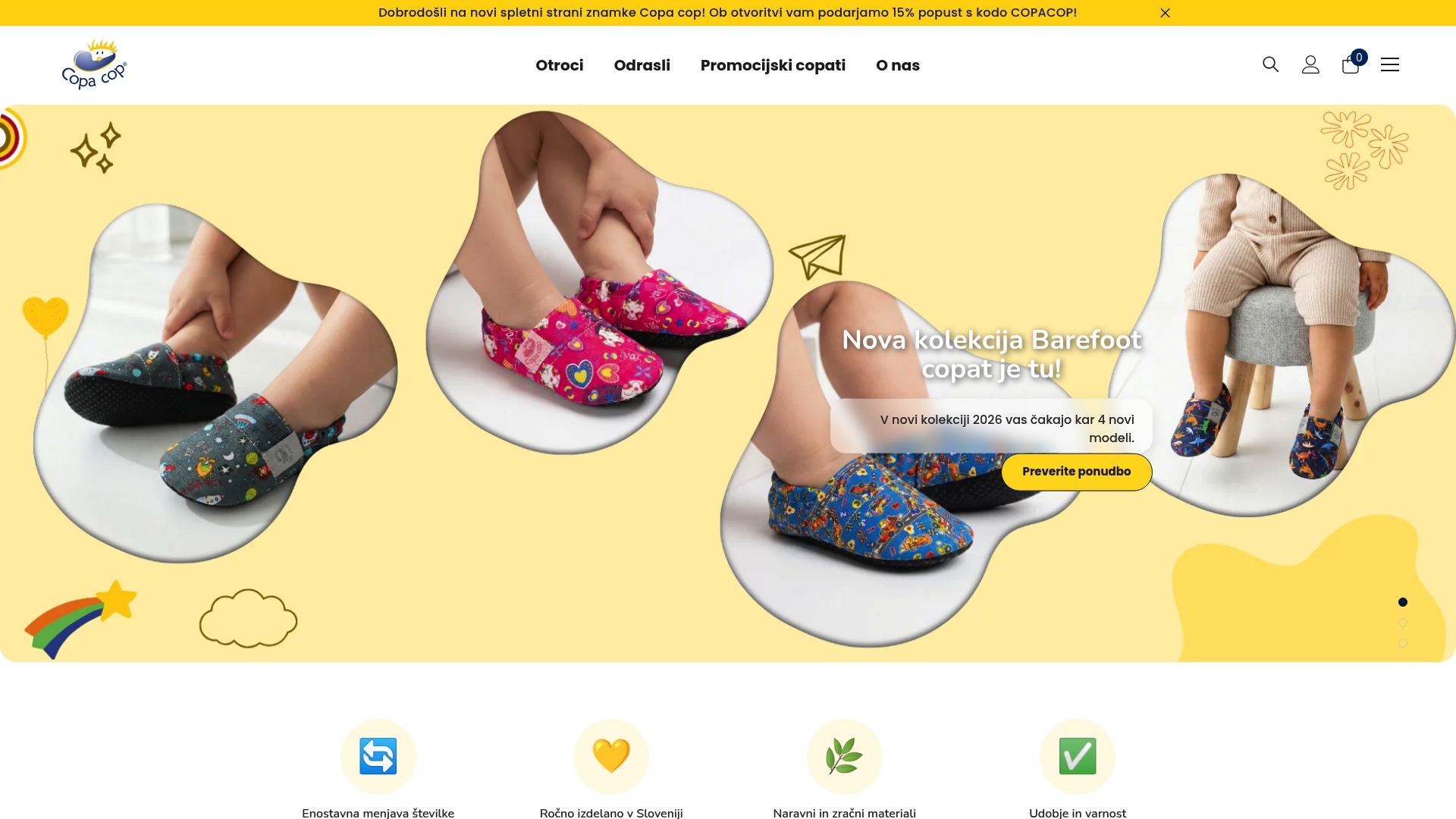
At Copa-cop, we designed Barefoot children's slippers with everything experts recommend in mind. The sole is flat and flexible, the toe space is wide enough, and the material breathes. The slippers are lightweight, made from natural textile materials, and adapted for home use and school. They come in a variety of colors and patterns, from dinosaurs to space, so the child happily wears what benefits them. All models are designed for natural foot development and comfort during everyday walking. For easier shopping, we offer free shipping over €50 and the option to exchange or return. Check out the full slipper range and choose a pair your child will happily wear.
Frequently asked questions
What is healthy footwear for children?
Healthy footwear for children is footwear with a flat sole, enough room for the toes, and a flexible construction that allows natural foot development. It does not restrict movement and activates muscles with every step.
How much space should there be in the shoe in front of the toes?
About 12 mm of extra space is recommended in front of the tip of the longest toe. This space allows the toes to spread while walking and prevents them from pressing against the shoe.
Are barefoot shoes suitable for children in winter?
Yes, for winter there are barefoot models with a waterproof membrane and warm lining. They maintain natural foot movement while protecting against cold and moisture.
When is orthopedic footwear appropriate for a child?
Orthopedic footwear makes sense only for diagnosed conditions such as hallux valgus, flat feet, or plantar fasciitis. The decision must be based on an assessment by an orthopedist or physiotherapist, not personal judgment.
Can a child wear used shoes?
Used shoes take on the shape and walking patterns of the previous child, which can hinder healthy foot development. Every child needs their own footwear that adapts to the shape of their foot.


