

From measuring to ordering: slipper bag, Copa-cop tips for parents
The best school and indoor slippers are flexible and breathable, with 0.5–1 cm of room in front of the toes and a safe, non-slip sole. Fasteners should be simple, preferably hook-and-loop closures or elastic, so the child can put them on independently. Choose the material according to use: textile for breathability, leather for durability for more active children.
In brief:
- When choosing school slippers, it is important to leave 0.5 to 1 cm of room between the toes and the edge to allow natural movement and stability.
- The material should suit the activity: textile for breathability and lightness, leather for durability and greater resistance to wear.
- Simple fasteners, such as hook-and-loop closures or elastic, make it easier for children to put on their slippers independently and affect how quickly they get ready in the morning.
- The sole should be non-slip, flexible, and pliable to prevent falls and ensure safety on slippery corridors.
- Regularly measuring the size in line with growth and allowing 0.5 to 1 cm of room ensures a proper and comfortable fit throughout the school year.
Table of contents
- Slipper bag selection: how to measure the foot accurately
- Which materials are best for school slippers
- How to choose fastenings so your child can put on their slippers independently
- Why the sole is crucial for safety in hallways
- Slipper care and when to buy a spare pair
- Quick shopping checklist
- How to choose a slipper bag based on where you will use it
- Practical features of a bag that make everyday life easier
- Safety when choosing a slipper bag
- Bag style according to the child's age and taste
- Ideas for organising the inside of an indoor shoe bag
- The Copa-cop perspective: how we approach children's indoor shoes
- Which Copa-cop model is right for your child
- Sources
Slipper bag selection: how to measure the foot accurately
Before you go to the store or order slippers online, measure your child's foot at home. Have the child stand on a sheet of paper, trace the outline with a pencil held at a right angle, and measure the distance from the heel to the longest toe. This measurement is the basis for every further decision about size.
When choosing a size, leave an allowance of 0.5 to 1 centimetre between the toes and the edge of the slipper. This space allows the toes to move naturally while walking and running, while also preventing the slipper from slipping off the foot during play. Too little room squeezes the toes, while too much increases the risk of falls because the child does not feel firm support while running.
Children's feet grow unevenly, so checking the size is an ongoing task, not a one-time chore:
- Up to the age of three, measure the foot every 6 to 8 weeks because growth is fastest during this period.
- For older children, that is, schoolchildren, check the size at least every three months, ideally when the seasons change.
- During the school year, watch for signs that the slippers have become too small: red marks on the skin, heel slippage, visible wear on the inside, or a child complaining of pain after wearing them for a few hours.
Parents often buy slippers one size larger “to allow for growth,” but this is not the right criterion. A 0.5 to 1 cm allowance is enough; a larger gap in the slipper causes instability when walking.
Which materials are best for school slippers
A child spends six or seven hours a day in school slippers, so the material determines whether their feet will be tired or relaxed at the end of the day. Breathability and a non-slip sole are therefore key features, not merely an aesthetic detail.
Textile slippers made of cotton or technical breathable fabrics are lightweight, dry quickly, and perform well in warm classrooms. Leather is more durable and also breathes well, making it a sensible choice for children who are more active or wear out their slippers more quickly.
- Textile is suitable for children who need lightweight, breathable footwear for quieter activities in the classroom.
- Leather is a better choice for physical education classes, playground breaks, and children who wear their slippers more intensively.
- A wide toe box is just as important as the material because it allows the toes to distribute weight naturally while walking. You can find more about why the shape of the front section is important for healthy foot development in our explanation of slipper toe boxes.
- A soft, flexible sole allows the foot to bend naturally with each step, which strengthens the foot muscles better than rigid footwear.
Expert advice: If you are unsure whether to choose textile or leather, consider your child’s schedule. A child who has sports or physical activity classes every day will benefit more from leather, while a child who spends time working at a desk will appreciate breathable textile.
How to choose fastenings so your child can put on their slippers independently
Independence when putting on footwear is not a minor matter, as it affects how quickly the child gets ready in the morning and how calmly they manage changes between physical education classes. Fastenings should be easy for small fingers to use while still secure enough to keep the slipper on the foot.
- Velcro fasteners are the most practical solution for younger schoolchildren because children can fasten them in one motion without adult help.
- Elastic straps work similarly, while the slipper adapts to the shape of the foot without needing to adjust a buckle.
- Laces and complicated buckles are not recommended for younger children because they slow down putting on the slippers and often cause the child to wear them untied.
- Before buying, check that the slipper fits snugly around the heel and does not slip off while running, jumping, or playing in the hallway.
When choosing a model for a younger child, elastic or Velcro fastening is almost always a better choice than a look reminiscent of “adult” lace-up footwear.
Why the sole is crucial for safety in hallways
School hallways can be slippery, especially after rain or when they have just been mopped. The sole is therefore the element that most directly affects whether a child will fall or maintain their balance.
- Choose a rubber, non-slip sole with a pattern that provides traction even on smooth floors.
- The heel should not be too high, because a higher heel shifts the weight forward and impairs balance while running.
- The sole should be flexible, so that it bends together with the foot rather than being a rigid plate that forces the foot into an unnatural stride.
- Quick in-store test: slide the slipper across a smooth surface with light pressure. If it slips without resistance, the grip is insufficient.
School documents and pediatric advice warn that slip-ons and slippers without heel support increase the risk of slipping and encourage improper walking because the foot lacks stable support. A stable, enclosing design is therefore more important than an appearance that initially looks comfortable.
Slipper care and when to buy a spare pair
Slippers that are cared for properly last longer and remain hygienically sound throughout the school year. In most cases, textile slippers can be washed by hand or in a washing machine at a lower temperature, depending on the care instructions on the label. Leather requires different care: wipe it with a damp cloth and occasionally treat it with leather cream to prevent cracking.
- Always air-dry the slippers after washing, away from radiators or direct sunlight.
- Avoid machine drying, as heat deforms the sole and shrinks textile fibers.
- A spare pair makes sense if the child wears slippers every day at school and at home, as the material wears out faster during drying if it does not have time to rest.
- Two pairs used in rotation also extend the lifespan of both, because the material is not constantly under strain.
Quick shopping checklist
Before you click “order” or pay at the checkout, take a minute for this quick check. It will save you time and prevent you from buying slippers that you will have to exchange a week later.
- Measure the foot at home using the tracing-on-paper method.
- Check the clearance between the toe and the edge of the slipper (0.5 to 1 cm).
- Perform a stability test: have the child take a few steps and jump in the slippers to check whether the heel stays in place.
- Assess the material and fastening based on the child's age and activity level.
- Check the exchange and return policy, as you may need a different size once you have actually tried the slippers on at home.
Expert advice: If your child is very active, running and jumping during breaks, choose a model with a more grippy sole and more durable material, even if it means a slightly higher price.
How to choose a slipper bag based on where you will use it
A slipper bag is not just an accessory but part of the daily routine, so choosing the right type means less stress in the morning and fewer forgotten slippers in the school bag. For kindergarten, you need a smaller, simple bag that the child can hang on a hook or place in a compartment independently. For school, it is better to choose a slightly larger bag with a handle, since the slippers must withstand not only their own weight but also occasional moisture or dirt along the way.
At home, a bag is often unnecessary because slippers are kept in a designated place by the entrance, but it is useful if the family travels frequently or visits grandparents, where the child wants their comfortable house slippers. For daily use between home and school, the most practical option is a textile drawstring bag that the child can open and close independently. When choosing a slipper bag for children, also make sure it is large enough for the slippers the child currently wears, as their feet grow throughout the school year.
For older schoolchildren who already prepare their schoolbag independently, a bag with a clearly marked name is useful so it is not mixed up with a classmate's slippers. Patterns such as football, dinosaurs, or unicorns make it easier to identify the bag among dozens of similar bags on the cloakroom rack.
Practical features of a bag that make everyday life easier
A good slipper bag should not add weight or bulk to a schoolbag, so light weight is the first thing to pay attention to. Portable slipper bags with a handle or hanging loop allow the child to hang them on a hook in the cloakroom without the teacher's help, speeding up the morning routine in the classroom.
Maintenance is another practical aspect of the choice. A bag that can be put in the washing machine together with other children's laundry saves a lot of time compared with one that requires hand washing or wears out quickly. Textile bags made of cotton or synthetic fabrics usually withstand regular washing without losing their shape, while cheaper bags made of thinner fabric lose the elasticity of the drawstring after a few washes.
When choosing a slipper bag for school, it is also worth considering how quickly it dries. A bag that remains damp after rain or after the slippers get wet while playing in the schoolyard can cause an unpleasant smell in the schoolbag. Thinner, breathable materials dry faster than thicker, padded versions, which are more durable but stay wet longer.
Safety when choosing a slipper bag
Safety when choosing a slipper bag is not limited to the slippers themselves, but also includes the bag in which the child stores them every day. Make sure the bag's textile has no sharp seams or exposed edges that could scratch the skin when the child pulls the bag out of their schoolbag or quickly puts it away during break.
The dyes and printed patterns on the bag should be free of toxic substances, which is especially important for younger children who often touch objects with their hands just before eating or rub their eyes. Quality bags have smoothly finished seam edges, without sharp thread ends or metal parts that could injure fingers when opening the bag.
The drawstring closure is another detail that parents often overlook. For younger children, the cord should be short enough not to pose a risk during play, while still being long enough for easy opening and closing without an adult's help.
Bag style according to the child's age and taste
The appearance of an indoor shoe bag is not merely an aesthetic decision, as children prefer to use items whose shape or pattern they like. Younger children in kindergarten often choose based on a colour or favourite motif, such as animals, cars or cartoon characters, which also makes it easier for a child to recognise their own bag among ten similar ones on a coat rack.
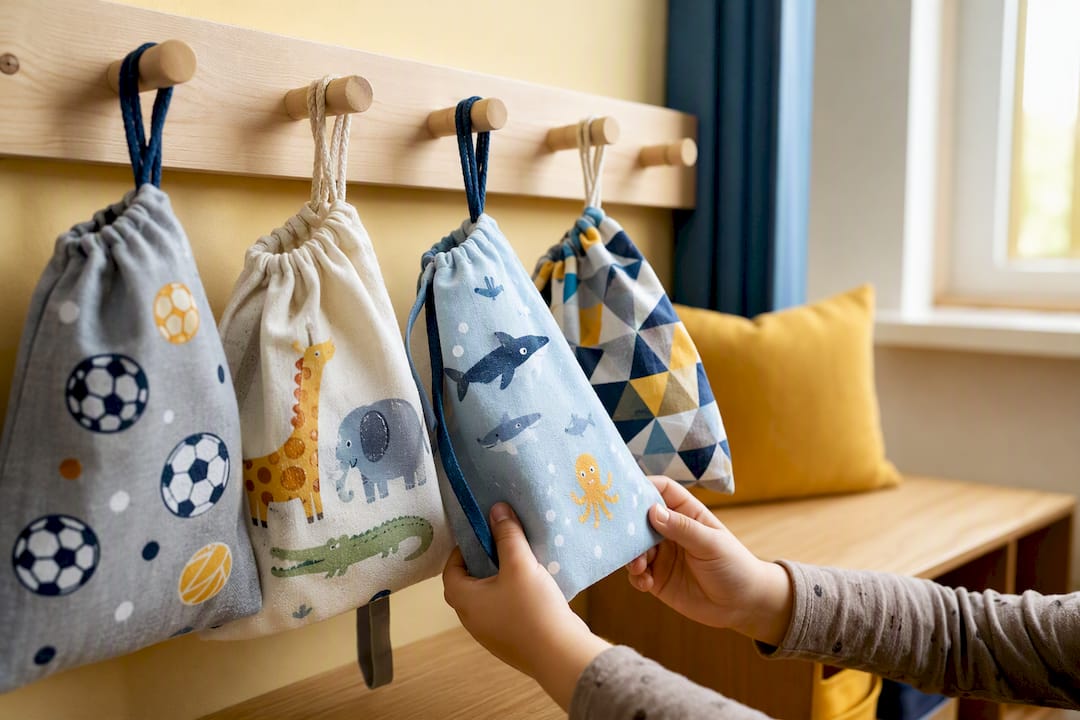
Children in the first grades still appreciate playful patterns, but they are already beginning to express opinions about colours that are “no longer for little children”. For this age group, more neutral patterns work well, such as geometric shapes, sports motifs or popular colours without cartoon characters.
Older primary school children often want an indoor shoe bag with a style that is more like a fashion accessory than a children's item. Plain bags with a small, subtle pattern or bags in school colours are more desirable at this age than among younger children. Regardless of age, it is a good idea to add a name label to the bag, as this prevents mix-ups and losses, which are common in school cloakrooms.
Ideas for organising the inside of an indoor shoe bag
The inside of an indoor shoe bag is often just an empty fabric tube, which means the shoes can slide away from each other inside or become tangled with other items in the bag. A simple solution is a bag with an internal divider or two separate pockets, with one shoe in each.
For parents who sew or buy custom-made bags, it is useful to add an internal strap or elastic that holds the indoor shoe in place and prevents the shoes from banging against each other while walking with the school bag. Some bags also have a small outer pocket, suitable for a wet wipe or spare socks, which is especially useful for younger children who are more prone to accidents during play.
If the bag has no internal divider, a simple trick can help: wrap the indoor shoes together, heel to heel, before putting them in the bag. This way, they take up less space and move around less while being carried in a school bag.
The Copa-cop perspective: how we approach children's indoor shoes
At Copa-cop, we design our indoor shoes around two things that, in our experience, most often determine whether a child will enjoy wearing their shoes or try to take them off every day: natural, breathable materials and a sole that moves with the foot rather than against it. We also check every model to see how easily a child can put it on independently, because independence when putting on shoes is not a minor detail but part of the daily routine that parents notice during the first week of school.
Because we know that measuring at home is approximate and that feet change during the school year, we offer the option to exchange or return items, as well as free shipping on orders over 50 euros. If you do not know where to start, we recommend first looking at textile barefoot models for breathability for younger children, and then, if necessary, checking the leather versions for more active schoolchildren.
— Črt
Which Copa-cop model is right for your child
Now that you know what to look for in terms of size, material and sole, it is time to put your choice into practice. Copa-cop designs slippers so that every criterion from this guide, from breathability to a non-slip sole, is not an exception but the standard throughout the entire range.
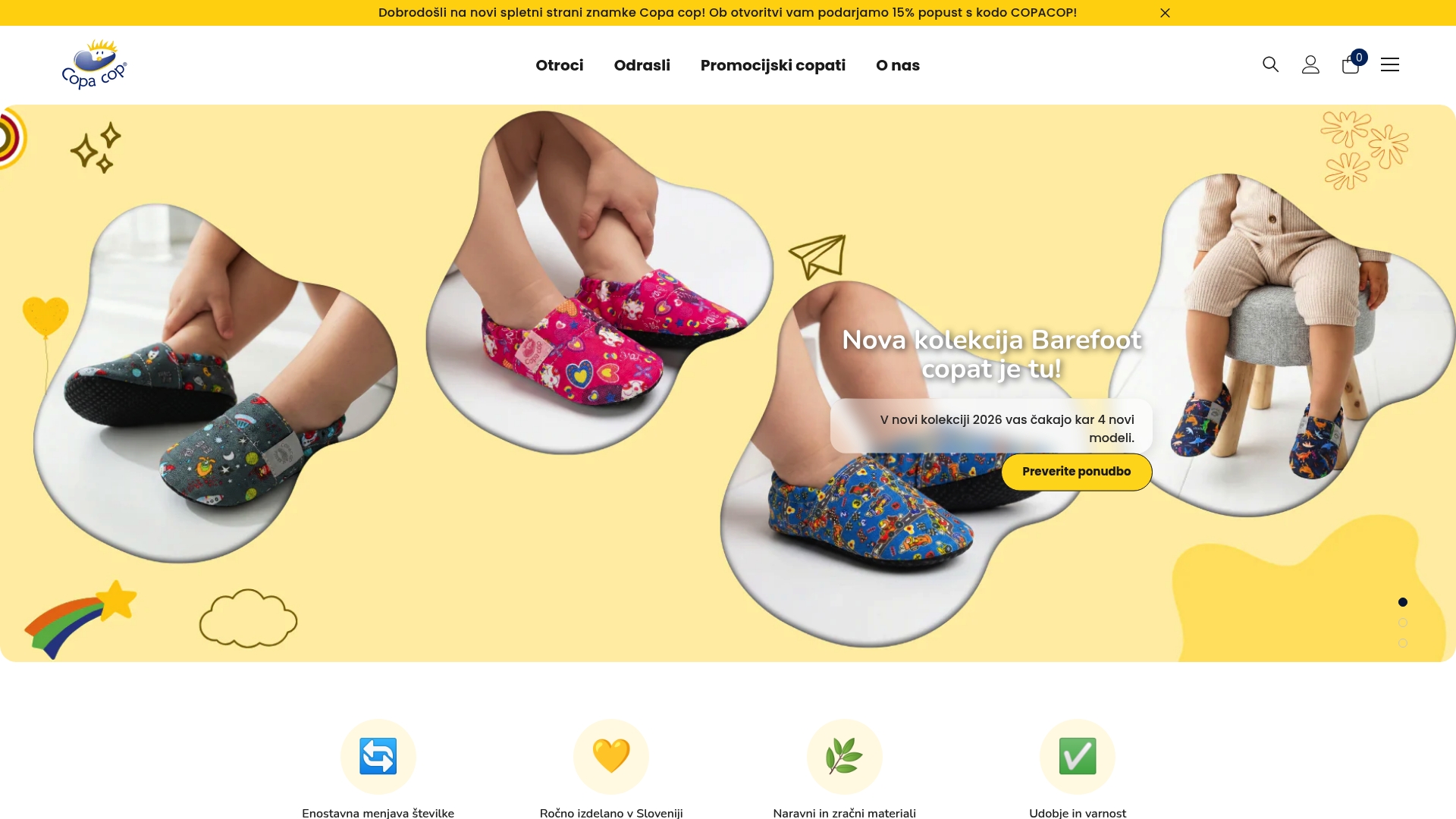
For younger children and preschool age, Children's textile slippers Barefoot Hearts and Children's textile slippers Barefoot Panda are made from breathable textile with elastic fastening, allowing children to put them on independently after just the first week of practice. Children who care about the pattern will probably be drawn to the Barefoot Trucks model, where the truck motif does not come at the expense of sole functionality.
For more active boys who wear out slippers faster, the leather models Boy’s Uni Nogomet, Boy’s Uni Gaming and Boy’s Uni Rokomet are a better investment, as leather withstands a more intensive school year without wearing out quickly. For home, we recommend Tekstilne hišne copate Copa Cop or Usnjene hišne copate for those looking for a slightly more durable option for everyday use at home.
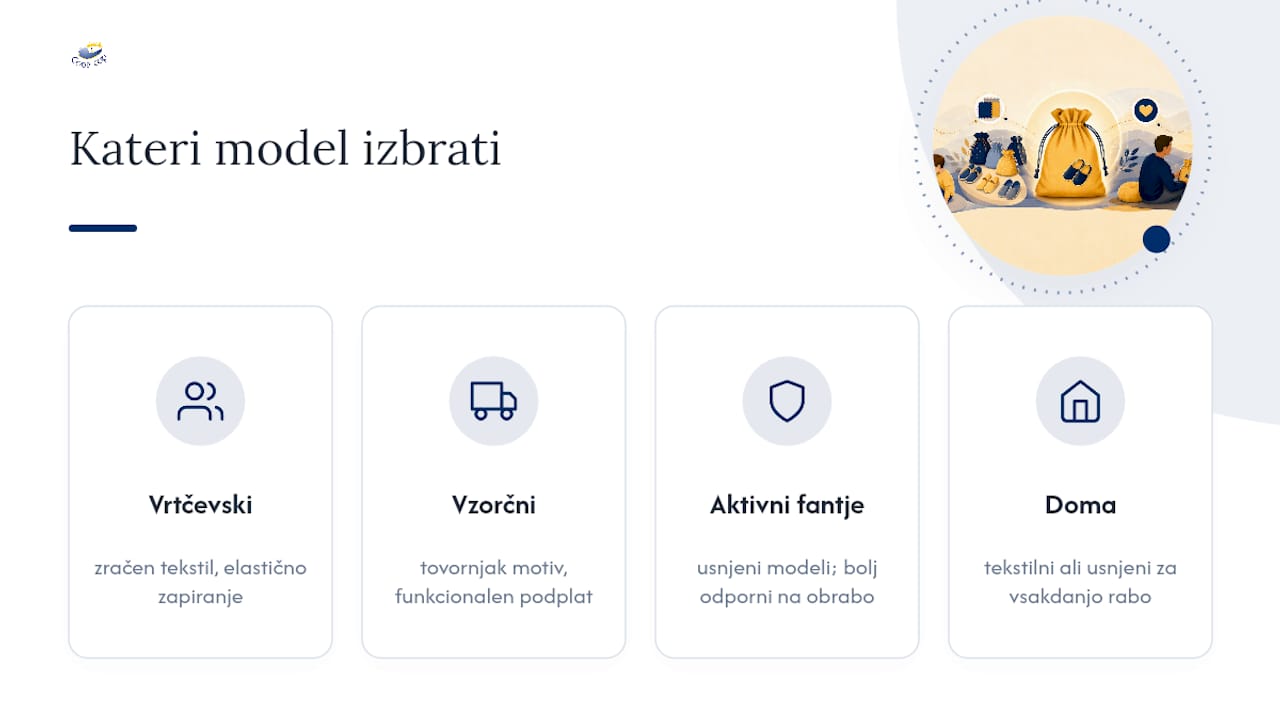
Once you have chosen a model, follow the checklist from this guide: measure the foot, check the extra room, and take advantage of the exchange option if the size does not fit at home as expected. Orders over 50 euros come with free shipping, so it makes sense to add a pair for home along with the school slippers.


