

Measure a three-year-old’s shoe size in 5 minutes and choose the right one
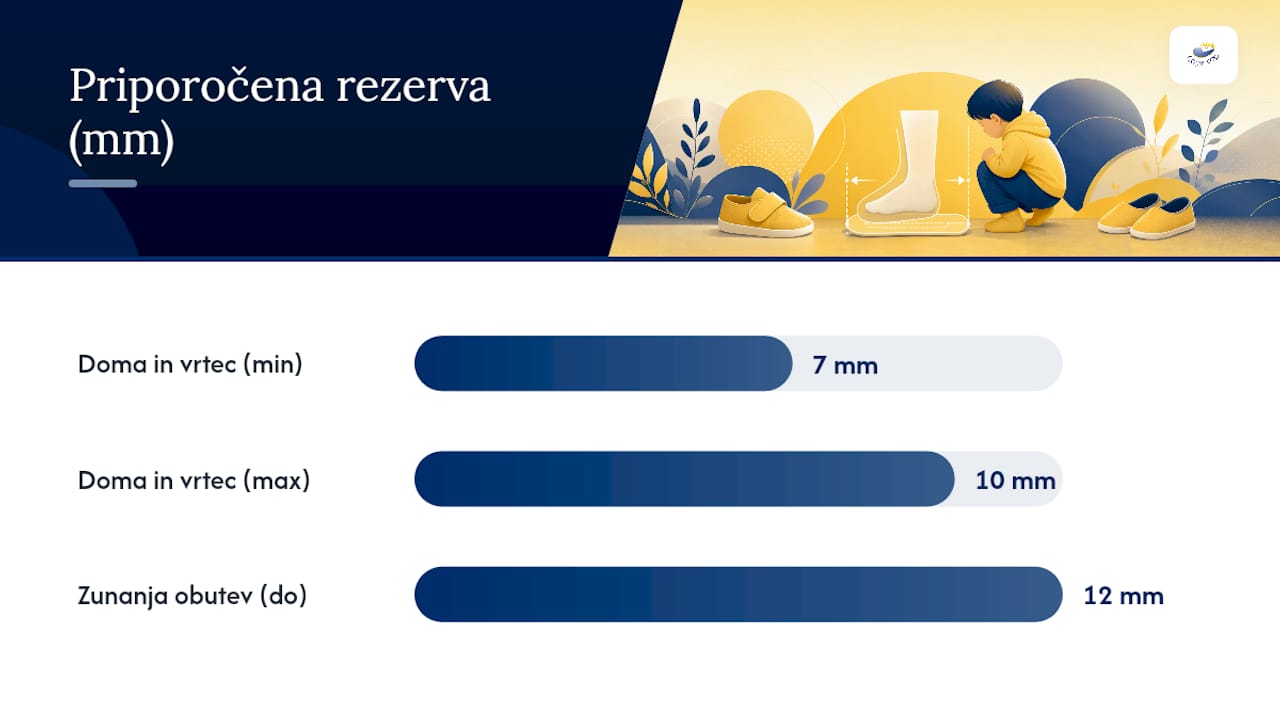
At age three, most children have a suitable foot length corresponding approximately to EU sizes in the toddler range. This range is only a guideline, as feet develop very unevenly. Therefore, do not buy slippers based on age or last year's size; always measure the foot in centimetres and check the chart. When choosing, leave an additional 7 to 10 millimetres of room for growth.
In short:
- For an effective choice of slippers, the child's foot should be measured in centimetres in the evening, because it stretches the most at that time.
- The growth allowance should be between 7 and 10 millimetres, and up to 12 millimetres for outdoor footwear under greater strain.
- For models designed for narrow or wider feet, it is important to choose a model with a suitable toe box, which ensures natural movement and stability.
- It is essential to take individual measurements every two to three months, as feet change significantly as early as age three.
- When choosing a size, it is important to consider the length of the longest toe and the width of the foot, and it is better to choose a slightly larger size with an appropriate allowance.
Table of contents
- How to accurately measure your child's foot at home
- Foot length and corresponding EU sizes table for three-year-olds
- How much growing room do slippers need at age three?
- Common mistakes when choosing the right size and how to prevent them
- Measuring routine and why materials are important in slippers
- Which Copa-cop slippers are right for a three-year-old?
- Sources
How to accurately measure your child's foot at home
Measuring a foot is a simple task that takes five minutes, but it determines whether the slippers will be comfortable or start squeezing the child after just a week. You only need a sheet of paper, a pencil, a straight wall, and a tape measure or longer ruler.
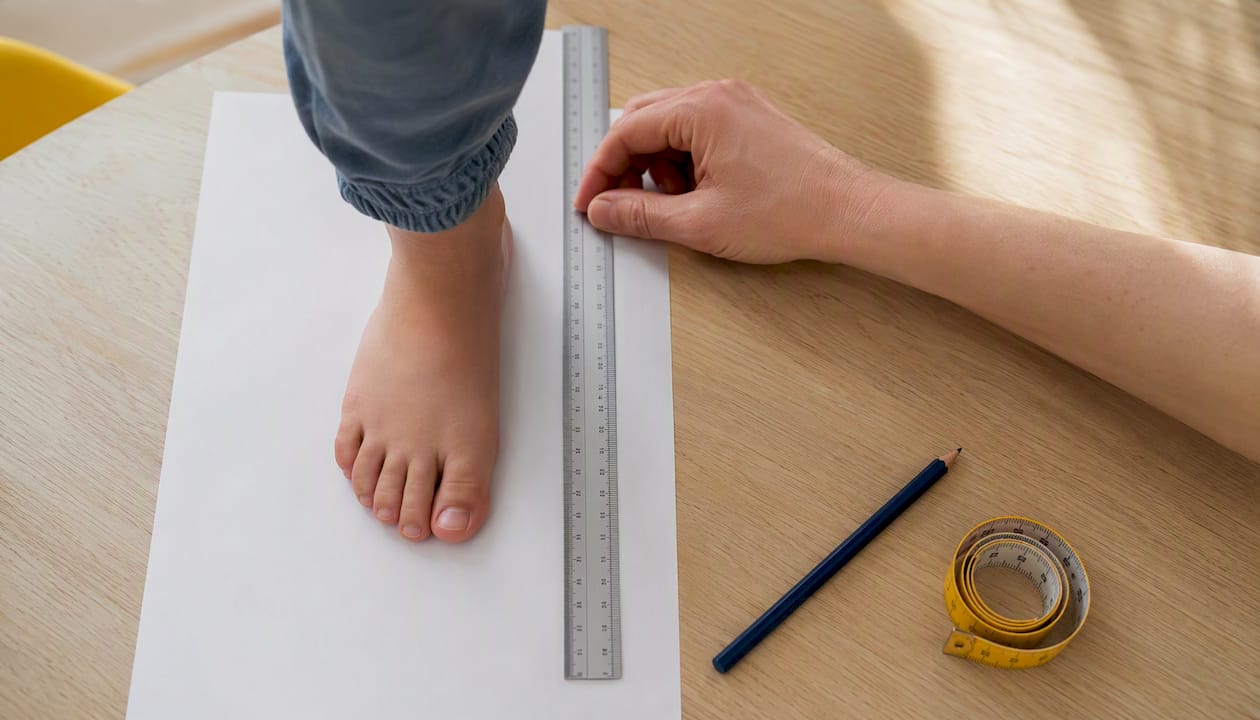
It is best to measure in the evening, when the foot is slightly stretched from the day's activity and is therefore at its maximum size. The child should stand, not sit, because the foot widens and lengthens under the body's weight.
The process is as follows:
- Place the sheet of paper against the wall on a hard floor, without a carpet.
- Have the child stand on the paper with their heel exactly against the wall.
- Use a pencil to mark the tip of the longest toe vertically (for many children, this is not the big toe but the second toe).
- Use a ruler to measure the distance between the edge of the paper against the wall and the mark. This is the foot length in centimetres.
- Repeat the process for the other foot, as the lengths almost always differ slightly.
Always use the longer foot when choosing a size. If you also want to check the width, observe whether the foot widens evenly on the paper or has a noticeably wider forefoot. This tells you whether the child needs a wider shoe or whether a narrower model is suitable. You can find an illustrated overview of the entire process on the how to measure a foot page.
Expert advice: Repeat the measurement at the end of the day, when the child has not just been running around kindergarten. The feet are then slightly swollen, showing you their true maximum size rather than their morning, "contracted" version.
Do not rely solely on age or the size from the previous pair of slippers, as children's feet at this age do not develop evenly, and one child may outgrow two sizes in just six months.
Foot length and corresponding EU sizes table for three-year-olds
Once you have the measurement in centimeters, simply find it in the size chart for girls below. This conversion logic is standard among Slovenian and European children's footwear manufacturers, although small differences between brands still exist.
If the measurement falls exactly between two rows, choose the larger size, as this will provide room for growth instead of slippers that are already tight when purchased. For models with a narrow last, such as leather school slippers, consider going one size up compared with soft textile barefoot models, which fit thinner feet better. These PDF size charts are a good additional resource for comparison if you buy from different brands.
How much growing room do slippers need at age three?
The correct allowance is the difference between slippers that will serve the child for three months and slippers that will serve for half a year. For slippers worn at home and preschool, the rule is 7 to 10 millimeters of free depth from the toe to the inside of the toe cap. For outdoor footwear, which is worn for longer and must also accommodate a thicker sock, an allowance of up to 12 millimeters is sensible.
Check the toe space by having the child stand while you press your thumb on the upper part of the slipper just above the longest toe. If you feel approximately a thumb's width between the toe and the front, the allowance is correct. Less than that means the slipper is already too tight, while much more means the foot will slide inside the slipper and the child will be unstable while walking.
For three-year-olds, width is also important, not just length. Some children have wider feet or a more pronounced instep, so a narrow model presses against the sides before length becomes a problem. The breathable toe area of slippers, which follows the natural shape of the foot, allows the toes to spread naturally while walking, which is often a key advantage of barefoot models.
For the difference between home and school use, a simple rule applies:
- Textile barefoot models with soft, flexible soles are ideal for home and preschool.
- For school, where footwear is subjected to greater wear, leather models with a somewhat firmer sole work better.
- A non-slip sole is essential for both uses, as children at this age run and jump a lot.
Expert advice: If the child is between two sizes, choose the smaller model only if the foot is very narrow. In all other cases, the safer choice is the larger size with an appropriate amount of room.
Common mistakes when choosing the right size and how to prevent them
The biggest mistake parents make is relying on age or the “last year's” size, even though the foot may have grown by a full size in the chart within three months. Slippers that are too small squeeze the toes, which can lead to deformities and pain when walking in the long term, while slippers that are too large cause blisters and slips because the heel moves inside the slipper with every step.
When buying at home, always check the insole as well, since some insoles are shorter than the actual length of the last and give you a false impression of the fit. The most reliable test is to have the child run a few steps on a hard floor while wearing the slippers. If the foot visibly slips or the toes curl while walking, the size is not right.
Here are some specific adjustments I recommend to parents:
- When shopping online, always measure the foot before ordering and take advantage of the option to exchange them if the size turns out not to be right.
- When buying a particular brand for the first time, also check the manufacturer's size chart, as lasts differ between brands.
- If you are unsure about the width or any special characteristics of the foot, visit a specialized store, where they can measure the foot using a device.
Measuring routine and why materials are important in slippers
At three years of age, feet grow faster than most parents expect. I recommend measuring them every two to three months, as at this age the size often changes at exactly this rate. Anyone who waits six months between measurements will almost certainly buy slippers that the child wears for only a short time.
As important as the size is the choice of material. Natural, breathable fabrics reduce sweating and discomfort, which for young children who spend the whole day in slippers at kindergarten is much more than just a matter of comfort. Slovenian footwear manufacturers emphasize this for good reason, as breathability and a non-slip sole directly affect how comfortable a child feels in their slippers while playing. That is precisely why at Copa cop we allow parents to exchange or return them if the chosen size turns out to be wrong, since no parent can always accurately guess how quickly a foot will grow.
— Črt
Which Copa-cop slippers are right for a three-year-old?
For someone tired of guessing among ten similar white slippers on store shelves, a clear chart and a verified size are worth more than any advertisement. Copa-cop saves you a second step here: because all models follow the same domestic production approach and use the same materials, a size measured once applies throughout the entire catalog, not just to one model.
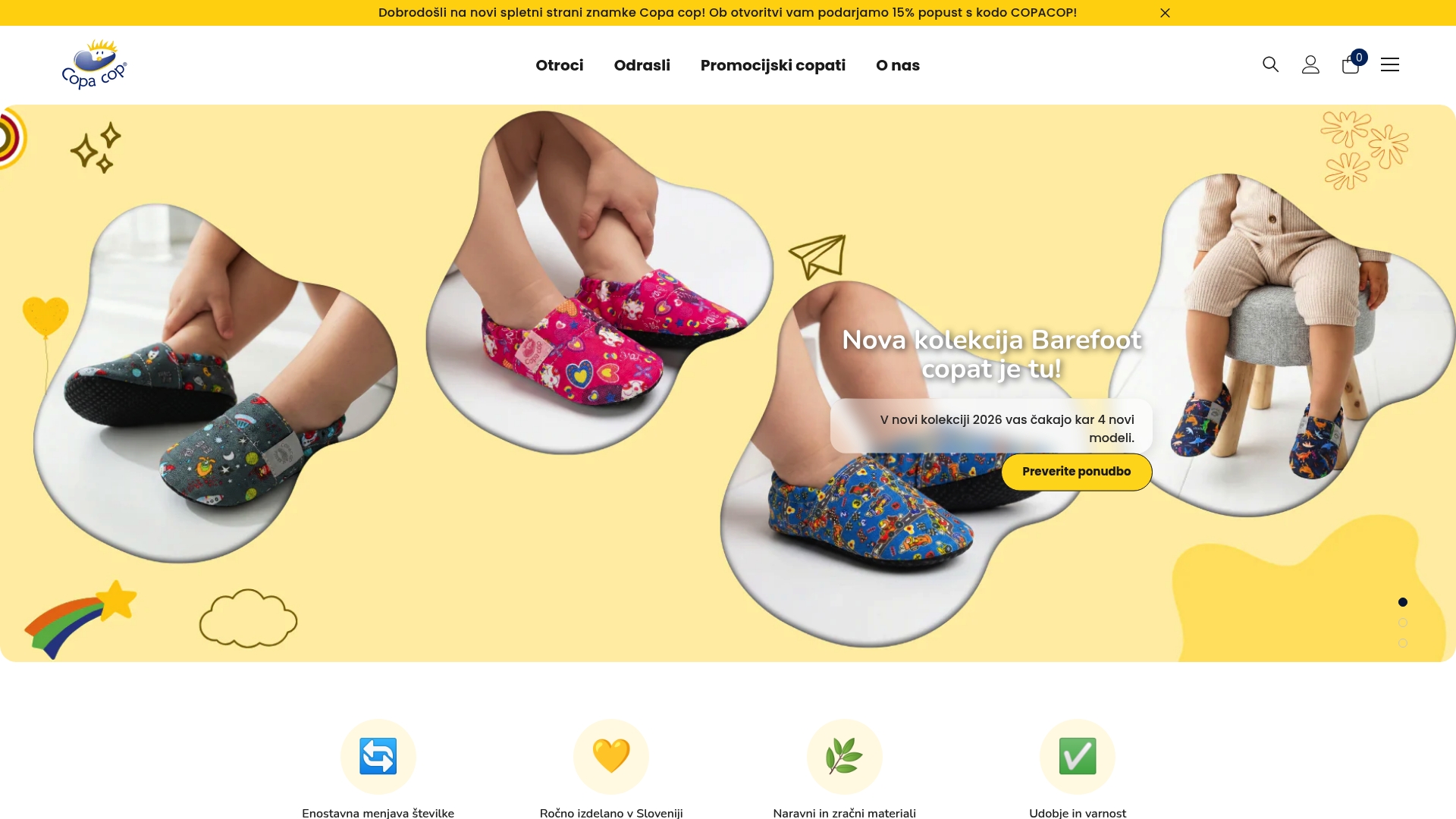
For home and kindergarten, soft textile barefoot models are the most suitable, such as Barefoot Hearts, Barefoot Panda, and the Barefoot Trucks pattern, which allow the toes to move naturally throughout the day of play. For school use and more durable walking, the leather models from the Boy’s Uni line are better designed, for example with a soccer, gaming, or handball motif, alongside the Urban and Camo textile patterns: Urban and Camo.
The process is the same as the one you practiced at home: measure the foot in centimeters, compare it with the chart on the product page for the selected model, and choose a size with 7 to 10 millimeters of room to spare. If the size turns out to be unsuitable after delivery, you can exchange or return it, and orders over 50 euros come with free shipping. Measure your child's foot this evening and choose the right size before your three-year-old outgrows it again.
Sources
- DZS: How to choose the right slipper size
- Otročarije: Children's shoes
- Citylife: Which children's slippers are most suitable for kindergarten or school


