

School slippers: what requirements they must meet and how to choose the right ones
School slippers must have a non-slip sole, as this is required by the school supply lists of almost all Slovenian elementary schools. This is the only truly mandatory condition. In addition, we recommend three things that make the difference between slippers a child happily wears and those left sitting in the cloakroom:
- a natural, breathable material (leather or cotton instead of synthetic material),
- the correct size with room for the toes, so the foot can grow and move,
- flexible construction that allows the sole to bend naturally while walking.
At Copa-cop, we have incorporated these criteria into every model we make in Slovenia, from textile to leather slippers. Below, we explain why each of these requirements matters and how to check them before you buy the slippers.
Key findings
A school slipper fulfills its purpose only when it combines a non-slip sole, natural material, and the correct size with room for the toes.
| Point | Details |
|---|---|
| A non-slip sole is mandatory | School supply lists state this requirement explicitly; check the sole's profile and material before purchasing. |
| Natural materials breathe better | Leather and cotton reduce foot sweating compared with synthetic materials. |
| Measure at the end of the day | The foot is at its widest then, so allow room for the toes (7 to 10 mm). |
| Personalization prevents loss | Unique patterns or name labels reduce mix-ups in the cloakroom. |
| Copa-cop meets all the criteria | Textile and leather models made in Slovenia, with exchanges or returns and free shipping on orders over €50. |
Table of contents
- Requirements for school slippers: materials, sole, construction, and safety
- How to correctly measure your child’s foot for school slippers
- How to choose and maintain school slippers throughout the year
- Why Copa-cop meets all these requirements
- Standards and certificates for the safety of school slippers
- Orthopedic support and slipper design for healthy children's feet
- When to replace school slippers based on the growth of your child's feet
- What school lists often leave out, but parents need to know
- Copa-cop: school slippers made in Slovenia that grow with your child
- Frequently asked questions about school slippers
- Sources
Requirements for school slippers: materials, sole, construction, and safety
When a parent enters a store or opens a website, they often find themselves facing ten pairs that look identical. The difference lies in details that need to be checked by hand, not just by eye.
Breathable materials
A child's foot moves, sweats, and grows throughout the school day. Natural materials such as leather and cotton reduce sweating and improve foot health compared with synthetic alternatives, which allow less air to pass through. Synthetic materials are cheaper, but in an enclosed slipper they create a damp environment where fungal infections and unpleasant odors develop more quickly.
Non-slip sole
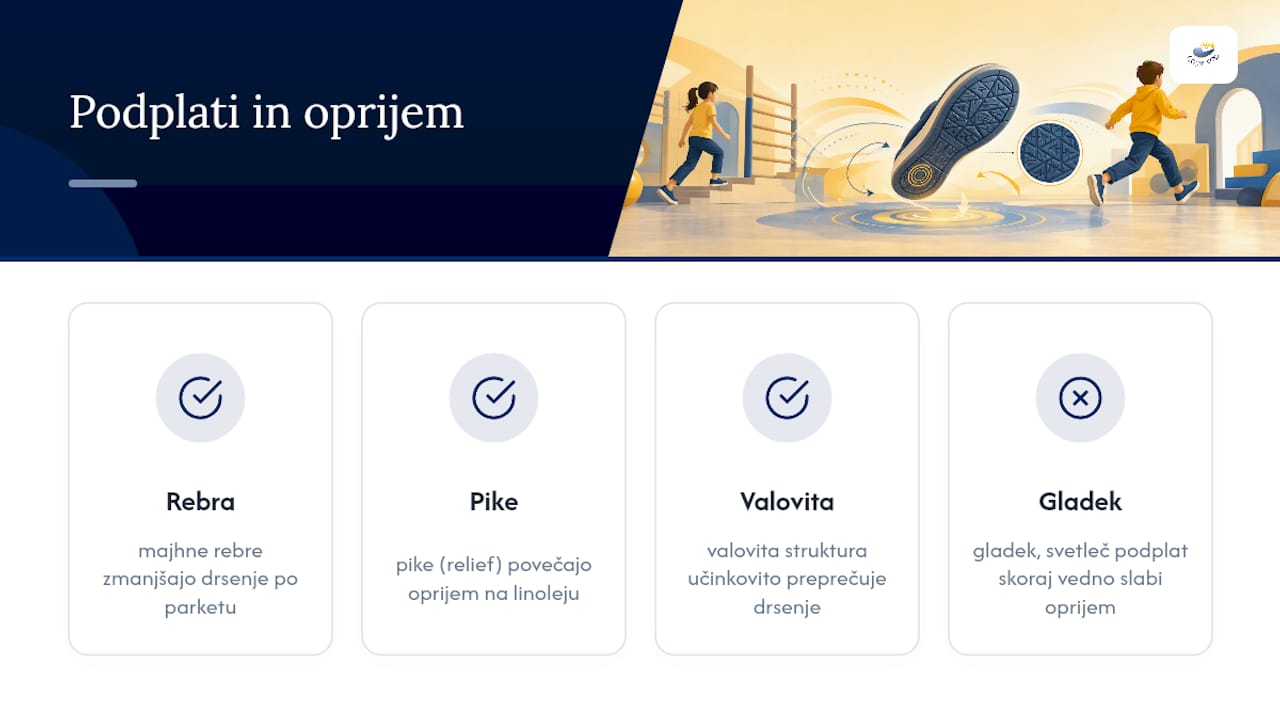
A non-slip sole is not a marketing slogan but a specific technical detail. When shopping, turn the slipper over and look at the sole profile: rubber or natural rubber with a patterned relief (small ribs, dots, or a wavy structure) significantly reduces slipping on parquet or linoleum. A smooth, shiny sole without texture almost always means poorer grip, regardless of what the label says.
A construction that follows the child’s movement
A good school slipper has:
- a closed toe that protects the toes when bumping into tables and chairs,
- an elastic strap or elastic instead of laces, so the child can put them on independently,
- a flexible sole that bends where the foot also bends when taking a step (under the toes), not in the middle.
A rigid, board-like sole forces the foot into an unnatural walking pattern, which affects the development of walking in young children over the long term.
Durability that justifies the price
A high-quality stitched construction, in which the upper is firmly attached to the sole, lasts significantly more miles along school corridors than a glued version, which starts coming apart at the edges after a few months. The right size, a good sole, and durable material are, according to parents’ and advisers’ experience, the three criteria worth checking before every purchase, regardless of the price of the pair.
Expert advice: Gently bend the slipper in your hand, as a child would bend it while walking. If it bends in the middle of the sole instead of under the toes, choose a different model.
How to correctly measure your child’s foot for school slippers
The wrong size is the most common reason new slippers end up in a drawer after two weeks. Measuring at home takes five minutes and prevents most of these mistakes.
- Have the child stand on a sheet of paper against a wall, at the end of the day, when the foot is most expanded from walking throughout the day.
- Trace the outline of the foot with a pencil held upright, not at an angle.
- Measure the distance from the heel to the tip of the longest toe with a straight measuring tool.
- Add room for the toes, approximately the width of one finger (7 to 10 millimeters), so the foot can move without pressure on the toe tip while walking.
- Check the heel fit while the child is standing in the slipper: the heel should not slip upward when walking up stairs.
If your child’s foot is growing quickly, choose a slipper half a size larger, never more. An oversized slipper causes unstable walking and rubbing that hurts just as much as one that is too tight. You can find detailed measuring instructions and additional tips in our guide to buying children’s slippers.
How to choose and maintain school slippers throughout the year
A kindergarten child and a ninth-grader need different things. Toddlers in kindergarten spend the day more barefoot and on the floor, so textile slippers with a soft, flexible sole (the so-called barefoot design) are the most natural choice. Primary school children need somewhat more support and protection, so leather models with a reinforced toe, which can withstand bumps during physical education, often prove suitable for them.
Maintenance is easy if you take the material into account:
- Put textile slippers in the washing machine at 30 degrees, without a high-speed spin cycle, and air-dry them away from the radiator.
- Never put leather in the washing machine. Wipe it with a damp cloth and let it dry naturally, without a hair dryer or direct sunlight.
- Do not dry slippers too quickly at a high temperature after washing, as the material becomes hard and cracks.
To prevent loss in the cloakroom, one simple thing helps: recognizability. Unique patterns and personalization with a name greatly reduce the likelihood that a child will bring home someone else's pair. A name label on the inside or a distinctive pattern on the outside is enough.
Expert advice: Check the school supply list once more just before buying, as some schools add specific requirements, such as a particular color or a ban on laces for younger grades.
Why Copa-cop meets all these requirements
At Copa-cop, we make slippers in Slovenia with one goal in mind: children's feet should remain healthy, relaxed, and dry throughout the school day. Our author Črt, who writes about children's foot health and choosing slippers at Copa-cop, explains in detail in the parent's guide why an ergonomic sole design is not merely a buzzword, but a concrete factor in the development of walking.
Our catalogue covers exactly the requirements set by school supply lists and professional recommendations:
- Children's textile slippers Barefoot Hearts and Children's textile slippers Barefoot Panda offer a soft, flexible sole for kindergarten and the first years of primary school.
- Children's textile slippers Barefoot Trucks feature a distinctive pattern that helps children quickly find their pair in the cloakroom.
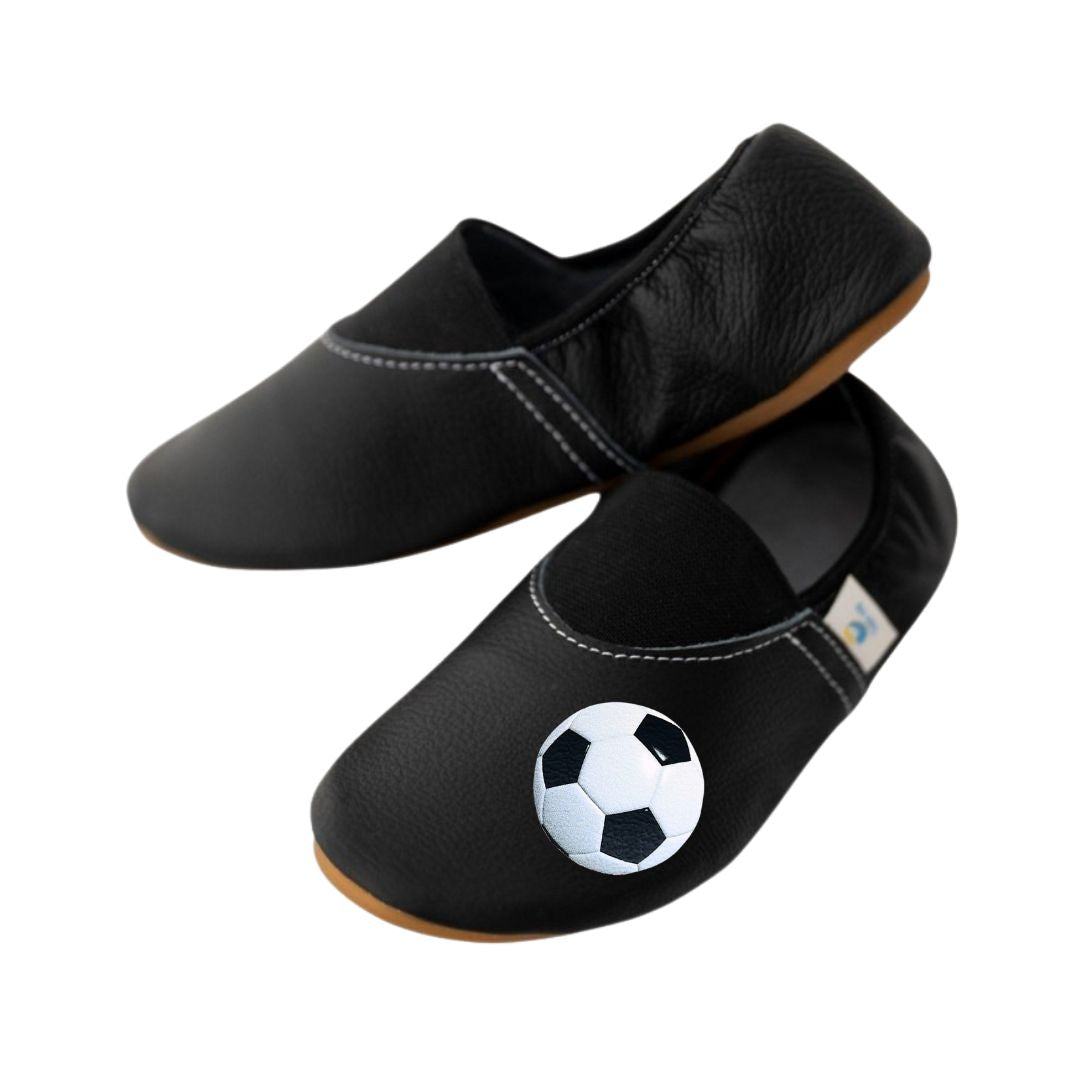
- Leather slippers for boys' football and gaming, and handball, are made of natural leather with a reinforced toe for older primary school children who need more support.
- Urban boys' textile slippers and Camo boys' textile slippers combine breathable textile with patterns that boys actually enjoy wearing.
Personalization with a unique design is proven to be the most reliable way to reduce lost slippers in school cloakrooms, which we took into account when designing the patterns. If the size is not right or your child's foot grows faster than expected, we will exchange or refund the slippers, and shipping is free for orders over 50 €.
Standards and certificates for the safety of school slippers
In Slovenia, there is no special legally prescribed certificate exclusively for “school slippers” as a category, so school supply lists are the documents that actually set the minimum requirements. Children's footwear in general falls under the general European safety requirements for products, which manufacturers must meet regarding the chemical safety of materials, such as limits on harmful substances in dyes and adhesives, and mechanical safety, such as ensuring that small parts cannot come loose for younger children.
When choosing, pay attention to the material composition label. Genuine leather will be identified as such, not as “synthetic leather” or “eco-leather”, which is often just another term for plastic. Quality manufacturers, including Copa-cop, state the exact composition of the upper, lining and sole on the packaging or website. If you cannot find this information on the product or website, it is a warning sign, not a minor detail.
For rubber soles, check whether they are made of hard rubber or a softer elastomer, as the latter absorbs impacts better when running around the playground and also provides better grip on the ground. This difference is often not listed on the label, so physically inspecting the sole before purchase is always a worthwhile additional check.
Orthopedic support and slipper design for healthy children's feet
A child's foot is not yet fully ossified until around the age of ten, so it adapts to the shape of the footwear the child wears every day. Footwear that is too stiff, narrow or has a raised sole can affect the long-term development of the foot arch and walking pattern.
The Barefoot approach used in several Copa-cop models is based on the idea that a thin, flexible and wide sole allows the foot to develop its muscles and balance naturally, similar to walking barefoot on a soft surface. The opposite is a classic orthopedic slipper with a raised heel and rigid arch, which a child needs only if a pediatrician or orthopedist explicitly recommends it because of a specific foot condition.
For a healthy child without diagnosed problems, the width of the toe area is the most important factor, not artificial arch support. The toes must spread with every step, which is possible only if the slipper is not narrowly tapered at the front. If you have doubts about the shape of your child's foot or notice unusual wear on one side of the sole, consult a pediatrician or orthopedist before choosing special corrective footwear.
When to replace school slippers based on the growth of your child's feet
Children's feet grow unevenly, more quickly during periods of bodily growth and more slowly otherwise. On average, this means younger children need a new size every three to six months, while older primary-school children need them somewhat less often, perhaps once per school year.
The sign that it is time for a new pair is not just visible tightness. Check for these signs:
- the child complains more and more often when putting them on or avoids wearing the slippers,
- you notice imprints from the slipper edges on the socks after a day at school,
- the big toe reaches the tip of the slipper with no room to spare when the child is standing,
- the sole is noticeably more worn on one side than the other, which may indicate an uneven gait caused by insufficient space.
We recommend checking the size at least every six to eight weeks during periods of rapid growth, especially at the beginning and end of the school year. Do not wait until the slipper is visibly too tight, as children often silently tolerate pressure on their toes without complaining until pain or an altered gait appears.
What school lists often leave out, but parents need to know
Official school-supply lists are a good starting point, but they tell only half the story. They say "non-slip slippers" and usually stop there, without a word about the material, the shape of the sole, or how quickly a child's foot actually grows between September and June.
The conventional advice I hear most often is, "Buy slippers that will last the whole year." That is the wrong question to ask. The real task is not to find slippers that survive nine months without replacement, but to accept that a child will probably need at least one, and perhaps two, size changes in between. Parents who buy slippers that are too large "for later" often do more harm than good, because oversized footwear changes the way a child walks.
If I had to choose one priority above all others, it would be sole flexibility, not color or pattern. A child will be more likely to wear slippers if they are comfortable, not because they are attractive; aesthetics only come into play once the basics are right.
Copa-cop: school slippers made in Slovenia that grow with your child
Instead of guessing in front of a store shelf full of similar pairs, at Copa-cop you get slippers in which each of the described criteria - a non-slip sole, natural material, and flexible construction - is already built into the product's foundation.
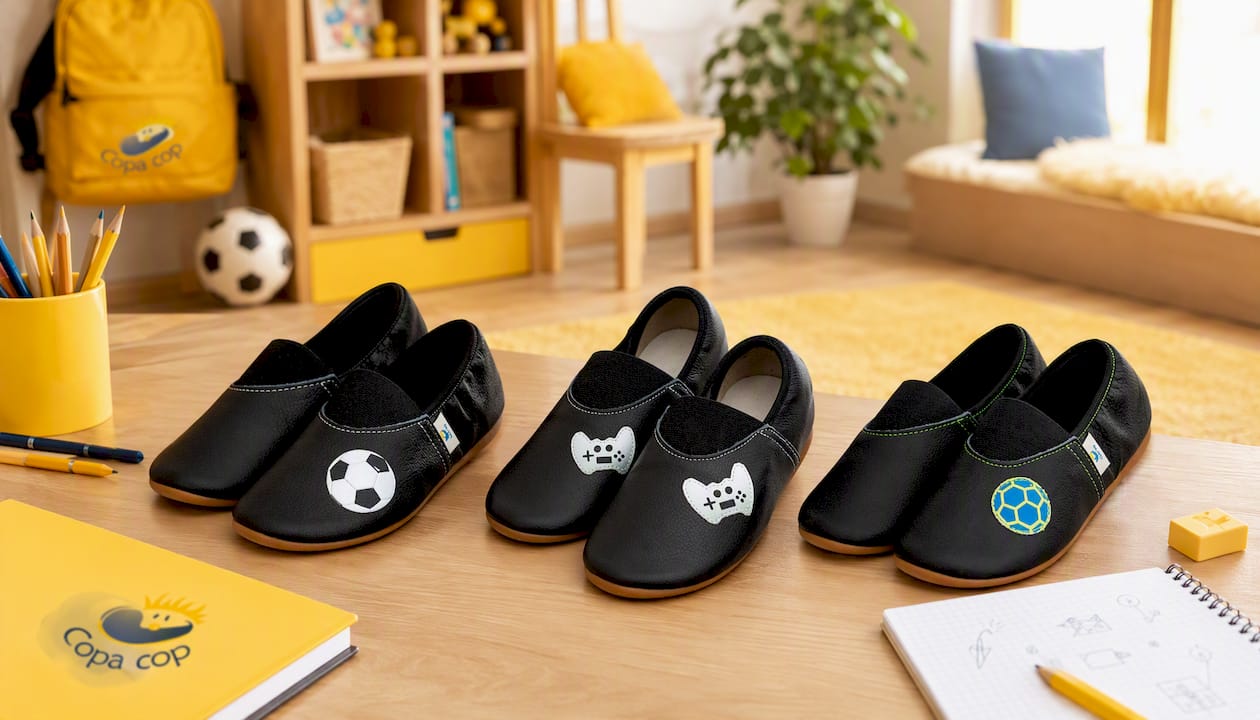
For younger children, we recommend the textile Children's textile slippers Barefoot Hearts or the patterned Children's textile slippers Barefoot Panda, both models featuring a soft sole for natural foot movement. For boys in older grades who need more support during physical education, leather Boy's leather slippers Boy’s Uni Handball or Boy's leather slippers Boy’s Uni Gaming are available. If the size is not right, we will exchange or refund the slippers, and shipping is free for orders over €50. Measure your child's foot using the steps above and check the correct size on our website before the school year begins.
Frequently asked questions about school slippers
Do school slippers have to have non-slip soles by law? Not by law, but school supply lists mention this requirement almost consistently, so schools treat it as mandatory in practice.
Which material is better for school slippers, leather or textile? Both are suitable, but the choice depends on the child. Leather is more durable and breathable with proper care, while textile is easier to wash and more suitable for children who sweat easily.
How often should school slippers be replaced? Younger children need a new size every three to six months, while older primary school children need new sizes somewhat less often. Check the size at least every six to eight weeks during growth spurts.
Do I need to choose orthopedic slippers for a healthy child's feet? For a healthy child without diagnosed problems, orthopedic footwear with an elevated arch is not necessary. A wide toe box and flexible sole are recommended, while special corrective slippers should only be used on the recommendation of a pediatrician or orthopedist.
How can I prevent my child from losing their slippers at school? Choose a model with a unique pattern or add a name label to the inside. Recognizable slippers are much less likely to be switched or lost in the cloakroom.
Sources
- School supplies checklist for first-grade students
- What should children's school slippers be like?
- school slippers - Our news


