

Recycling Children's Footwear: A Guide for Parents in Slovenia
How to properly recycle children's footwear in Slovenia
Recycling children's footwear in Slovenia is feasible but requires some attention in preparation and choosing the right drop-off location. The most important rule: always submit shoes in pairs, never individually.
Here are the steps we recommend:
- Collect shoes in pairs and tie them with laces or rubber bands so they don’t separate during transport.
- Clean the footwear before handing it in. Remove mud, moisture, and coarse dirt, as dirt complicates further processing.
- Dispose of in designated textile containers. In Slovenia, local municipal services manage marked containers that accept all types of footwear in pairs, from sports shoes to winter boots.
- Check local humanitarian options, as quality used footwear often finds a new owner faster than it goes for processing.
- Never dispose of them in mixed municipal waste. This prevents recycling and increases environmental burden.
- Consult Interseroh collection and processing of waste raw materials d.o.o., Slovenian experts in collection and processing of waste materials, when looking for comprehensive solutions.
Why recycling children's footwear is challenging and what you can do instead
Children's footwear is often made from rubber, plastic, textile, foam, and metal parts simultaneously. This mixture of materials makes separation during processing technologically challenging and expensive. Therefore, donation or reuse often has a greater environmental impact than direct recycling.
Repair is often the best first option. Sewing, gluing, or replacing soles significantly extend the life of footwear, and the repair cost is on average lower than buying a new pair. A cobbler often solves problems that seem irreparable.
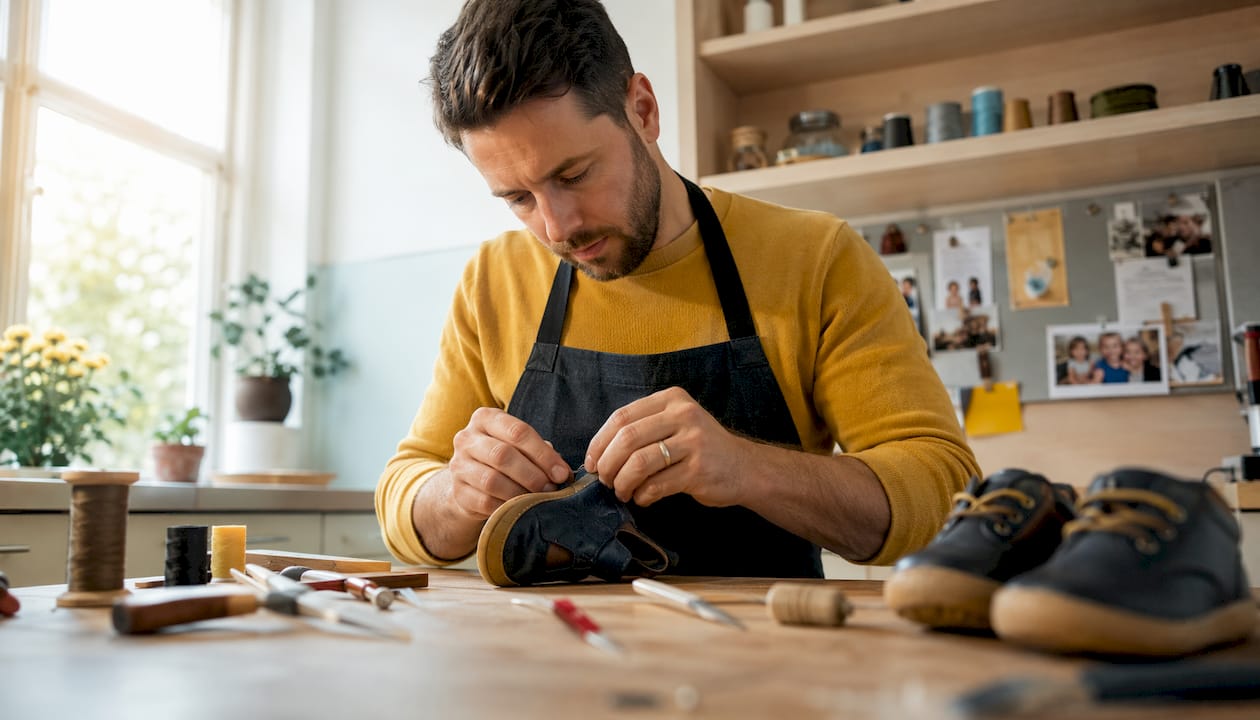
High-quality footwear made from natural materials is easier to maintain and repair. When you buy durable shoes, you reduce waste at the source.
Professional advice: Before taking children's footwear to a bin, show the pair to a shoemaker. Replacing the sole or sewing the upper part often extends the lifespan by one season or more, significantly reducing the environmental footprint.
Where to donate children's footwear and where to dispose of it properly
Quality used children's footwear deserves a second chance. Humanitarian organizations in Slovenia accept clean, undamaged pairs for charitable purposes, where the footwear goes directly to children in need.
Practical tips for donating:
- Tie shoes in pairs with laces or elastic bands before donating to prevent separation.
- Collection centers and humanitarian organizations accept only clean and undamaged pairs.
- Textile bins in public locations are also suitable for footwear that is no longer wearable but still in pairs.
- Overly damaged or dirty footwear hinders the work of recyclers and reduces the quality of secondary raw materials.
Unfortunately, most footwear manufacturers in Slovenia do not yet have their own return and recycling programs, so the role of individuals and local communities is crucial. Your decision to dispose of shoes properly matters.
Why quality footwear means less waste: Copa-cop and sustainable shopping
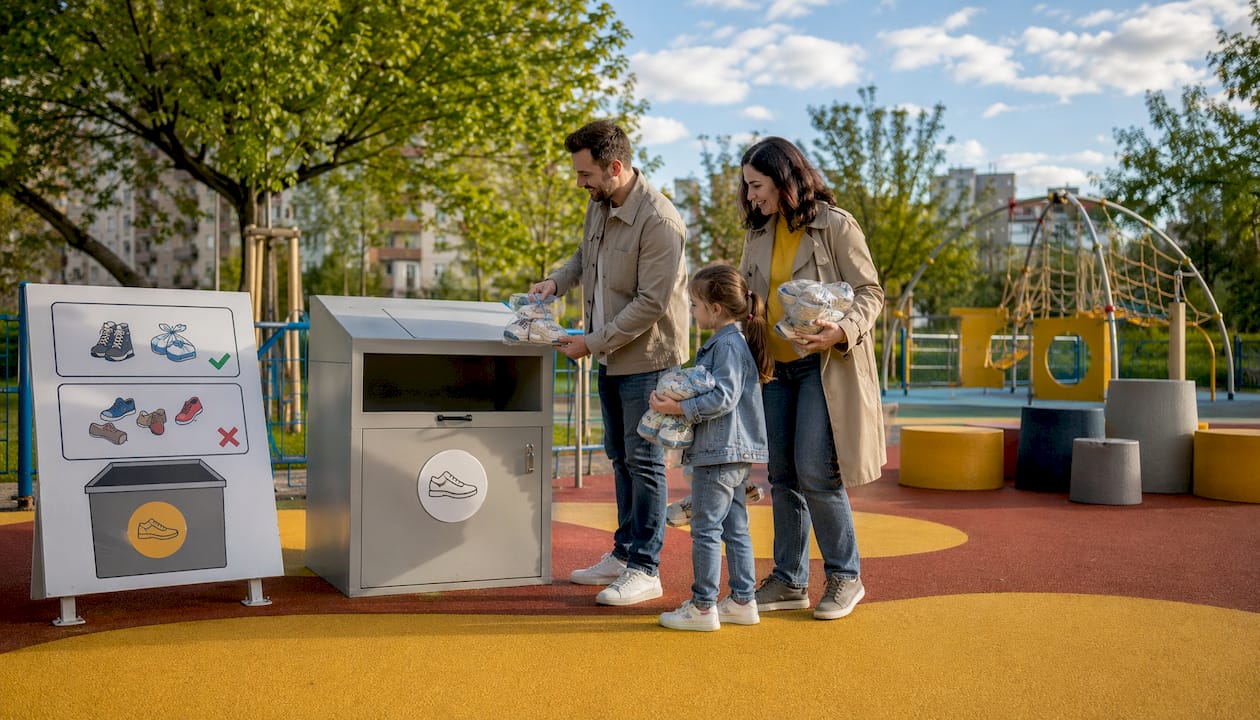
Every pair of children's shoes that lasts longer means less waste. It's a simple calculation that we at Copa-cop know well.
Copa-cop children's slippers are made from natural, breathable materials that support healthy foot development and allow easy maintenance. Ergonomic and flexible soles follow the natural movement of the child's foot, while soft materials reduce discomfort during prolonged wear. Quality footwear made from natural materials is easier to repair and maintain, supporting sustainable use.
The exchange or return option offered by Copa-cop builds trust and encourages thoughtful purchases. When you know you've chosen the right pair, children wear them longer.
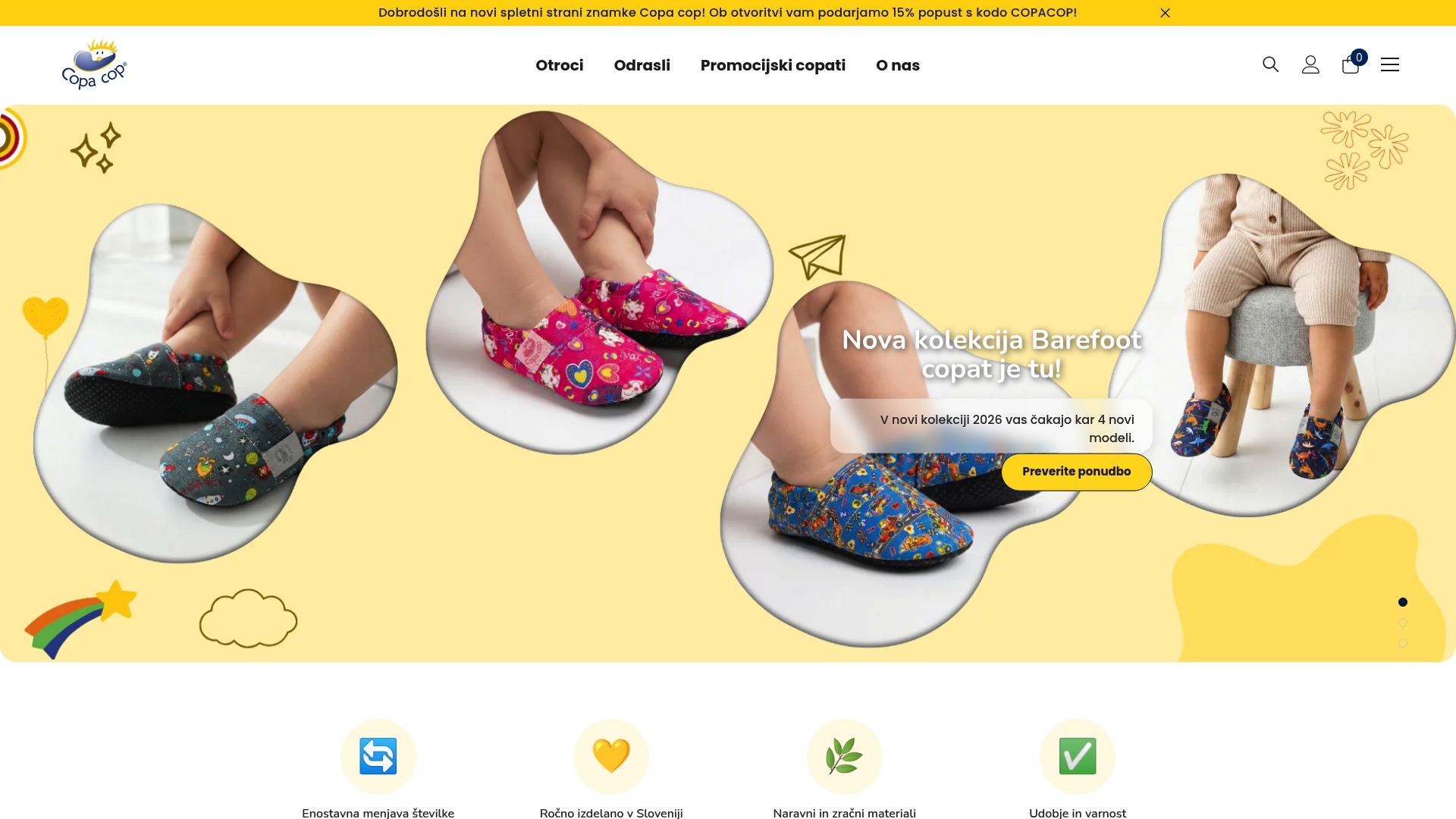
Check out Copa-cop children's barefoot slippers, designed for intensive use at home and school, with comfort and durability in mind.
Most common mistakes when disposing of children's footwear
Disposal mistakes are more common than we think, and each has real consequences for the environment.
- Disposing of footwear with mixed waste is the most common mistake. Materials are then very difficult to separate and valuable raw materials are lost.
- Submitting a single shoe without its pair drastically reduces the chance of reuse or recycling.
- Dirty or wet footwear in the container contaminates other items and complicates recycling.
- Overly damaged footwear at donation collection centers hinders the work of volunteers and recyclers.
- Ignoring local sorting instructions means good intentions do not achieve the desired effect.
Conscious behavior is not complicated. It is enough to clean the shoes, tie them in pairs, and take them to the right place.
Which materials in children's footwear have the greatest environmental impact?
Synthetic rubber and plastic parts decompose very slowly in nature, some taking several decades. The adhesives that bond footwear layers are often chemically aggressive and complicate recycling. Natural materials like leather and cotton decompose faster but require a lot of water and energy to produce. Recycled polyester found in some modern models reduces the use of new raw materials but does not solve the end-of-life product problem on its own. That is why choosing footwear with fewer plastic components and more natural fibers is a step in the right direction from the moment of purchase. Children's clothing and footwear made from sustainable materials, which you can also find at children's fashion brands, show that the industry is slowly pushing boundaries.
What happens to materials from recycled footwear?
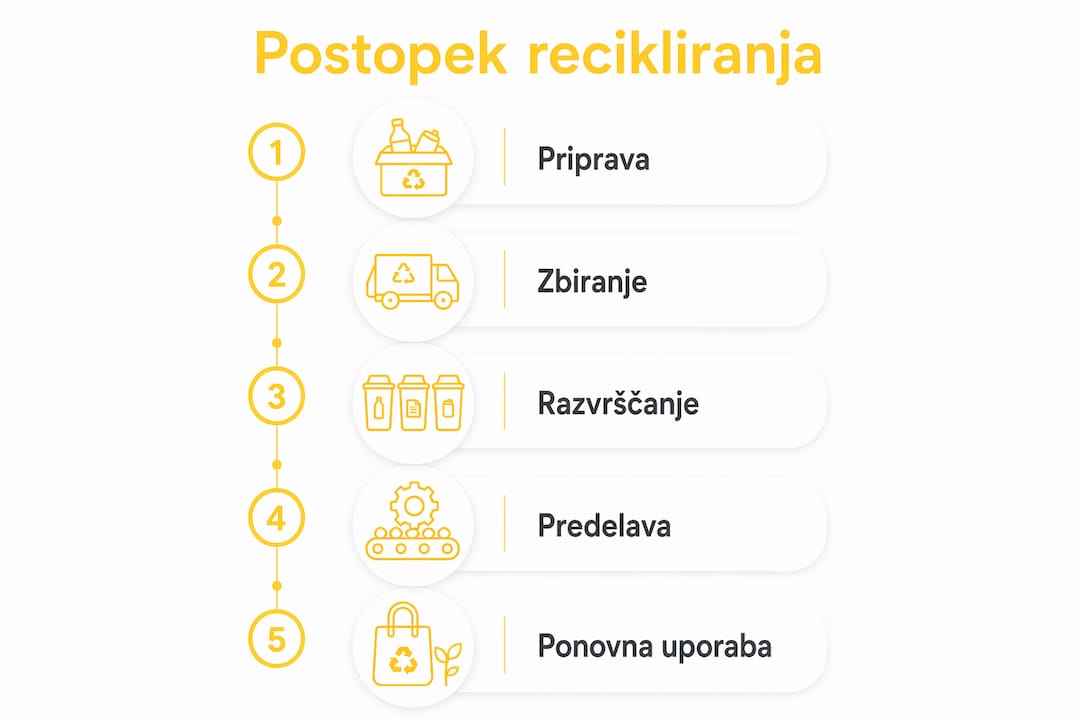
When footwear arrives for recycling, it is broken down into its components. The rubber from soles is processed into granulate used for playground surfaces, athletic tracks, and floor coverings. Textile parts become filling material or insulation. Metal parts go to the metal processing industry. Interseroh Collection and Recycling of Waste Raw Materials Ltd., as a specialized collector and recycler, ensures that secondary raw materials get a new life in industry instead of ending up in landfills. The process is limited, but every kilogram of recycled material means fewer new raw materials.
What is the responsibility of footwear manufacturers in recycling?
The principle of extended producer responsibility requires companies to take part of the responsibility for their products even after their use ends. In practice, this means establishing return programs, financing recycling infrastructure, or designing products that are easier to decompose. Abroad, some large manufacturers already run their own collection programs, but in Slovenia these systems for footwear are not yet widespread. The burden therefore remains on consumers and local communities. Sustainability-oriented manufacturers who consider recyclability at the design stage are a step ahead of the competition and legislation, which is tightening in the European Union in this area.
What happens when footwear is disposed of improperly?
Footwear that ends up in mixed municipal waste almost certainly goes to landfill or incineration. Adhesives, synthetic rubber, and plastic parts release harmful substances into soil and air during decomposition. Dyes and chemical impregnation agents further pollute groundwater. A single pair of shoes may seem small, but together with millions of other pairs annually, it creates a serious environmental burden. Proper sorting and disposal in designated bins are the smallest possible gestures with the greatest collective impact.
Key findings
Recycling children's footwear in Slovenia is most effective when parents combine proper preparation, local collection points, and thoughtful purchase of quality, repairable shoes.
| Point | Details |
|---|---|
| Disposal in pairs | Always tie shoes together before placing them in a bin or donating to a charity. |
| Cleaning before disposal | Remove dirt and moisture, as contaminated footwear makes recycling more difficult. |
| Repair before disposal | The cost of repair is on average lower than buying a new pair and extends the lifespan. |
| Local infrastructure | Municipal textile bins and Interseroh are the main options for proper disposal in Slovenia. |
| Quality footwear reduces waste | Purchasing durable, natural materials at the source reduces the amount of footwear waste. |


