

Pronation in children: slippers that truly help the foot
Most pronation in children does not require changing slippers or using orthopedic insoles, unless pain is present or the pronation angle exceeds 6 degrees. This is reassuring news for many parents who notice that their child's ankles tilt slightly inward when walking.
In practice, this means:
- Continue measuring the foot regularly, as children's feet grow faster than you think.
- Choose flexible, breathable slippers that allow the foot to move naturally.
- Watch for symptoms, especially pain, fatigue while walking, or awkward falls.
- If pain or limited mobility occurs, visit a pediatrician or orthopedist.
Only when these signs occur alongside visible pronation are we talking about a condition that truly warrants medical monitoring.
Key findings
Pronation in children rarely requires intervention as long as it remains painless and below the clinical threshold of a 6-degree pronation angle.
| Point | Details |
|---|---|
| Threshold for concern | A pronation angle above 6 degrees together with pain is a reason to seek an assessment from a specialist. |
| Measuring the foot | Measure foot length regularly and add 12 to 17 millimeters of room for growth. |
| Choosing the material | Natural, breathable materials such as leather and cotton reduce sweating and skin irritation. |
| The role of exercises | Strengthening exercises and walking barefoot freely often reduce the effects of pronation without insoles. |
| Copa-cop as a choice | Copa-cop slippers combine a flexible sole, breathable materials, and the option to change sizes. |
Table of contents
- What is pronation and when does it become clinically significant
- How to check pronation at home: observing and measuring the foot
- Criteria for choosing children's slippers that support healthy pronation
- Practical tips for putting on slippers, maintenance, and monitoring foot growth
- When to seek a professional evaluation from a pediatrician or orthopedist
- Why Copa-cop slippers are a good choice for pronation
- Possible causes and risk factors for pronation in children
- Long-term consequences of unsuitable footwear in cases of pronation
- Exercises and activities to strengthen foot muscles in children
- Differences between shoes for overpronation and supination
- How to Choose Slippers Based on Your Child’s Age and Activity Level
- What Every Parent Should Know About Pronation Before Buying New Slippers
- Where to buy slippers adapted to your child's foot
- Sources
What is pronation and when does it become clinically significant
Pronation is a natural movement of the foot while walking, in which the foot turns slightly inward when it touches the ground and cushions the impact. Every child pronates, as do adults. The problem arises when this movement is excessive and the foot does not return to a neutral position before the next step.
Young children often appear to have flat feet because the fat pad along the inner edge of the foot has not yet disappeared. This is a normal part of development, not a diagnosis. In most children, the arch develops gradually by the age of seven or eight, and in some children even later.
The line uses a clearer boundary to distinguish between a normal and excessive pattern. When pronation exceeds approximately 6 degrees, the navicular bone may drop, increasing the load on the inner part of the foot and sometimes causing pain or difficulty walking. Experts emphasize that pronation itself is not a disease. The key is to distinguish between a child who simply has a softer, flexible arch and one who has symptoms. Without pain, limited mobility, or obvious asymmetry, observation is usually sufficient.
How to check pronation at home: observing and measuring the foot
You can check many things yourself at home before visiting a doctor. Have the child stand barefoot on a firm surface and look at where the heel points and whether the foot appears straight from behind or tilts inward.
- Observe the gait from behind: if the ankles visibly roll inward with every step, make a note of it and check again in a few weeks to see whether the condition is changing.
- Look at the soles of old slippers: wear on the inner edge of the heel often reveals more than a single look at the foot while standing.
- Measure foot length in the late afternoon, when the foot is largest due to the day's activity, and add room for a thumb's width between the toes and the slipper's tip.
- Check both feet separately, as they often differ by a few millimeters.
For toddlers who cannot yet cooperate well when their gait is being observed, measuring foot length is more reliable than a visual assessment. Regular measurement and choosing the correct size provide more accurate insight than simply looking at sole wear.
Expert advice: Measure the foot while standing, not sitting. Body weight slightly spreads the foot, so measuring while seated almost always gives a smaller result than the actual size.
Criteria for choosing children's slippers that support healthy pronation
Slippers cannot correct pronation, but they can give it room to develop naturally. There are several criteria to follow consistently when choosing them, not just occasionally.
- Size with room for growth: 12 to 17 millimeters of space in front of the toes is recommended, allowing for growth without the risk of the slipper being too large and unstable.
- Natural, breathable materials: leather and cotton reduce sweating and skin irritation, which makes a noticeable difference for children who wear footwear for six or seven hours a day.
- Flexible sole: the slipper should bend where the foot bends, under the toes, not in the middle.
- Non-slip sole: stability when running and jumping is just as important as flexibility.
- Heel support: a firmer heel counter keeps the heel in place without restricting the front of the foot.
An overly large allowance for growth is not saving, but a risk. An oversized slipper reduces foot stability and increases the chance of tripping or falling, which is a common cause of minor injuries among active preschool children.
Hard orthotic insoles without consulting a doctor are not something we would recommend on your own. Physiotherapy research shows that rigid, restrictive footwear often hinders the development of the foot muscles and proprioception, that is, the sense of the foot's position in space. Instead of an insole, a combination of a flexible slipper and targeted exercises that strengthen the muscles responsible for arch control is often more appropriate.
Practical tips for putting on slippers, maintenance, and monitoring foot growth
Choosing the right slipper is only half the story. The other half is how you use the slipper every day.
- When putting them on, always loosen the laces or buckle completely, then put the slipper on and only afterward tighten it. A child who forces their foot into a partially fastened slipper will eventually injure their heel.
- Do a toe test: press your finger against the toe of the slipper while the child is standing. There should be approximately one finger's width of space between your finger and the toe.
- Wash textile models according to the manufacturer's instructions and dry them away from the radiator, as heat can shrink the material.
- Wipe leather slippers with a damp cloth and leave them to air-dry, never in direct sunlight.
- Check the size every six to eight weeks for children up to three years old, and at least every three months thereafter.
Expert advice: A slipper that was still comfortable two months ago may already feel tight today. A child's foot can grow by as much as two sizes per year during the first few years, so regular checks are more reliable than relying on memory.
When to seek a professional evaluation from a pediatrician or orthopedist
Some signs require a visit to a specialist, regardless of how mild the pronation may seem at first glance. Persistent pain in the foot, ankle, or shin that does not subside with rest is the first clear signal. The same applies to limited mobility, marked asymmetry between the left and right foot, or a visible deformity.
During an examination, an orthopedist or physiotherapist usually assesses joint mobility, observes walking, and, if necessary, measures the pronation angle. A combination of clinical examination and functional measurements is the standard approach, while orthotic insoles are prescribed selectively, not automatically. Conservative measures, namely exercises and physiotherapy, are often the first choice, as professional literature advises caution with more invasive procedures without a clear indication.
Why Copa-cop slippers are a good choice for pronation
Copa-cop makes slippers in Slovenia from natural, breathable materials with a flexible sole that allows the foot to move and develop naturally. This is not a random choice, but a response to precisely the criteria mentioned by experts: flexibility, breathability, and appropriate heel support.
- Exchange or return is possible if the size turns out to be wrong, which is a practical advantage for a child's foot that grows month by month.
- Shipping is free on orders over 50 euros.
- For first independent steps, textile models from the Barefoot line are suitable, giving the foot the greatest freedom.
- More durable leather and textile models adapted to everyday activity are available for school.
You can find more about the connection between shoes and healthy foot development in the guide to children's foot health.
| Criterion | Why it matters |
|---|---|
| Flexible sole | Allows natural foot movement while walking. |
| Natural materials | Reduce sweating and skin irritation. |
| Growth allowance 12–17 mm | Provides room for growth without sacrificing stability. |
Possible causes and risk factors for pronation in children
Pronation is not caused by a single factor, but by a combination of factors that often overlap in children. Heredity plays a role: if one parent has noticeably flat feet, the likelihood of a similar pattern in the child is higher.
Loose ligaments and joints are normal in young children and generally become less pronounced with age, but in some children they remain more pronounced for longer. Excess body weight places additional strain on the medial arch of the foot, which has to bear greater force with every step. Too little barefoot movement, such as constant use of hard, stiff footwear from the first year of walking, can also slow the development of the muscles that support the arch.
Neuromuscular factors, meaning how the brain coordinates the muscles of the foot and lower leg, also affect whether pronation remains within normal limits or becomes more pronounced. In some children, the cause is linked to broader joint hypermobility throughout the body, not just in the foot.
Parents cannot fully control any of these factors, but they can influence those that depend on daily habits: encouraging barefoot walking at home, choosing flexible footwear, and maintaining a healthy body weight. The combination of heredity and footwear often determines whether pronation remains unnoticed or eventually causes problems.
Long-term consequences of unsuitable footwear in cases of pronation
Shoes that do not allow the foot to do its job have an effect that only becomes apparent over years, not over a week. Stiff, tight, or too-narrow footwear restricts the natural movement of the toes and arch, causing the muscles that would otherwise provide foot stability to gradually weaken.
Poorly fitting or unsuitable footwear can contribute to the development of problems with walking and posture, which in some children appear as altered knee alignment and hip or back pain during the teenage years. This is a consequence that develops gradually, so it is often overlooked until it becomes noticeable.
On the other hand, an oversized shoe with a loose heel forces the child to curl the foot inward to keep the shoe on, creating an unnatural walking pattern. Both extremes, a shoe that is too tight and one that is too loose, are therefore harmful in different ways.
The good news is that these consequences are largely preventable. Regularly changing shoe sizes, choosing flexible soles, and avoiding the inherited habit of “making the shoes last as long as possible” are simple measures that protect the feet in the long term more than many parents realize.
Exercises and activities to strengthen foot muscles in children
Strengthening the feet is not something that requires special equipment or an hour a day. Regular, relaxed activity incorporated into everyday play does the most.
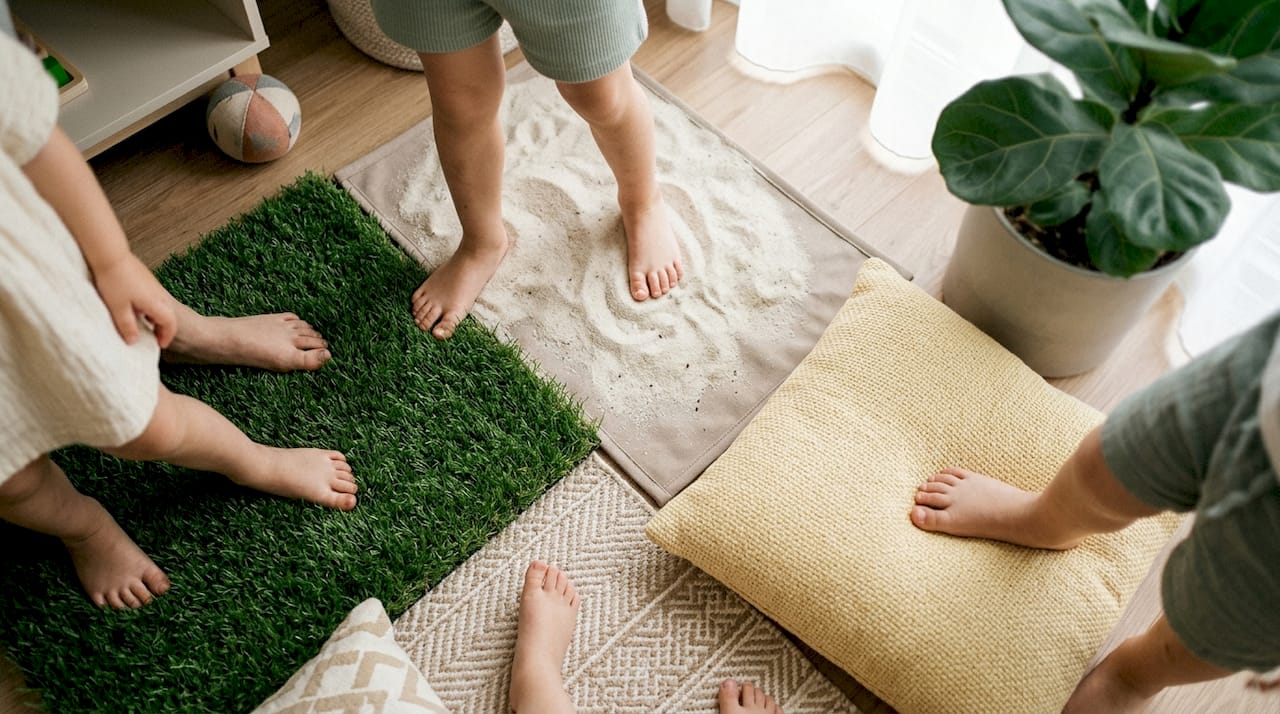
Walking barefoot on different surfaces, such as grass, sand, or mats, encourages the intrinsic muscles of the foot to work more actively than on flat ground. Standing on tiptoe, trying to pick up small objects with the toes, or walking along a rope laid on the ground are simple games that strengthen precisely the muscles that control the arch.
Physiotherapy exercises targeting the tibialis posterior and the intrinsic muscles of the foot can reduce the negative effects of overpronation without the need for rigid orthopedic support. This does not mean that exercises replace a professional examination in cases of pronounced pronation, but it does mean that they are often the first and most natural choice before even considering insoles.
Hopping, balance games on one leg, and climbing over uneven surfaces further strengthen the ankle and foot as a whole. Children generally do not perceive these activities as exercise, but as play, which is the greatest advantage when establishing a regular habit.
Differences between shoes for overpronation and supination
The term pronation in everyday speech mostly refers to the inward collapse of the foot, that is, what experts mean when they talk about overpronation. Less commonly, children display the opposite pattern, supination, in which the foot does not turn inward enough while walking and remains more rigid.
Slippers designed to cushion excessive inward pronation usually have somewhat firmer support along the inner edge of the heel, which helps prevent the foot from rolling too far inward. Nevertheless, the sole must remain flexible enough not to restrict natural movement, since excessive rigidity in a child’s foot does more harm than good.
With supination, cushioning across the full width of the sole is often more beneficial, since the foot is less able to absorb impact on its own when stepping. It is crucial for parents not to buy slippers based on the general description “for pronation,” but on their child’s actual walking pattern, as observed at home or assessed by a professional.
In children, the difference between the two patterns is often less pronounced than in adults, since the foot is still developing. Therefore, when choosing slippers, it makes more sense to aim for overall flexibility and good heel support than for a highly specialized model designed for just one walking pattern.
How to Choose Slippers Based on Your Child’s Age and Activity Level
A new walker between one and three years old needs a completely different slipper than a six-year-old running around the playground. During the initial stage of walking, maximum freedom of movement is most important, so a thin, flexible sole and minimal slipper weight are advantages, not drawbacks.
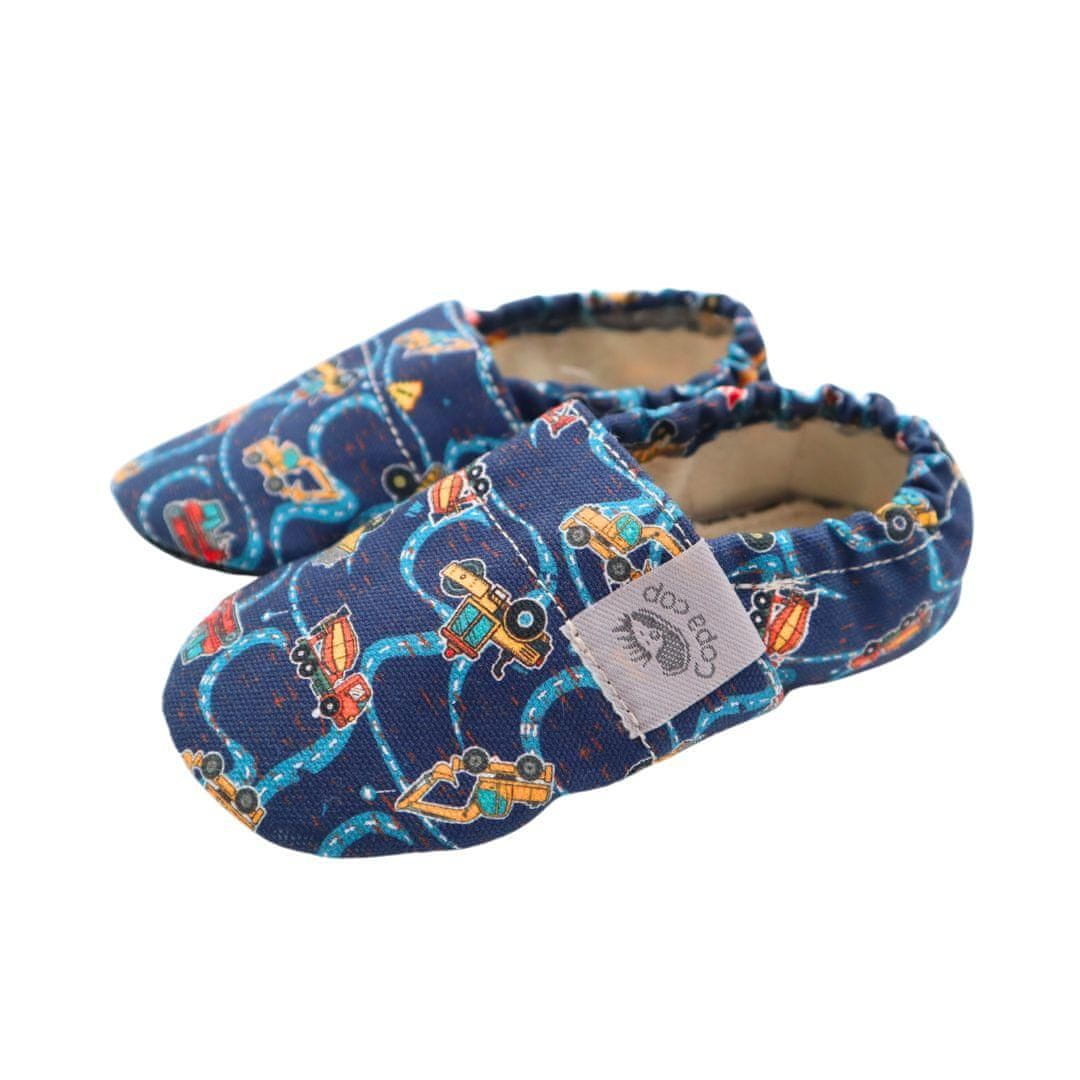
Between the ages of three and six, when a child moves, runs, and jumps with greater confidence, stability during rapid changes of direction becomes more important. The sole may be somewhat thicker, but it must remain flexible under the toes. Heel support becomes more important because the ankle bears greater loads when running.
School-age children who spend all day on their feet need slippers that can withstand eight hours of wear without losing comfort. Here, the breathability of the material is just as important as flexibility, since the foot heats up and sweats inside a closed slipper during the day.
More active children who train in sports need additional stability and sometimes a firmer toe box, while children with a quieter schedule can stick with lighter, more relaxed models. A child’s activity level is therefore often a better guide for choosing footwear than the age listed on the box.
What Every Parent Should Know About Pronation Before Buying New Slippers
The biggest mistake I see parents make is not acting too quickly, but the opposite: waiting for a child to “outgrow” something that requires attention, or, conversely, panicking at every flat foot on the beach. The truth lies somewhere in between. Pronation over 6 degrees combined with pain is a clear signal, while a mildly flat foot without symptoms is almost always part of normal development.
The conventional advice to “buy stiffer slippers for support” is often wrong. Research shows that rigid footwear deprives the foot of the opportunity to build the strength it needs on its own. Flexibility is not a compromise, but a prerequisite for healthy development.
If I could advise parents to do one thing, it would be to measure the foot regularly, not to buy more expensive insoles. The slipper size affects walking more directly than many an “orthopedic” label on a box. So the next step is simple: measure, observe, and choose flexible footwear before turning to more complicated solutions.
— Črt
Where to buy slippers adapted to your child's foot
Once you know what to look for, choosing becomes much easier. Copa-cop offers models that meet exactly these criteria: a flexible sole, breathable materials, and appropriate heel support, without unnecessary additions that would restrict the foot's natural movement.
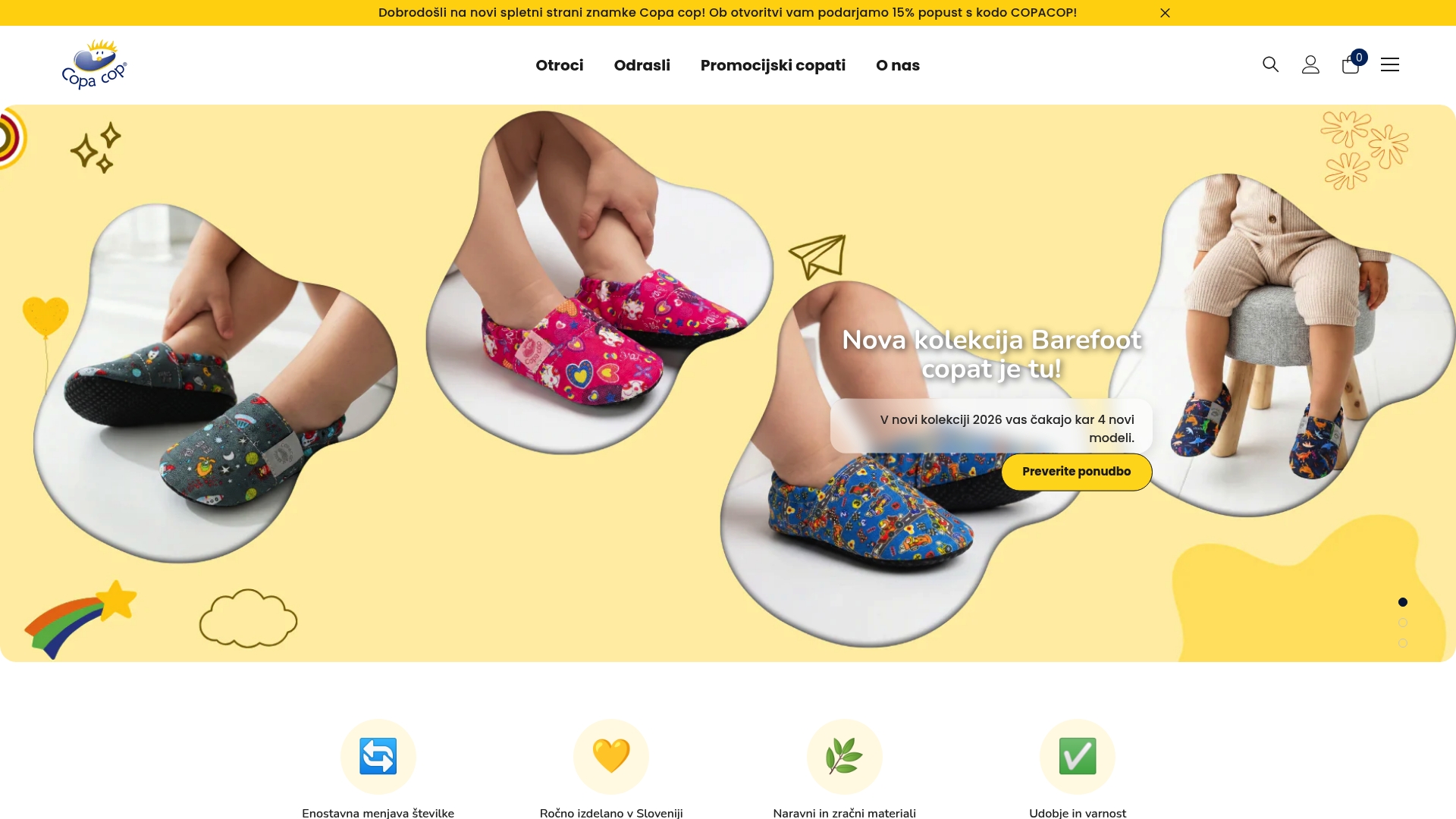
For first independent steps, Barefoot Hearts children's textile slippers and Barefoot Panda children's textile slippers are suitable, both made from breathable material with a highly flexible sole. Children drawn to patterns will also love the Barefoot Trucks model. For schoolchildren who need more durable footwear for all-day wear, Boy’s Uni boys' leather slippers in the Football version and Urban boys' textile slippers are available.
Before purchasing, take five minutes to measure your child's foot at home using the procedure described above. If the size turns out to be unsuitable, you can easily exchange it, and shipping is free for orders over 50 euros.
Sources
- Foot pronation | OIM Orthopedic Engineering
- Pediatrics — relevant study on children's foot development
- Children's slippers for first steps and children's school slippers
- DOI: 10.3390/ijerph17134882


