

Is your foot slipping in your slipper? The cause isn’t just the size
If the heel slips in the shoe, first check the size and how securely the heel is held. Choosing a smaller size is not a solution and often harms the foot more than the slippage itself. The correct procedure is clear: measure the foot, check the toe allowance (the recommended adequate toe allowance), then examine whether the fastening and heel edge actually hold the foot in place. If pain or limping is present, consult a pediatrician or podiatrist.
In short:
- When checking the fit, it is important to measure the foot while standing still on a hard surface, ensuring there is room for a toe around the last toe.
- A firm heel counter, adjustable fastening, and breathable lining reduce heel slippage and ensure stability in the shoe.
- A smaller shoe does not solve slippage, as it actually causes tightness and foot deformity, so proper measuring and choosing the right size are important.
- When checking the fit, it is essential to observe the child's movements and check whether the heel lifts during quick turns or acceleration, which indicates a mismatch.
- At home, stability can be temporarily improved by tightening the fastening or using non-slip insoles, but lasting solutions require choosing suitable shoes and seeking a professional assessment.
Table of contents
- Why the heel slips in a shoe: size, shape, and materials
- How to measure the foot and check the heel fit
- Which shoe features best prevent heel slippage
- Quick fixes at home and when it's time for a professional assessment
- How choosing a Copa-cop model addresses heel slippage
- The author's perspective: a balanced choice for healthy development
- Where to find slippers with stable heel support
- Key studies and recommendations for further reading
- Sources
- Frequently asked questions
Why the heel slips in a shoe: size, shape, and materials
Heel slippage rarely means that the shoe is too small. More often, there is too much space around the toes or heel, allowing the heel to move up and down with every step. In such cases, parents often choose a smaller size, which is the wrong approach. The systematic review clearly recommends adequate toe room at the front of the shoe. Less space does not mean less slippage; it only means cramped toes and a changed foot shape in the long term.
Heel slippage is therefore a question of shape and construction, not just length. Three factors determine whether the heel will stay in place:
- A firm heel counter forms a cup around the heel and prevents sideways movement.
- Adjustable fastening (hook-and-loop or laces) allows the shoe to adapt to the width and shape of the foot, not just its length.
- Grippy inner materials and a breathable lining reduce slipping caused by sweating or moisture.
The review of children's footwear confirms that these three features - flexibility, ergonomic shape, and breathability - are essential for a stable fit. Without them, even the correct size will not help.
How to measure the foot and check the heel fit
Measuring at home takes less than five minutes, but most parents do it incorrectly because they measure the foot while standing on paper without applying the body's weight properly.
- Place the child on firm paper against a wall, with weight distributed evenly on both feet, and trace the length from the heel to the tip of the longest toe.
- Add the appropriate toe allowance and compare that length with the shoe's inner length, not the size marked on the box, because sizes vary between brands.
- Put on the shoe and tighten the fastening as the child would wear it all day, not just for trying it on.
- Check the space at the ankle. There should be enough room for approximately one finger between the heel and the back of the shoe; if there is more space, the heel slips.
- Observe walking and acceleration. Have the child run a few steps and stop. If the shoe sounds as though it is striking the ground or the heel visibly lifts, the fit is not appropriate.
Expert advice: Observe the child when turning or changing direction quickly, not only when walking straight. A heel that slips only during sharp turns is often an overlooked problem that parents notice only when blisters appear.
What does not work is adding thicker socks or buying a smaller shoe as a quick fix. Clinical advice warns that this usually only reduces toe space, while the slippage remains because the cause was not excess space but poor fixation.
Which shoe features best prevent heel slippage
Once you know the cause lies in the construction, you also know what to look for on the shelf or in an online store. The following features are not decorative; they are technical solutions to this exact problem.
- Shaped, firm heel counter. A simple test: squeeze the back of the shoe with your fingers. If it folds or flattens under pressure, the heel counter is not firm enough for reliable fixation.
- Adjustable closure at the midfoot or upper part of the foot. A hook-and-loop fastener or laces allow the slipper to fit snugly around the foot even with narrow or wide feet, which a single elastic strap cannot do.
- Non-slip inner texture at the heel combined with a breathable upper material that reduces sweating and, consequently, moisture-related slipping.
- Age-appropriate sole flexibility. Toddlers need a softer, more flexible sole, while schoolchildren can benefit from somewhat more structure around the heel, with the toes remaining free and unrestricted.
A study on the impact of sole flexibility on walking finds that there is not enough evidence for one universally “best” type of sole. It is better to look for a combination of verifiable properties than to chase one miracle solution.
Quick fixes at home and when it's time for a professional assessment
Some solutions can be tried tonight, while others require a new purchase or a visit to a professional.
Safe temporary measures include:
- Retighten the hook-and-loop fastener or laces, as they often loosen during the day.
- Check whether the inner lining is dry; moisture from rain or sweaty heels causes additional slipping.
- A thin non-slip strip or heel insert may help, but it should be selected or approved by a professional, not chosen at random from a store.
It's time to replace slippers when you notice a visibly worn heel edge, when slipping persists despite proper tightening, or when a new measurement shows that the foot has outgrown the prescribed allowance.
Expert advice: Check slippers every six to eight weeks for children who grow quickly. A heel edge that was firm in spring may already be too soft by summer.
If pain, limping, or suspected abnormal foot development occurs alongside slipping, consult a pediatrician, podiatrist, or physiotherapist. A review on fitting children's footwear warns that improperly fitting shoes increase the risk of deformities, so home improvisation is not always sufficient.
How choosing a Copa-cop model addresses heel slippage
Some slippers are designed according to the same principle confirmed by the reviews cited above: fit and heel fixation matter more than the bare number. Natural, breathable materials can reduce moisture inside, one of the common causes of heel slippage. The guide's author examines how these technical solutions translate into everyday use for children.
Three models address the problem of slipping in different ways:
- Formula boys' textile slippers. The textile upper is breathable, reducing heel sweating during play or exercise.
- Surf Dino boys' textile slippers. The adjustable fastening allows the slipper to fit snugly even for active children who run a lot.
- Balerina Flex leather slippers. The more structured heel section provides additional heel support when a textile model is not sufficient.
Always measure the foot before buying and check the toe at the ankle, even if you choose one of these models. Some stores offer exchanges, so treat the first pair as a trial rather than a final decision.
The author's perspective: a balanced choice for healthy development
Parents often look at the slipper's color or pattern first and only then consider the fit. I understand: children choose slippers with their hearts, not with a tape measure. However, measuring and checking that the heel is secure must come before fashion, because the wrong choice leaves marks on the foot, not just in a photograph.
No single feature is a miracle solution. A firm heel counter without proper fastening is not as helpful as it is when combined with it. That is why I recommend considering features together rather than looking for just one. And if slipping persists after all the checks, it is not a sign that you should try another slipper, but that it is time to speak with a specialist.
— Črt
Where to find slippers with stable heel support
Some online slipper stores offer products made from natural, breathable materials, which means you can try the fit without worry, as exchanges or returns are available if the heel does not fit perfectly despite accurate measurement.
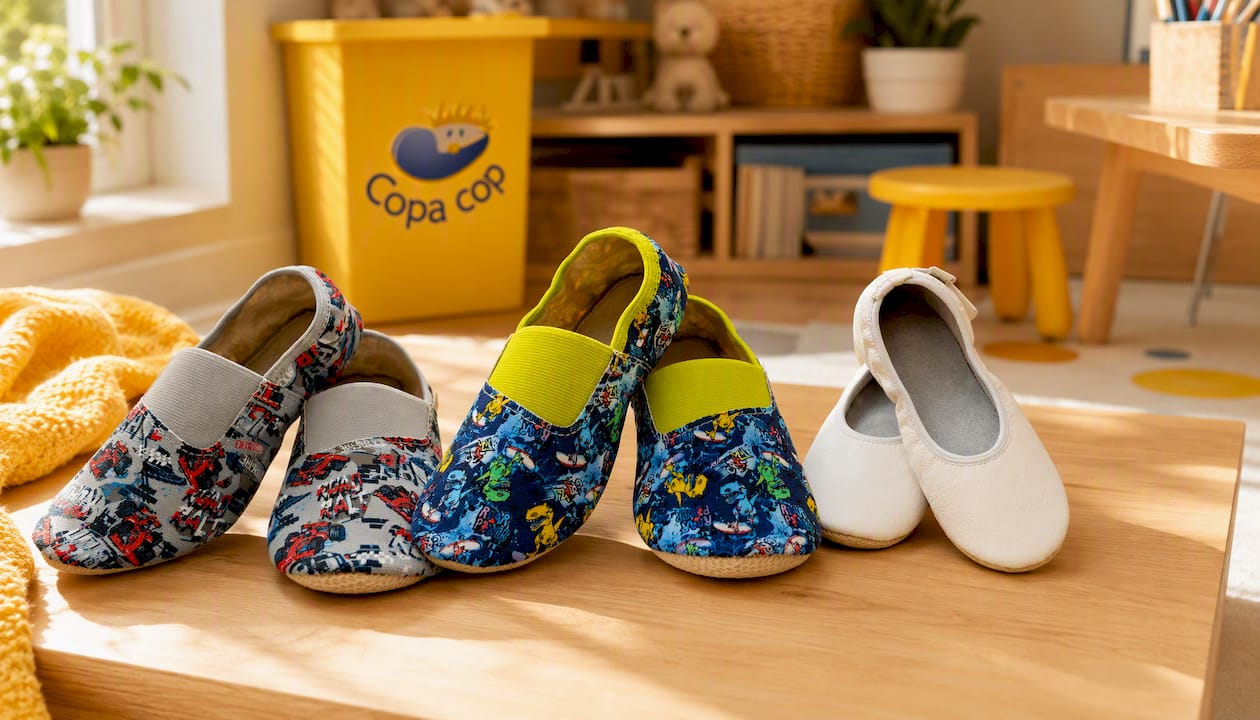
For children who need extra breathability, the Formula boys' textile slippers are a good first choice, while the Surf Dino boys' textile slippers with adjustable fastening can handle even more active days on the playground. When the foot needs more structure around the heel, the Balerina Flex leather slippers are a sensible upgrade. You can find the full range in the children's slippers category, where orders over €50 are not subject to additional shipping costs.
Before deciding on long-term wear, do the heel-attachment test at home that we described above. If the fit is not perfect, take advantage of the exchange option and look for another model or size until the heel stays in place with every step.

Key studies and recommendations for further reading
The recommendation for appropriate toe room comes from the systematic review, while features such as the heel counter are supported by the review of children's footwear. The consequences of improper fit are described in an earlier review of children's footwear, and the question of sole flexibility is addressed by a study on gait and soles. For more practical advice on choosing, also see the parent's guide to choosing slippers.
Sources
- PubMed listing — systematic review (2024)
- Respectful children's shoes: systematic review (2024)
- The impact of shoe flexibility on gait (2019)
Frequently asked questions
Why does the heel slip in the slipper even when the size is correct?
The heel often slips because of a weak heel counter or insufficiently adjustable fastening, not because of the slipper's length. A review of children's footwear highlights that the shape of the rear section and the adjustability of the fastening are often more important than the size itself.
Can a smaller slipper solve heel slipping?
No, a smaller slipper will not solve heel slipping and may squeeze the toes and affect foot shape in the long term. A review of children's footwear links improperly small footwear to a higher risk of deformities.
How much space should there be between the heel and the slipper?
There should be an appropriate amount of toe room between the heel and the toes, as recommended by the systematic review. At the heel itself, there should be only approximately enough room for one finger, and no more.
When should I see a specialist about heel slipping?
Visit a pediatrician, podiatrist, or physiotherapist if pain, limping, or suspected improper foot development occurs along with the slipping. Adjustments at home, such as tightening the fastening, make sense only when there are no symptoms.
Which Copa-cop slippers help prevent heel slipping?
The boys' textile slippers Formula and Surf Dino offer breathability and adjustable fastening, while the leather Balerina Flex slippers provide additional structure around the heel. The exact price of each model is listed on the product page on the Copa-cop website.


