

Toe box of shoes: what shape is healthiest for children’s feet?
The toe area of slippers should be wide and shaped according to the natural anatomy of the foot, with at least 10 to 12 millimeters of space in front of the toes. For a child, this means less pressure on growing bone structures and more freedom with every step. If you know this information, only one question remains: how can you check at home whether the slipper you are holding really meets these requirements?
In brief:
- When choosing children's slippers, the toe area should be at least 10 to 12 millimeters wide to prevent pressure on growing bone structures.
- Measuring the inner length of the foot and slipper should include subtracting 10 to 12 millimeters for the correct size.
- For a growing foot, the most suitable toe shape follows the natural line of the foot and allows free movement.
- When buying, it is important to check that the heel does not slip while walking and that the sole allows flexible bending with light pressure.
- Fashionable pointed models are not suitable for everyday use, as they can cause deformities and restrict the natural development of the foot.
Table of contents
- Why the shape of the toe area affects comfort and foot development
- How to measure your child's foot and the inner length of a slipper at home
- Toe-box shapes: descriptions and who they suit
- Checklist for buying children's slippers
- How Copa cop approaches toe shape
- What parents most often get wrong when choosing slippers
- Choose a model that truly fits your child
- Sources
Why the shape of the toe area affects comfort and foot development
A child's foot develops until around the age of six faster than many parents expect. The bones are still soft, cartilage predominates over hard tissue, and the muscles are only just learning how to bear the body's weight while walking and running. During this period, the toe area of a slipper is not merely an aesthetic detail, but a factor that directly affects how the foot develops.
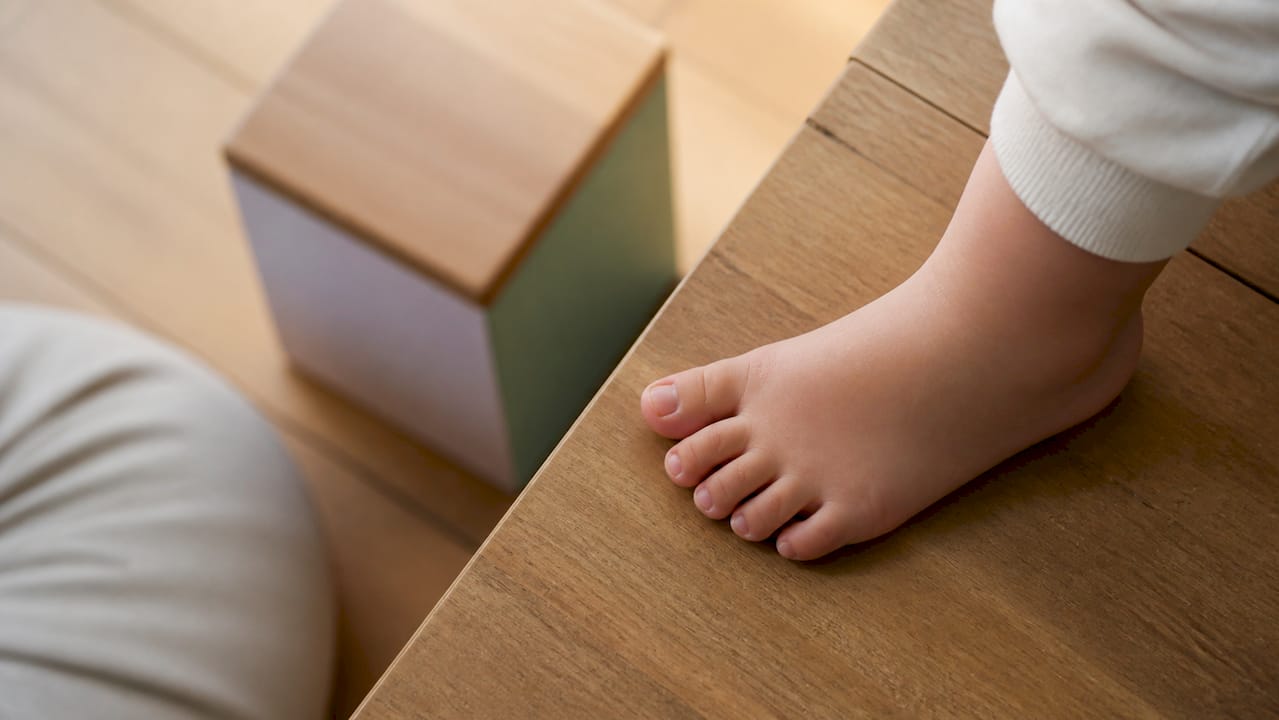
The toes must spread with every step. This happens when the foot lands on the ground and takes the body's weight. If the toe area is too narrow or pointed, the toes do not have room for this natural movement, so they press against one another. Repeated pressure of this kind over the years can contribute to deformities such as hammertoe, or to weakened foot muscles that would otherwise help with balance and push-off.
A raised toe area is another distinctive feature, also known as toe spring, where the front part of the sole is raised upward. In adult shoes, this shape makes push-off easier when walking on hard surfaces, but in indoor slippers and preschool slippers it limits the natural contact between the toes and the ground. In the long term, this can weaken the muscles that the foot would otherwise actively use with every step.
So what should you look for in the shape of the toe area:
- Enough width for all the toes, including the little toe, to fit without pressing against the edge.
- A flat or very slight sole profile instead of a pronounced lift at the toe.
- A shape that follows the natural line of the foot rather than narrowing artificially toward the middle.
- Material that gently adapts to the shape of the foot without squeezing it.
How to measure your child's foot and the inner length of a slipper at home
Measuring is not complicated; you only need a sheet of paper, a pencil, and a ruler. The process takes less than five minutes, and the result tells you whether the model you have chosen is even suitable.
- Have the child stand on a sheet of paper placed against a wall, with the heel firmly against the wall's edge and the weight evenly distributed on both feet.
- Mark the foot's longest point, which in children is often not the big toe but the second toe. Hold the pencil vertically to avoid an inaccurate reading.
- Measure the distance from the wall to the mark in millimetres and repeat the process for both feet, as their lengths often differ.
- Measure the slipper's internal length by inserting a sheet of paper into it, pushing it to the heel, and marking the point where the slipper's toe ends.
- Subtract the foot length from the slipper's internal length. The difference should be 10 to 12 millimetres. Less than this means that the slipper is too small, even if it appears suitable at first glance.
After measuring, put the slippers on and check two more things in practice: whether the toes can move freely up and down while walking, and whether the heel slides upward out of the slipper while walking. A slipping heel often means that you have chosen a model that is too large, which is just as uncomfortable as a toe box that is too small.
Expert advice: Repeat the measurement every six to eight weeks during periods of rapid growth, as a toddler's foot may lengthen by a few millimetres during this time without parents noticing by eye.
Toe-box shapes: descriptions and who they suit
You will find three predominant toe-box shapes on the market, and each performs differently depending on the shape of the child's foot and the intended use.
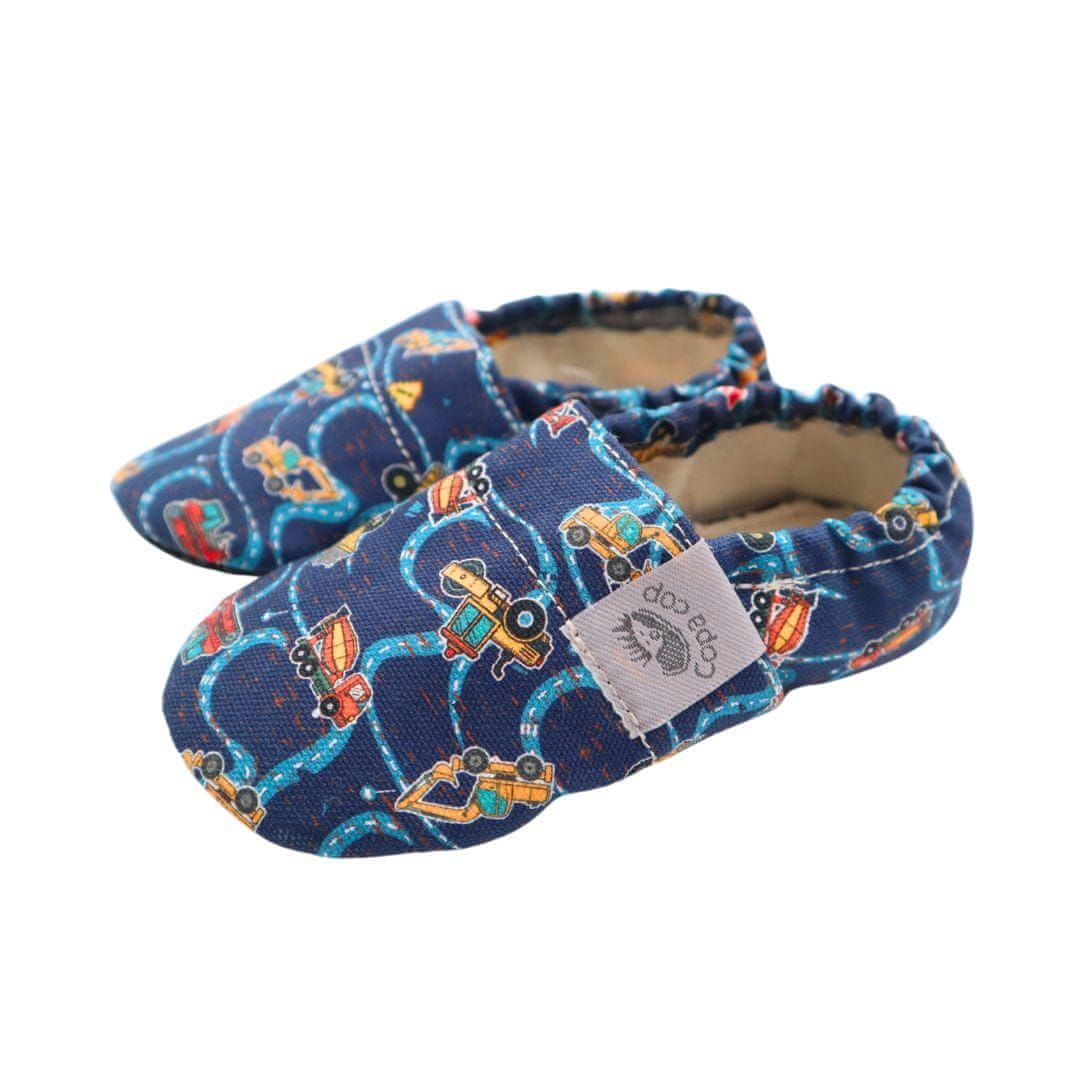
A round or symmetrical shape is the most common choice for everyday slippers. It follows the natural line of the toes and provides enough room for movement, provided that the slipper's internal length is measured correctly. This is the shape found in most high-quality school and home models, including school slippers with a round toe box, intended for indoor use.
A pointed shape, where the slipper narrows toward the toe, is often associated with fashion trends rather than the needs of children's feet. This design is acceptable in adult dress shoes, but in children it can squeeze the toes, especially the second and third toes, which are longer than the big toe in many children. It is advisable to avoid it for everyday use, sports, or kindergarten.
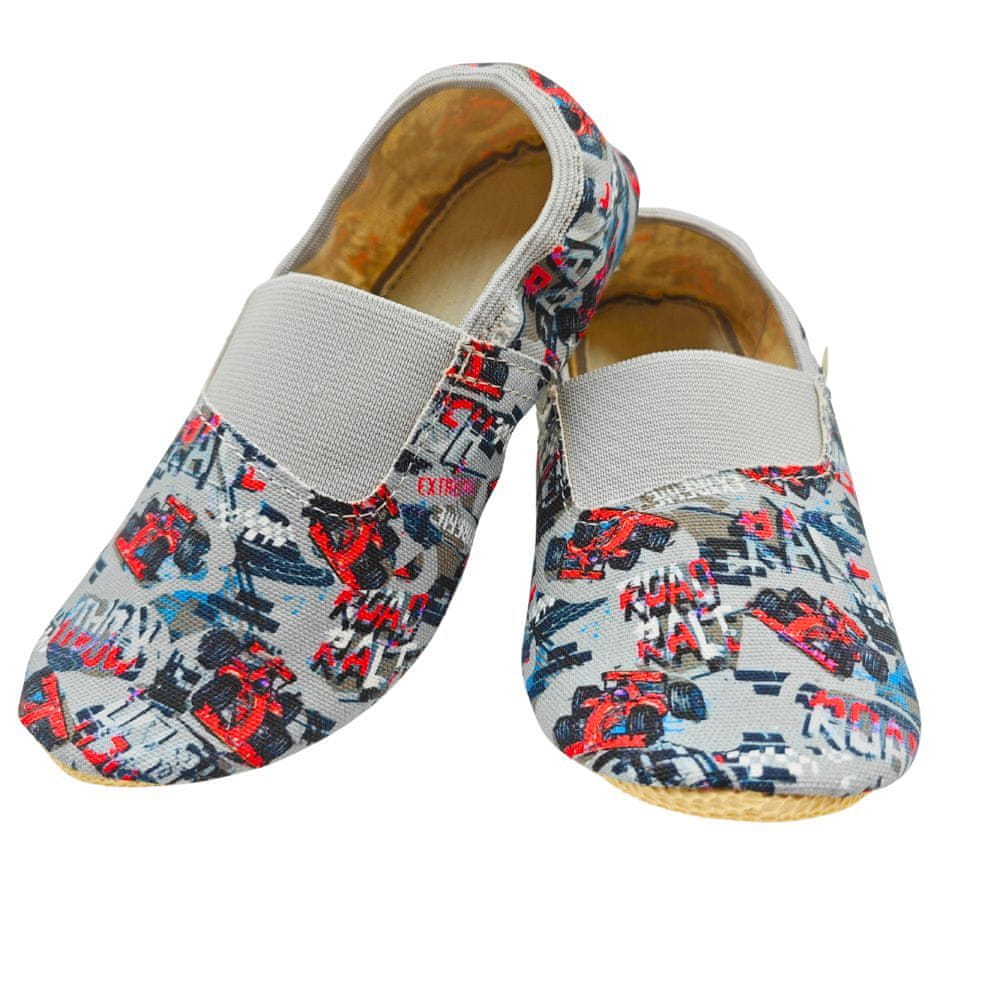
A wide, properly shaped toe box, also known as a barefoot fit, follows the foot’s exact outline without narrowing. This shape is considered the most recommended for growing feet because it allows the toes full freedom of movement with every step. We explained the concept in more detail in our article about barefoot slippers.
When a model you otherwise like does not suit your child's foot shape, look for a wider version from the same line or a material such as soft textile or pliable leather that adapts slightly to the shape of the foot. Instep volume, meaning the height and width of the upper part of the slipper above the foot, is just as important as the toe shape itself, because too much pressure from above can undermine even a well-designed toe box.
Checklist for buying children's slippers
Before paying, take a minute to check the following points, preferably right in the store, with the slipper on the child's foot.
- Toe room: there should be 10 to 12 millimeters of space between the longest toe and the inner edge of the slipper.
- Heel grip: the heel should not lift or slip while walking, as this strains the ankle and alters the way of walking.
- Sole flexibility: the sole should bend in the direction of walking with light hand pressure, not only at the toe but along its entire length.
- Fastening system: a hook-and-loop strap or elastic allows more precise adjustment to the width of the foot than a fixed buckle.
- Materials: breathable textile or soft leather reduces sweating and skin irritation, which is especially important for daycare slippers, as children wear them all day.
- Avoid a pronounced raised toe section in models for home or daycare, as it restricts natural toe contact with the ground.
Expert advice: When shopping online, always check the exchange policy before adding a product to your cart. Even with accurate measurements taken at home, it occasionally happens that a model does not fit perfectly upon arrival, and the option of a free exchange saves you unnecessary stress.
How Copa cop approaches toe shape
At Copa cop, we design our models according to the same principles described in this guide. This is no coincidence, as they were developed by observing real children's feet, not just size charts. We regularly publish practical guides on our blog, including how to choose slippers for children and how slippers affect healthy foot development, both written by Črt.
What this means in practice:
- The models have a round, symmetrical toe shape that follows the natural line of the foot rather than an artificially shaped toe.
- The soles are soft and flexible, without a pronounced raised section that would restrict toe movement when walking around the home or in the playroom.
- Textile and leather materials are chosen for their breathability, which reduces sweating during all-day use in daycare or school.
Because you know that even the most careful measurement at home does not guarantee a perfect fit, Copa cop allows exchanges or returns, making it easier for parents to decide on an online purchase without the risk of wasting money on a slipper that does not fit.
What parents most often get wrong when choosing slippers
Of the questions we receive from parents, the same three mistakes come up most often. The first is buying by age instead of by the measured foot length, even though children of the same age can differ in foot size by as much as two sizes. The second is relying on the child to say if the slipper is too tight, which rarely happens with preschool children because they do not yet have the vocabulary to describe the sensation or simply get used to the discomfort.
The third mistake is choosing a fashionable, pointed model for everyday use because it is "pretty" or because the child picked it out on the shelf. Occasional wear is not a problem, but it is not the right compromise for kindergarten or sports.
In the store, I recommend a simple test: have your child walk or jump a few steps in the slippers instead of just standing still. The way they walk tells you more than looking at the slipper on the shelf. And when you're unsure between two sizes, choose the one with more room, since you'll probably have to replace the slippers sooner than you think anyway.
— Črt
Choose a model that truly fits your child
Now that you know what to look for in the shape of the toe box, all that remains is to choose the right model. The Copa cop range includes several lines that follow these principles, from lightweight textile slippers to durable leather models for school.
For toddlers who need maximum freedom of movement for their toes, the Barefoot Hearts children's textile slippers and Barefoot Panda children's textile slippers are designed with a wide, rounded toe box and soft, breathable textile. If your child prefers vehicle patterns, the Barefoot Trucks textile slippers are designed according to the same criteria. For schoolchildren who need a sturdier material and a secure heel fit, we recommend the Boy’s Uni Football, Boy’s Uni Gaming, or Boy’s Uni Handball leather models. For home, Copa Cop textile house slippers and leather house slippers offer the same width in the toe box for carefree play around the apartment.
Before ordering, measure your child's foot using the steps in this guide and compare the selected model with the measured length. If the size turns out not to be right, you can make a simple exchange without any additional complications.
Sources
The following sources support the recommendations in this guide and offer additional reading for parents who want to deepen their understanding of choosing children's slippers.
- How much space do we need in shoes? - Barefoot Universe
- How to choose the right sports shoes? - Aktivni.si
- COPA COP school leather slippers Beauty - Pink


