

The best children’s slippers for healthy foot development
The best slippers for children have flexible soles, enough room for the toes, and are made from natural, breathable materials. This is not just a matter of comfort but the foundation of healthy foot development. Before we look at the details, here is a quick checklist for every purchase:
- Flexible sole: the slipper should bend easily at the toe area while remaining stable at the back.
- Room for the toes: there should be room to grow between the longest toe and the tip of the slipper (about one finger’s width).
- Non-slip sole: especially suitable for parquet, tiles, and school hallways.
- Natural material: leather or cotton for the inside, so the foot can breathe.
- Secure fastening: hook-and-loop fastening or elastic for quick, independent putting on.
Copa-cop is a Slovenian company that makes children’s slippers with these features and offers exchanges, which is a real convenience when shopping online.
Table of contents
- Why the Right Footwear Determines the Healthy Development of Children’s Feet
- What to look for in children’s slippers — a detailed checklist
- Which slippers are suitable for each age?
- How to measure a child’s foot correctly and when to replace slippers
- Which material is right for children's slippers, and how should you care for them?
- How much should quality children's slippers cost, and how long do they last?
- Why Copa-cop is considered a reliable Slovenian choice
- Key findings
- Quality footwear is an investment that pays off
- Copa-cop: Quality Children's Slippers with Exchange Option
Why the Right Footwear Determines the Healthy Development of Children’s Feet
Children’s feet are not smaller versions of adults’ feet. Their bones are soft, their muscles are still getting stronger, and their balance develops step by step. A slipper that squeezes the toes or slips too much causes more than discomfort; in the long term, it can affect walking, posture, and the development of the foot arch.
Pediatricians and orthopedists recommend footwear that mimics walking barefoot: a thin, flexible sole, enough room for the toes to spread naturally, and minimal support that does not replace muscular effort. Footwear that is too rigid or too soft can both hinder natural movement.
A child’s foot needs room to develop. A slipper that is too tight or too rigid does not protect—it restricts. The right slipper adapts to the foot, not the other way around.
Replacing slippers is also part of caring for healthy feet. Children who are growing quickly need their size checked every three to four months, not just at the start of the school year.
What to look for in children’s slippers — a detailed checklist
A slipper’s quality lies in details that are not visible at first glance. Here are the features that really matter:
- Sole: non-slip on smooth surfaces, rigid enough for stability yet flexible at the toe area. Slippers that are too large increase the risk of falls just as much as slippers that are too tight.
- Insole: light cushioning is welcome, but overly soft foam does not provide proper support.
- Toe room: there should be at least one finger’s width of space between the toe and the tip of the slipper to allow room for growth.
- Fastening: hook-and-loop fastenings are ideal for preschool children who put their slippers on themselves; elastic is a good alternative for the youngest children.
- Material: natural leather or cotton for indoor use; synthetic materials are less recommended for extended daily wear.
- Environment: slippers for home can be softer, while school slippers need a more durable sole and easy cleaning.
Expert advice: Check the sole’s flexibility at home as follows: hold the slipper by the heel and toe and try to bend it. It should bend easily at the toe area, while the heel should remain stable. If it bends along its entire length or does not bend at all, it is not suitable.
Which slippers are suitable for each age?
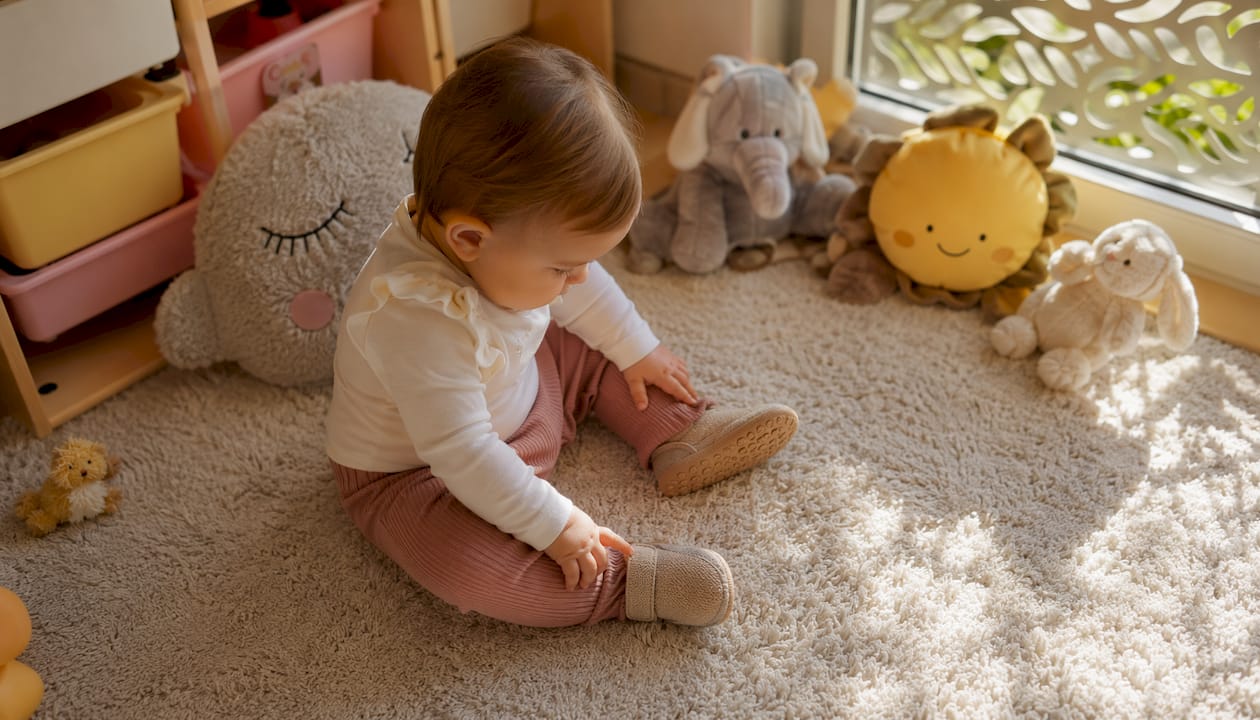
Babies (up to their first step)
For babies, slippers are primarily for warmth and protection, not support. The sole must be extremely soft and flexible, while the material should be natural and breathable. Easy putting on is essential, as babies often resist. Winter booties made from natural sheepskin are an excellent choice for the colder months.
A child taking their first steps
When a child starts walking, stability at the back of the slipper becomes important. A toe cap that protects the toes and a slightly firmer heel counter help with balance, while the front remains flexible. Barefoot slippers with toe protection combine both principles: flexibility and toe protection.
Toddlers at preschool and school
- The sole must be durable and slip-resistant on different surfaces.
- A hook-and-loop fastening allows children to put them on independently.
- The material should be washable or at least easy to clean with a damp cloth.
- Footwear that mimics walking barefoot is suitable for preschools with smooth floors; for school corridors, choose a slightly more durable sole.
How to measure a child’s foot correctly and when to replace slippers
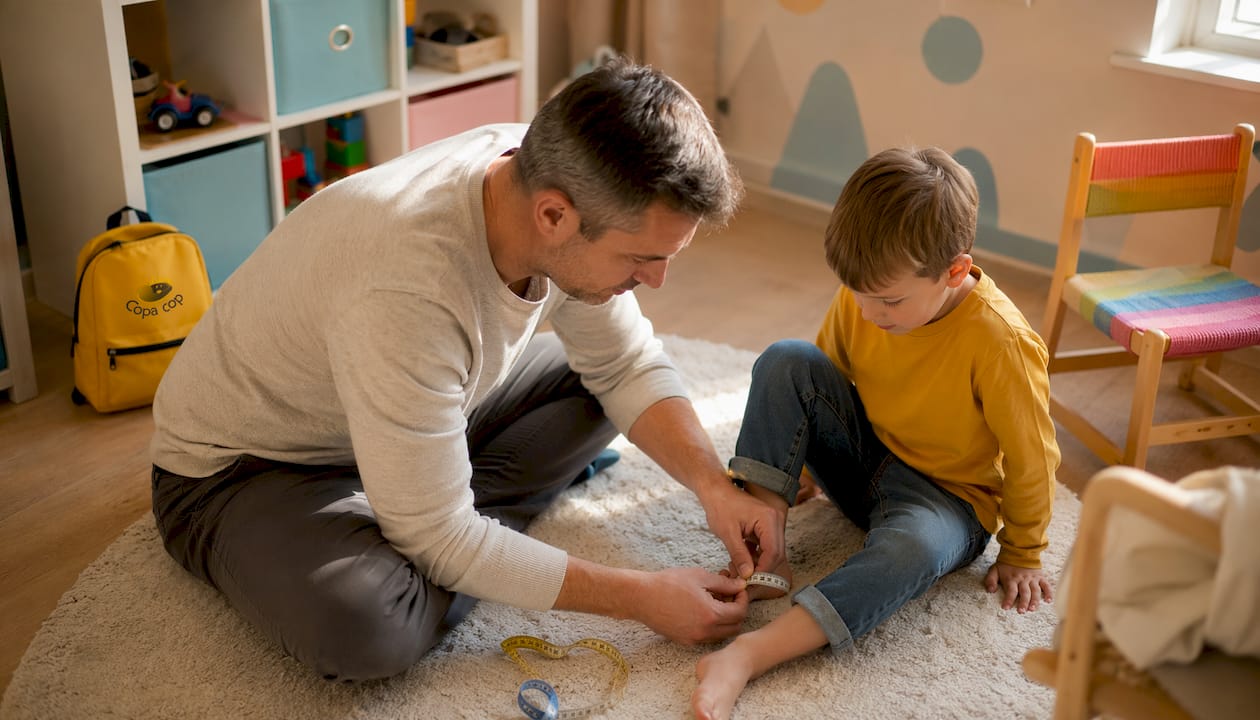
Measuring is a step many parents skip, relying on “what fit last year.” This is a mistake that feet pay dearly for.
- Place the child's foot on a sheet of paper.
- Trace around the heel and the tip of the longest toe.
- Measure the distance between the two points in millimeters.
- Measure both feet and use the larger measurement.
- Choose a slipper that is 8–12 mm longer than the measured length, depending on the child's age and growth rate.
When is it time for a new size? The signs are clear: the child complains that the slippers are too tight, their toes are pressed against the front, the slipper wears out quickly in one spot, or the child walks unusually. A seasonal check is the minimum; for children under three, checking every three months is recommended.
Expert advice: Measure at the end of the day, when feet are slightly swollen and at their largest. Morning measurements often show a smaller size, which can lead to slippers that are too tight.
Which material is right for children's slippers, and how should you care for them?
| Material | Breathability | Durability | Care | Recommended use |
|---|---|---|---|---|
| Natural leather | High | High | Moderate (damp cloth) | School, kindergarten, everyday use |
| Cotton / textile | High | Medium | Easy (machine washable) | Home, kindergarten, summer |
| Synthetic materials | Low | Medium | Easy | Occasional use, lower price range |
Leather is the material most often recommended by parents and experts for school slippers: it is breathable, durable, and easy to clean with a damp cloth. Cotton textile slippers are an excellent choice for home and kindergarten because they can be washed in a washing machine. Synthetic materials are cheaper but less suitable for extended daily use because feet breathe less well in them.
A few care rules that extend the lifespan of slippers:
- Clean leather slippers with a damp cloth and occasionally treat them with a natural leather cream.
- Wash textile slippers according to the instructions on the label, usually at 30 or 40 degrees.
- Always air-dry them, never use a dryer or place them in direct sunlight, as heat deforms the sole.
Learn more about breathable materials for children's slippers in Copa-cop's guide for parents.
How much should quality children's slippers cost, and how long do they last?
The price of children's slippers in Slovenia falls into three tiers. Cheaper models are suitable for short-term use or as a spare pair, but they often do not last an entire season of intensive kindergarten use. The mid-range offers a good compromise between quality and price and is the most suitable choice for most parents. The higher price range, which includes natural materials and ergonomic construction, is worthwhile for children who wear slippers for several hours every day.
- Cheaper models: suitable as a spare pair or for occasional use; expect a shorter lifespan.
- Mid-range: good materials and a durable sole, suitable for preschool and school; they last one season of intensive use.
- Premium range: natural materials, an ergonomic shape, and greater durability; a worthwhile investment for first steps and frequent wear.
Because children’s feet grow quickly, it makes sense to invest in quality where slippers are worn most often, while saving on less expensive models for occasional use.
Why Copa-cop is considered a reliable Slovenian choice
Copa-cop is a Slovenian company that exclusively makes slippers for children, schoolchildren, and adults. Its models are made from natural, breathable materials with an ergonomic, flexible sole, in line with recommendations for healthy foot development.
What sets Copa-cop apart from generic online retailers:
- Exchange and return option: the wrong size is a common problem when shopping online. Copa-cop offers a clear exchange policy that allows parents to try them without risk.
- Free shipping over EUR 50: a practical benefit when ordering for the whole family.
- Blog with advice for parents: guides on choosing, measuring, and caring for slippers that build trust and help with the decision.
- Local availability: a Slovenian company that understands the needs of local parents and schools.
Copa-cop was founded on a simple belief: children’s feet deserve slippers that follow their movements rather than restrict them. Each pair is designed with comfort, safety, and the joy of movement in mind.
Local manufacturers offering exchanges reduce the risk of online purchases, which is one of the most important trust factors for parents who cannot try on the slippers in person.
Key findings
The best children’s slippers combine a flexible sole, natural materials, and the correct size, which should be checked regularly.
| Point | Details |
|---|---|
| A flexible sole is essential | The sole must be flexible in the toe area and stable at the back for natural walking. |
| Measure at the end of the day | Children’s feet are larger in the evening; measure both and use the larger measurement, adding 8–12 mm for growth. |
| Natural materials for indoor use | Leather and cotton ensure breathability and are recommended for everyday use. |
| Replace them often | For children up to three years old, check the size every three months; for older children, check every season. |
| Copa-cop offers exchanges | The Slovenian brand Copa-cop allows risk-free size exchanges for online purchases. |
Quality footwear is an investment that pays off
Parents often ask whether it is really worth paying more for children's slippers that their child will outgrow in three months. My opinion is clear: when it comes to slippers a child wears every day, quality is not a luxury. Feet develop during precisely these months, and every pair that squeezes the toes or slides across the parquet floor leaves a mark. This is not about perfectionism, but about sensible prioritization. Choose one quality pair for everyday use and, if needed, a cheaper pair for occasional use. The guide you have just read gives you all the tools you need to make that decision.
Copa-cop: Quality Children's Slippers with Exchange Option
Parents looking for reliable slippers for everyday use will find models at Copa-cop designed specifically for everyday life in Slovenia: preschool, school, and home. Each pair is made from natural materials with a flexible sole and comes in cheerful colors and patterns that children love to wear.
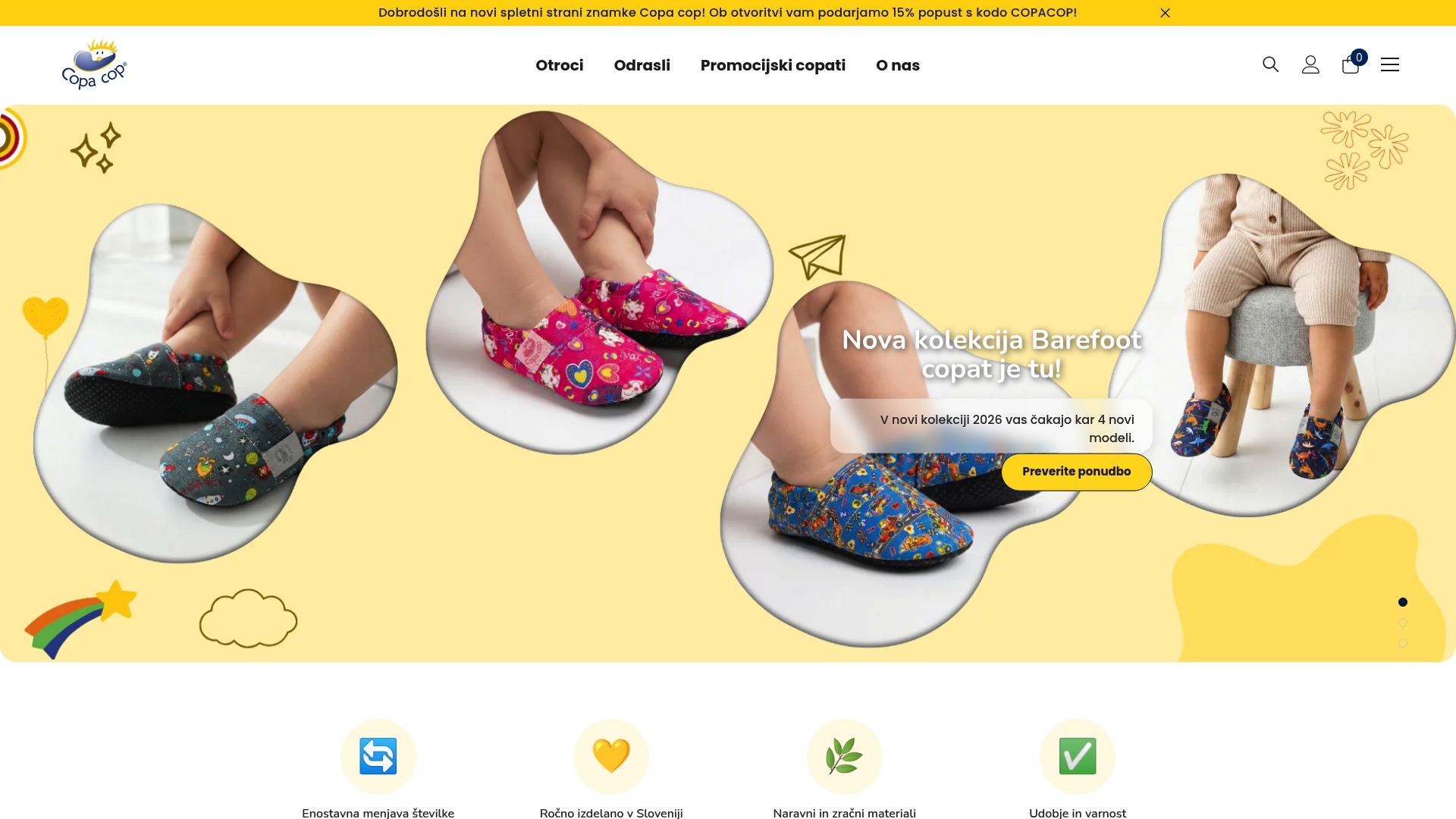
The selection includes models for every age and need. Barefoot slippers with protection are ideal for first steps and preschool, combining flexibility with toe protection. Leather boys slippers are made for school use and can withstand a whole season of intensive wear. For the youngest children, there are winter booties made from sheepskin, soft and warm for the first cold months. Children who like choosing their own things will love the barefoot models with lively designs, which can be paired with children's clothing in bright colors.
Order from copa-cop.com; free shipping applies to orders over EUR 50, and size exchanges are easy and stress-free. Browse the selection and choose a pair that will keep up with your child every step of the way.


