

How to Choose Slippers for Children: A Guide for Parents
Choosing the right slippers for children is one of the most important decisions a parent makes for their child’s health. Children’s footwear is not just a fashion accessory. It is a tool that directly affects foot development, walking, and even spinal posture. Quality children’s footwear must allow the foot to feel the ground while being protected. Once you know what to look for, choosing slippers for children becomes a simple question with a clear answer.
What features must quality children’s slippers have?
Quality children’s slippers must be flexible, safe, and made from breathable materials. Each of these features directly impacts the health of the child’s feet.
Sole flexibility
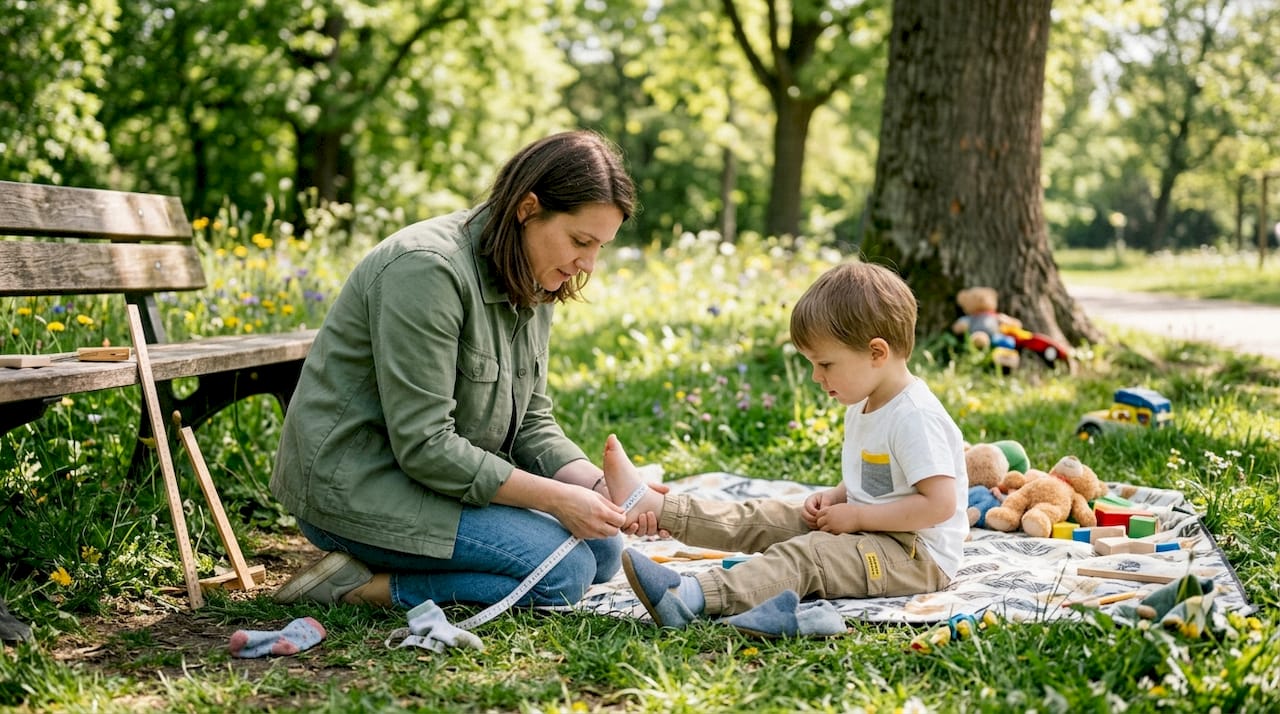
The sole is the foundation of every good slipper. A flexible sole bends with the child’s foot at every step, strengthening muscles and encouraging natural movement. A hard sole blocks this movement and forces the foot into an unnatural walking pattern. A child’s foot does not need hard support or a high shoe, as this limits muscle development and movement. A simple test: hold the slipper by the heel and toes and bend it. A good slipper bends easily; a poor one remains stiff.
Natural and breathable materials
Children’s feet sweat significantly more than adults’. Non-breathable materials create a moist environment where fungi and skin irritation develop. Natural materials like leather, cotton, and textiles wick moisture away and keep the foot dry. Synthetic materials are often cheaper but harmful to skin and nail health in the long run.
Safety factors
A non-slip sole is essential, not optional, for children's slippers. Kids run, jump, and spin on all kinds of surfaces, from parquet to tiles. A smooth sole on a smooth surface is a recipe for a fall. The slipper should also protect toes from impacts without squeezing the foot. A wide, tapered toe shape is a sign of a good slipper, while a narrow, tapered shape indicates a poor one.
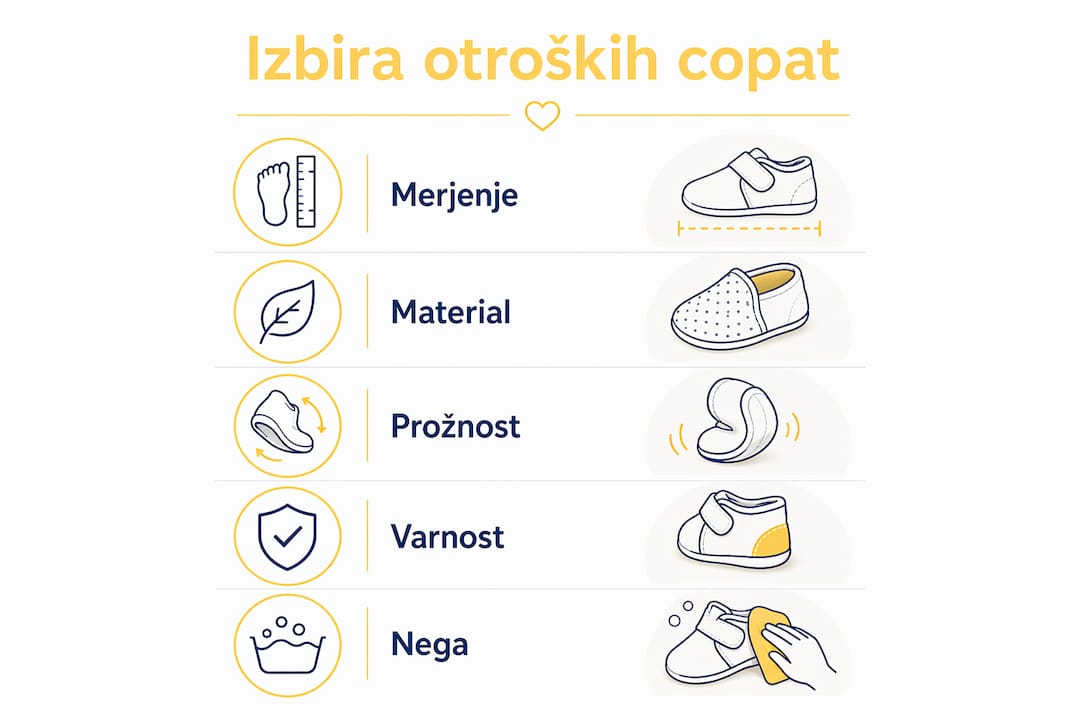
Expert advice: Before buying slippers, turn them over and check the sole. A good sole has visible grip patterns and is made of rubber or a similar material with good traction.
Key features to look for when buying:
- Flexible sole that bends at the toes
- Wide toe shape for natural toe spread
- Non-slip rubber sole
- Natural materials that breathe (leather, cotton, textile)
- Easy closure that the child can manage independently
- Lightweight, not burdening the foot
Too hard or too narrow slippers can cause flat feet and improper leg rotation, leading to back pain. This is not scare-mongering. It’s an orthopedic reality that pediatricians and physiotherapists observe every day.
How to measure a child’s foot and determine the right size?
Incorrect slipper size is the most common mistake when buying children’s footwear. Parents often overlook the importance of regularly checking and adjusting slipper size according to the child’s rapid growth. Children’s feet grow quickly, sometimes by a whole size in three months.
Step by step: measuring the foot at home
- Prepare a sheet of paper and a pencil. Place the paper on a hard surface.
- The child steps on the paper. Measurement should be done standing, not sitting. When standing, the foot spreads and lengthens slightly under body weight.
- Trace the outline of the foot. Hold the pencil upright so the outline doesn’t tilt.
- Measure the length from heel to longest toe. The longest toe is not always the big toe. For some children, the second toe is longer.
- Repeat for both feet. Feet often differ in length. Always choose the size based on the larger foot.
- Add 10–12 mm. There should be 10–12 mm of space between the longest toe and the end of the slipper for unrestricted movement.
This space is not “extra.” It’s necessary because the toes stretch forward when walking and running. Without this space, the toes hit the end of the slipper with every step.
Table: signs of incorrect size
| Sign | Meaning |
|---|---|
| The child walks on tiptoes | Slippers are too small or too narrow |
| Red spots on toes or heel | Slippers rub and are too small |
| Slippers fall off the feet | Slippers are too big |
| The child complains of pain | Immediate replacement is necessary |
| Space in front of the big toe less than 5 mm | Time for a new size |
Checking the space in front of the big toe should be part of the daily routine. Less than 5 mm is a clear sign to replace the slippers. Experts recommend slippers with removable insoles so parents can more easily check the size. You take out the insole, the child steps on it, and you can immediately see how much space is left.
Expert advice: Children’s feet should always be measured in the afternoon. In the morning, feet are slightly smaller, while in the afternoon they reach their largest size after a day of walking.
Which materials and types of slippers are best suited for children?
Choosing the material is not just a matter of durability. It’s a matter of health. Different materials have different properties, and each has its place depending on the child’s age and intended use.
Leather
Leather is a natural material with excellent properties. It breathes, adapts to the shape of the foot, and is durable. Genuine leather slippers withstand intensive use and shape to the foot over the years. Leather is especially suitable for school slippers and everyday wear. The downside is the price, which is higher than synthetic alternatives, and the need for regular care.
Textile and cotton
Textile slippers are light, soft, and ideal for younger children and indoor use. Cotton absorbs moisture well and is pleasant on the skin. Textile slippers are often easier to wash, which is a practical advantage for parents. The downside is less durability with intensive outdoor use.
Comparison: slippers for indoors and outdoors
| Feature | Slippers for indoors | Slippers for outdoors |
|---|---|---|
| Sole | Thin, flexible, non-slip | Thicker, wear-resistant |
| Material | Textile, plush padding | Leather, durable textile |
| Weight | Very light | Somewhat heavier |
| Protection | Basic protection from cold | Protection from impacts and moisture |
| Recommended age | All ages | From the first steps onward |
Barefoot slippers: when are they the right choice?
Barefoot footwear mimics barefoot walking. It has a thin, flexible sole without a raised heel counter and a wide shape at the toes. Barefoot footwear encourages foot muscle development, but for orthopedic issues, prior consultation with a pediatrician is recommended. For a healthy foot without special problems, barefoot slippers are an excellent choice from the first steps onward. Orthopedists today recommend soft, flexible shoe models that do not restrict ankle movement and allow muscle development.
Expert advice: For barefoot slippers, check that the sole is not thinner than 3 mm for outdoor use. A sole that is too thin does not protect the foot from sharp objects on the ground.
Copa-cop offers textile barefoot slippers with protection that combine the benefits of barefoot walking with practical protection for everyday wear. This is a combination that parents appreciate in practice.
Tips for buying and caring for children’s slippers
A good slipper purchase doesn’t end at the checkout. Proper care extends the slippers’ lifespan and preserves their properties.
What to avoid when buying
Used slippers are a common trap. They seem like an economical solution but are actually risky. Each slipper shapes itself to the previous owner's foot. When another child wears them, the slipper forces their foot into an unnatural walking pattern. This causes imbalance and long-term posture problems. Parents should not buy slippers that are too small or too large "in advance," as they cause developmental and walking issues.
Also avoid:
- Slippers with a narrow toe box
- Slippers with a thick stiff sole without flexibility
- Slippers made of synthetic materials without ventilation
- Slippers with a high heel counter for small children
- Slippers that the child cannot put on or take off by themselves
Proper slipper care
Cleaning slippers is recommended with a clean damp cloth, without machines, to preserve quality and shape. Washing machines ruin adhesives, deform soles, and shorten slipper lifespan. After cleaning leather slippers, apply natural balm or leather milk to keep them soft and flexible.
Storage also matters. Store slippers in a dry, ventilated place, not in plastic bags. Moisture in a closed bag causes mold and unpleasant odors. After wearing, let them air dry before putting them away.
How often to replace slippers?
Children's feet grow quickly, especially in the first five years. It is recommended to check size every two to three months for children up to five years old. For older children, checking every three to four months makes sense. Don’t wait for the child to say their shoes pinch. Children often don’t complain because they are used to discomfort they can’t describe.
Children should mostly walk barefoot or in socks with non-slip soles at home. Slippers are necessary for protection outside. Barefoot walking or walking in anti-slip socks at home is the best exercise for foot muscles.
Key findings
Choosing the right children's slippers requires a flexible sole, natural materials, precisely measured size, and regular growth checks, as each of these factors directly affects the healthy development of the child's foot.
| Point | Details |
|---|---|
| Sole flexibility | The slipper must be flexible at the toes, not stiff along the entire length. |
| Correct size | There should be 10–12 mm of space between the longest toe and the end of the slipper. |
| Natural materials | Leather and textile breathe and prevent moisture and skin irritation. |
| Regular replacement | Check size every 2–3 months for children up to five years old. |
| Avoiding used slippers | Used slippers force the foot into an unnatural walking pattern and cause problems. |
Why proper footwear is not just a matter of taste
Marko writes:
When I first looked for slippers for my child, I focused on appearance. Color, pattern, price. Only when I noticed the child walking somewhat oddly and complaining about tired feet did I start seriously thinking about what they were actually wearing on their feet.
I found that most of the slippers I bought were too narrow at the toes. The sole was stiff. The material synthetic. Everything looked nice but caused harm.
What really surprised me was the realization that children rarely say their shoes pinch. They get used to it. They keep walking. Only when you see red spots or notice them avoiding certain movements do you understand that the problem has existed for a long time.
Today, when choosing slippers, I first check the sole. I bend it. I look at the width at the toes. I ask the child if they feel their toes free. Only then do I look at the color.
The combination of health and comfort in slippers is not a compromise. It is a standard that every children's slipper should have. Parents who understand this do one of the most important things for their children's long-term health. Regular size checking is not a hassle. It is care that shows its value only after years when the child walks without pain.
— Marko
Copa-cop slippers: comfort your child feels with every step
Everything described in this guide is built into every pair of Copa-cop slippers. Natural and breathable materials, flexible soles, wide toe shape, and non-slip base are the foundation of every collection.
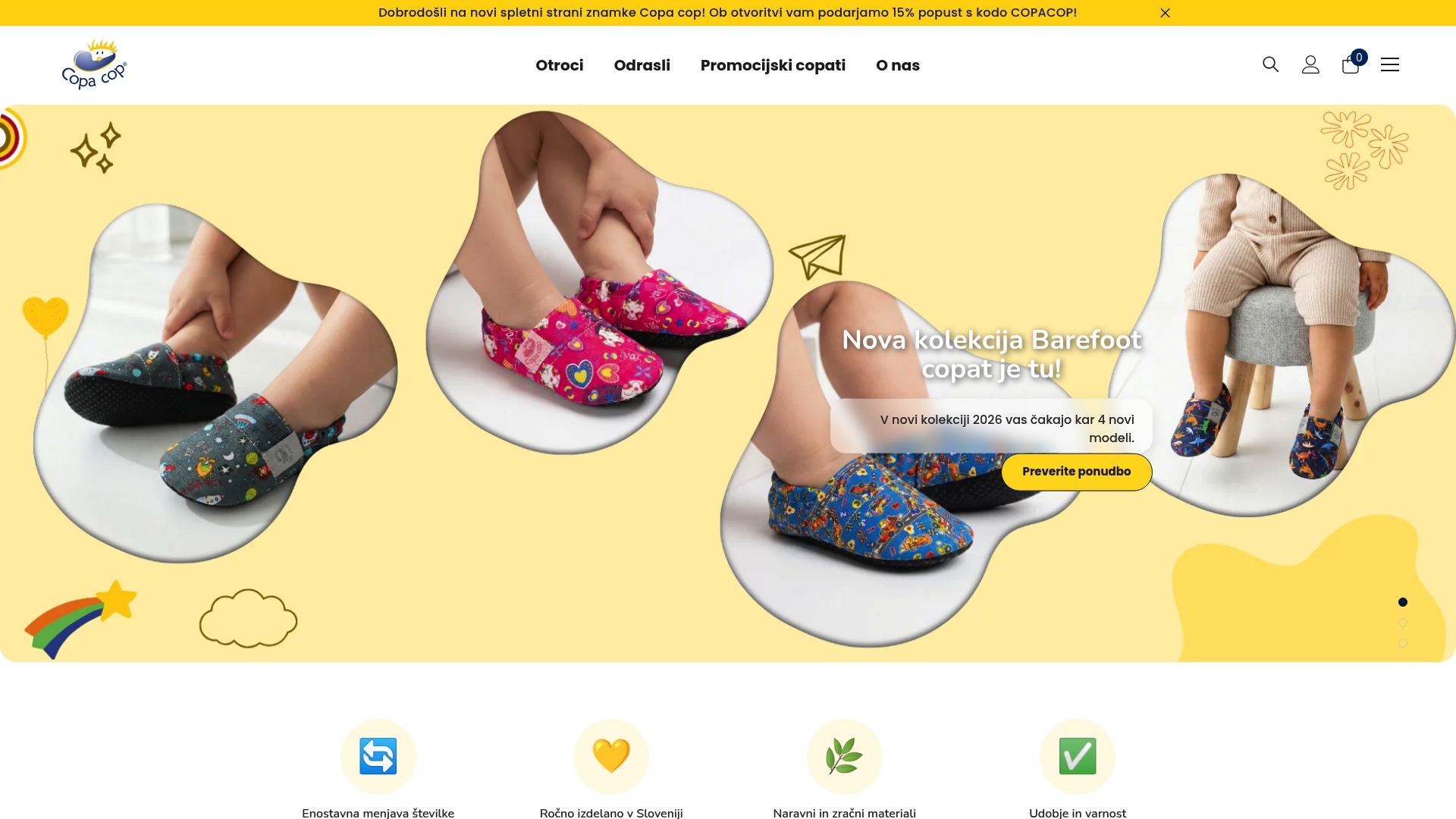
For younger children and first steps, barefoot slippers Trucks are especially popular, combining the softness of textile with a protective sole. For girls, Roza Unicorn slippers with the same design are available. Copa-cop offers free shipping over €50 and the option to exchange, making the purchase risk-free. Visit copa-cop.com and find a pair that will bring your child comfort with every step.
Frequently asked questions
When to buy a child’s first slippers?
Buy the first slippers when the child starts walking outside. At home, barefoot walking or walking in non-slip socks is better for foot muscle development.
How much space should there be in slippers at the toes?
There should be 10–12 mm of space between the longest toe and the end of the slipper. Less than 5 mm is a sign that it's time for a new size.
Are barefoot slippers suitable for all children?
Barefoot slippers are suitable for children with healthy feet. For orthopedic issues, first consult a pediatrician or orthopedic specialist.
How often should I check my child's slipper size?
For children up to five years old, check the size every 2–3 months. For older children, checking every 3–4 months is advisable.
Are used slippers okay for a child?
Used slippers are not recommended. Each slipper is shaped according to the previous owner's foot and forces the new foot into an incorrect walking pattern.


