

Copati za malčke: kakovostni in udobni za doma in vrtec
Za malčka izberite zračne, upogljive copate z nedrsečim podplatom — ta kombinacija zagotavlja udobje doma in varne prve korake v vrtcu. Tekstilni barefoot modeli, mehki usnjeni copatki in volneni copatki za prve korake so tri vrste, ki jih starši v Sloveniji najpogosteje izberejo z razlogom. Vsaka od njih ima svoje prednosti glede na starost otroka in okolje, v katerem jih bo nosil.
Copa-cop je slovenski proizvajalec, ki ponuja prav te modele z možnostjo menjave ali vračila in brezplačno poštnino nad 50 EUR. Če niste prepričani glede velikosti, to ni ovira.
- Tekstilni barefoot copati: upogljiv podplat, lahki, primerni za doma in vrtec
- Mehki usnjeni copatki: trpežni, zračni, priporočeni za vrtčevsko rabo
- Volneni ali flis copatki: topli, mehki, idealni za domačo uporabo pozimi
Kazalo
- Kateri copati za malčke so pravi za doma in za vrtec?
- Zakaj so naravni materiali pomembni za razvoj stopal?
- Kako pravilno izmeriti otrokovo stopalo?
- Na katere varnostne lastnosti biti pozoren?
- Kako prati in vzdrževati copate za malčke?
- Kje kupiti copate za malčke v Sloveniji?
- 6 korakov za pravo izbiro copat za malčka
- Od izbire do dostave: kako poteka nakup?
- Kateri modeli so na voljo pri Copa-cop?
- Ključne ugotovitve
- Zakaj lokalni proizvajalec naredi razliko
- Copa-cop: mehki copati za malčke, narejeni v Sloveniji
Kateri copati za malčke so pravi za doma in za vrtec?
Izbira je odvisna od dveh stvari: starosti malčka in tega, kje bo copate nosil. Različnih modelov je na trgu veliko, od pletenih in volnenih copatkov do usnjenih šolskih copat in natikačev, a ne ustrezajo vsi vsaki situaciji.
Doma so najboljši mehki tekstilni ali volneni modeli. Stopalo se v njih prosto giblje, podplat pa je dovolj tanek, da malček čuti podlago pod seboj — to krepi ravnotežje in mišice stopal.
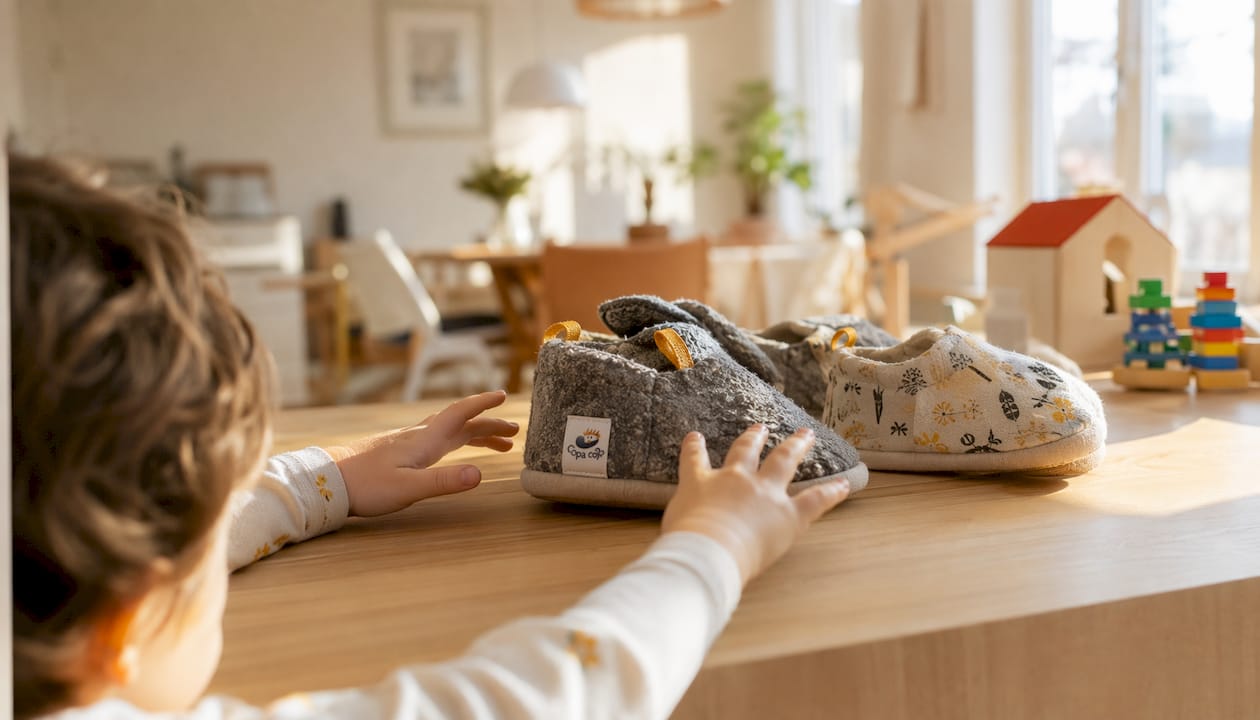
V vrtcu so bolj primerni usnjeni ali ojačeni tekstilni copati. Usnjeni modeli so priporočeni za zgodnjo hojo prav zaradi kombinacije zračnosti in trpežnosti. Vrtčevski copati morajo zdržati cel dan aktivne igre, zato je ojačitev pri prstih dobrodošla.
Za prve korake je ključen upogljiv podplat, ki se prilagaja naravnemu gibanju stopala. Stabilnost pri gležnju je plus, a ne sme biti toga.
- Tekstilni (mehki): doma, lahki, pralni
- Usnjeni (anatomski): vrtec, trpežni, zračni
- Merino/volna ali flis: doma pozimi, topli, mehki
- Natikači ali odprti modeli: poletje, enostavno obuvanje
- Barefoot-style: naraven razvoj, tanek podplat, priporočeni od prvih korakov naprej
Strokovni nasvet: Pri malčkih do treh let izberite mehkost in upogljivost pred trpežnostjo. Ko otrok začne hoditi v vrtec, dodajte ojačitev pri prstih — stopala so takrat že nekoliko bolj razvita in potrebujejo zaščito, ne le mehkobo.
Zakaj so naravni materiali pomembni za razvoj stopal?
Stopala malčka se razvijajo hitro in potrebujejo okolje, ki jim to omogoča. Copatki iz mehkega bombaža, volne ali flisa imajo notranjost brez šivov, ki ne draži občutljive kože, in elastične zaključke za lažje obuvanje.
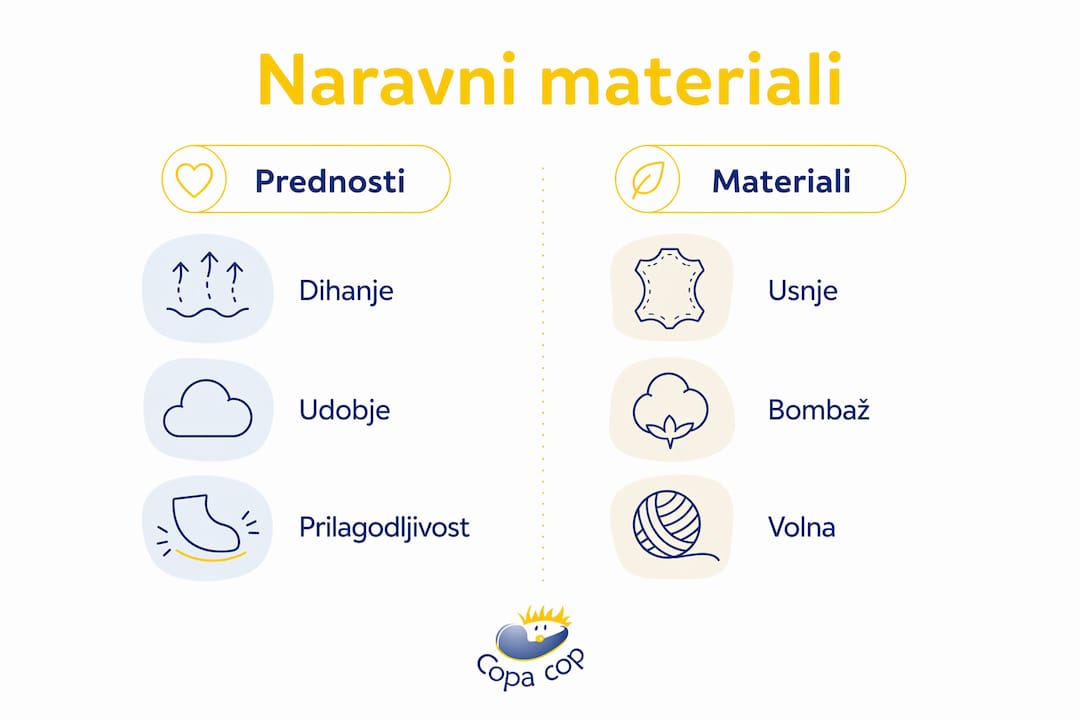
Usnje diha, vpija vlago in se oblikuje po stopalu — zato je tako priljubljen material za vrtčevske copate. Bombaž in merino volna sta prijetna ob koži in preprečujeta pregrevanje. Sintetični materiali tega ne zmorejo enako dobro: noga se v njih hitreje znoji, kar poveča tveganje za drgnjenje in nelagodje.
Barefoot princip temelji na tem, da stopalo čuti podlago in se odziva nanjo. Debel, tog podplat to prepreči. Za malčke, ki šele odkrivajo hojo, je to posebej pomembno. Močnejši zaščitni podplat pride v poštev šele, ko otrok hodi zunaj po neravnih površinah.
Strokovni nasvet: Iščite copate, ki jih je mogoče prati v pralnem stroju — to je pri vrtčevski rabi praktično nujno. Usnjene modele čistite z vlažno krpo in nežnim čistilom, ne z vodo v pralnem stroju.
Kako pravilno izmeriti otrokovo stopalo?
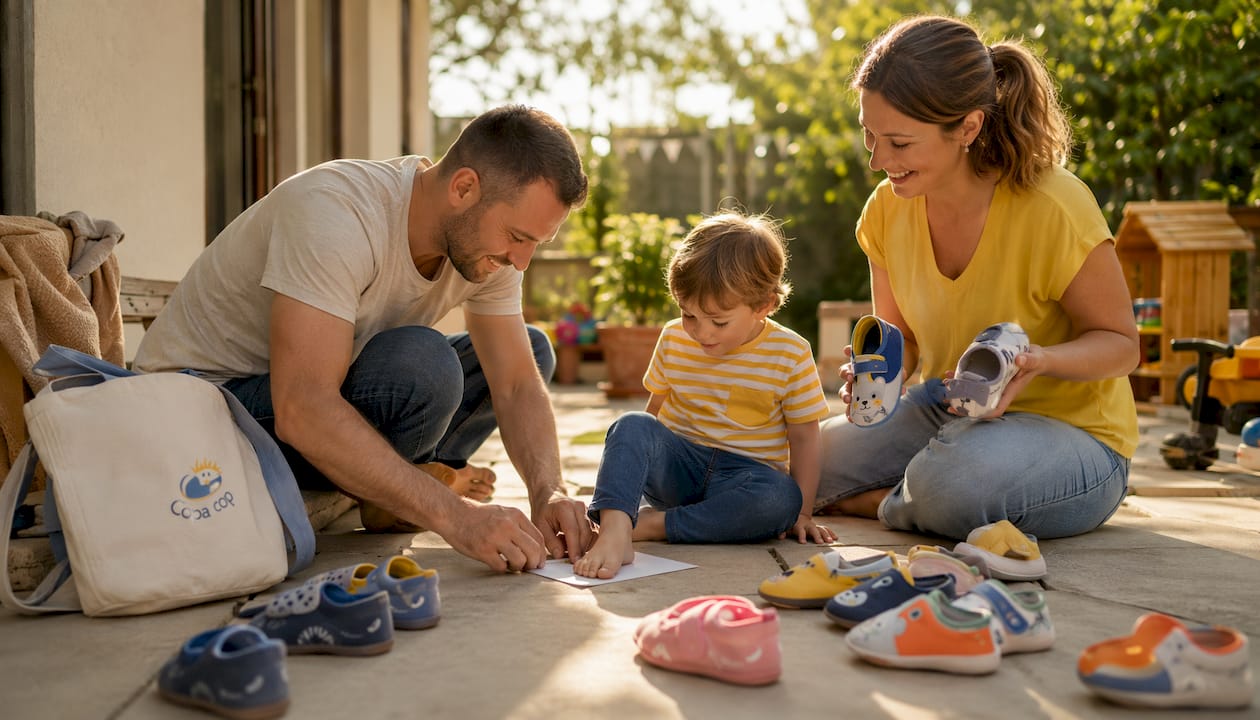
Merjenje stopala doma je preprosto in traja manj kot dve minuti. Naredite to zvečer, ko je stopalo rahlo oteklo — takrat je na največji velikosti.
- Položite list papirja na trda tla.
- Otrok stopi na papir z ravno nogo (brez nogavice).
- Z svinčnikom označite najdaljši prst in peto.
- Izmerite razdaljo v milimetrih.
- Primerjajte z velikostno tabelo — Copa-cop ima jasno tabelo na spletni strani.
- Če je stopalo med dvema velikostma, izberite večjo.
Priporočeni dodatek za rast je 10–15 mm glede na izmerjeno dolžino stopala. Copati, ki so preveč tesni, ovirajo razvoj; preveč ohlapni pa povzročajo drse in padce.
| Dolžina stopala (mm) | Priporočena velikost EU | Priporočeni dodatek |
|---|---|---|
| — | — | 10–15 mm |
| — | — | 10–15 mm |
| — | — | 10–15 mm |
| — | — | 10–15 mm |
| — | — | 10–15 mm |
Preverite Copa-cop vodnik za izbiro velikosti in izkoristite možnost menjave, če se pri prvem naročilu zmotite.
Na katere varnostne lastnosti biti pozoren?
Nedrseči podplati in lahka fleksibilnost sta pri copatih za malčke standard, ki ga ne smete spregledati. A to ni vse.
- Nedrseč profil podplata: nujen na parketu, ploščicah in linoleju
- Upogljiv zgornji del: stopalo se mora naravno gibati
- Zaobljen nos: ščiti prste pri teku in igri
- Varni okraski: brez majhnih delov, ki bi se lahko odlomili
- Enostavno zapiranje: ježek ali elastični rob za hitro obuvanje
Za vrtčevsko rabo dodajte še ojačitev pri prstih. Kombinacija zračnih materialov in zaščitnih ojačitev je pravi kompromis med udobjem in vzdržljivostjo za cel dan v vrtcu.
Kako prati in vzdrževati copate za malčke?
Vrtčevski copati se umažejo hitro. Dobra novica: večina tekstilnih modelov je pralna.
Tekstilni copati:
- Operite jih pri 30 °C z nežnim detergentom.
- Sušite na zraku, stran od direktne toplote.
- Ne sušite v sušilnem stroju — podplat se lahko deformira.
Usnjeni copati:
- Obrišite z vlažno krpo takoj ob madežu.
- Za globlje čiščenje uporabite nežno milo za usnje.
- Nikoli ne potapljajte v vodo in ne sušite na radiatorju.
Za vrtčevske copate priporočamo tedensko čiščenje. Podplat podaljšate tako, da copate po vsakem nošenju pustite, da se posušijo na zraku — vlaga je največji sovražnik podplata.
Kje kupiti copate za malčke v Sloveniji?
Spletni nakup je pri copatih za malčke povsem smiseln, če prodajalec ponuja jasno velikostno tabelo in možnost menjave. Vračila do 30 dni so pri spletnem nakupu otroških copat odločilen dejavnik — napačna velikost je pogosta, ne pa problem, če jo je mogoče zamenjati brez stroškov.
Copa-cop je lokalni slovenski proizvajalec z možnostjo menjave ali vračila in brezplačno poštnino nad 50 EUR. To pomeni, da tveganje pri spletnem nakupu ostane majhno.
Preden zaključite nakup, preverite:
- Jasna velikostna tabela z merami v milimetrih
- Možnost menjave ali vračila (vsaj 14 dni)
- Opis materialov (naravni vs. sintetični)
- Brezplačna poštnina nad določenim zneskom
- Čas dostave (za Slovenijo navadno 2–4 delovne dni)
- Kontaktna možnost za vprašanja o velikosti
Preberite tudi vodnik za spletni nakup otroških copat, ki pojasnjuje, na kaj biti pozoren pri opisih izdelkov.
6 korakov za pravo izbiro copat za malčka
- Izmerite stopalo zvečer, ko je na največji velikosti.
- Preverite material — naravni (usnje, bombaž, merino) za dihanje in udobje.
- Izberite tip glede na rabo — mehki tekstil za doma, ojačeni za vrtec.
- Preverite podplat — upogljiv, nedrseč, brez togih vložkov.
- Preverite varnost — brez majhnih delov, varno zapiranje.
- Preverite politiko menjave — možnost zamenjave velikosti brez zapletov.
Barvni motiv prepustite otroku. Malček, ki si sam izbere copate z dinozavri ali enorogom, jih bo z veseljem obuval — in to je pol bitke.
Od izbire do dostave: kako poteka nakup?
Postopek je hiter. Izmerite stopalo, preverite tabelo velikosti na spletni strani Copa-cop, izberite model in barvo ter oddate naročilo. Dostava v Slovenijo navadno traja nekaj dni delovnega časa. Če velikost ni prava, menjava poteka brez zapletov.
Za zimske modele, kot so škorenjčki iz naravnega ovčjega krzna, velja enako — naročite, preizkusite doma in zamenjajte, če je treba. Ni potrebe po obisku trgovine.
Kateri modeli so na voljo pri Copa-cop?
Copa-cop ponuja več linij, prilagojenih različnim potrebam malčkov. Barefoot tekstilni copati so lahki, pralni in primerni tako za doma kot za vrtec. Modeli z ojačitvijo pri prstih, kot sta Barefoot Airplane in Barefoot Rockets, dodajo zaščito brez izgube upogljivosti. Usnjeni modeli, kot so fantovski Uni copati, so namenjeni vrtčevski in šolski rabi.
Vzorci segajo od nevtralnih (sivi, modri) do živahnih motivov z enorogom, mačkami in vesoljem. Za otroška oblačila, ki dopolnijo celoten videz, si oglejte tudi otroška oblačila pri Minoti.
Ključne ugotovitve
Za malčka so najboljši copati tisti iz naravnih, zračnih materialov z upogljivim nedrsečim podplatom, ki podpirajo naraven razvoj stopal in ustrezajo tako domači kot vrtčevski rabi.
| Točka | Podrobnosti |
|---|---|
| Material šteje | Naravni materiali (usnje, bombaž, merino) dihajo in preprečujejo pregrevanje. |
| Podplat je ključen | Upogljiv in nedrseč podplat je nujen za varne prve korake in zdrav razvoj. |
| Merjenje pred nakupom | Izmerite stopalo zvečer in dodajte 10–15 mm za rast. |
| Politika menjave | Možnost zamenjave velikosti brez stroškov zmanjša tveganje spletnega nakupa. |
| Copa-cop | Lokalni slovenski proizvajalec z barefoot in usnjenimi modeli, menjavo in brezplačno poštnino nad 50 EUR. |
Zakaj lokalni proizvajalec naredi razliko
Starši pogosto podcenjujejo, kako pomembna je politika menjave pri nakupu copat za malčka. Stopala rastejo hitro in nepredvidljivo — copati, ki so danes pravi, so čez dva meseca premajhni. Ko kupujete pri lokalnem slovenskem proizvajalcu, kot je Copa-cop, je menjava del izkušnje, ne izjema.
Opazil sem tudi, da starši pogosto izberejo material, ki izgleda lepo, ne pa tistega, ki diha. Usnje in bombaž sta morda manj barvita od sintetičnih tkanin, a noga v njiju ostane suha in udobna ves dan. To je razlika, ki jo otrok čuti, starš pa jo opazi pri manj jokavih jutranjih obuvanjih.
Copa-cop vodnik za menjavo copat jasno pojasnjuje postopek — preverite ga, preden oddate naročilo, da veste, kaj vas čaka, če bo treba zamenjati velikost.
Copa-cop: mehki copati za malčke, narejeni v Sloveniji
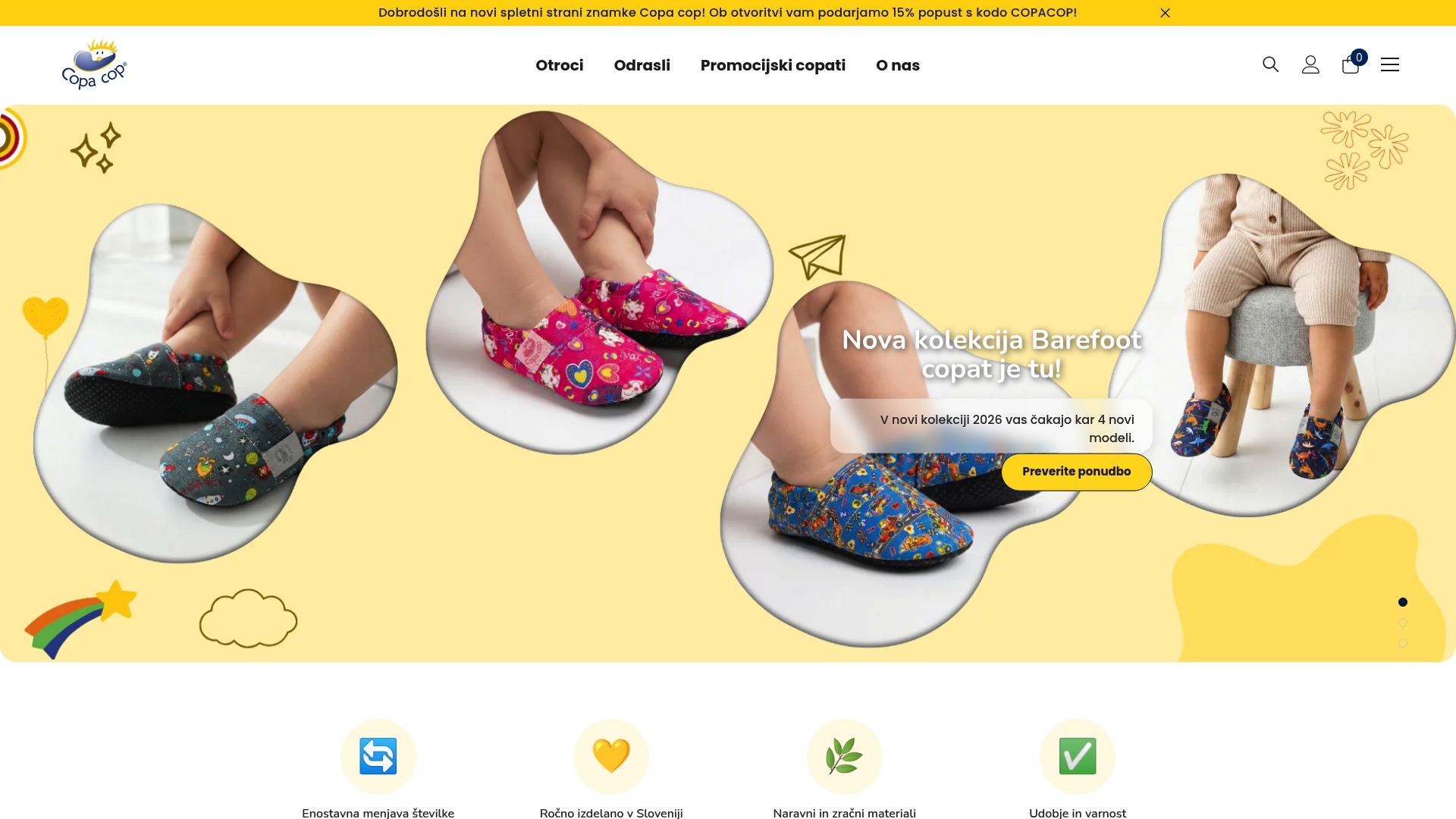
Copa-cop ponuja barefoot tekstilne copate, ojačene modele za vrtec in usnjene copate za šolsko rabo — vse iz naravnih, zračnih materialov, zasnovane za zdrav razvoj stopal. Modeli so na voljo v živahnih vzorcih, ki jih malčki z veseljem izberejo sami.
Postopek je preprost: izmerite stopalo, preverite velikostno tabelo na spletni strani, izberite model in barvo. Dostava v Slovenijo traja 2–4 delovne dni, poštnina je brezplačna nad 50 EUR, menjava pa je mogoča brez zapletov.
Začnite z barefoot copati z zaščito Roza Unicorn ali si oglejte celotno ponudbo na copa-cop.com in poiščite model, ki bo vašemu malčku pisan na kožo.


