

Shorter path, faster change: Slovenian handmade slippers
Yes, handmade slippers made from natural materials in Slovenia are a worthwhile choice for home, school, and everyday use. Such slippers are usually made from breathable natural materials and often include exchange or return options as well as free shipping above a certain threshold. If you are looking for a combination of comfort, durability, and a sense of home, Copa cop slippers are a trusted choice. Črt, who knows the needs of children's and adults' feet well, wrote about the choice in this article.
In brief:
- Leather slippers are the most durable and suitable for everyday use at school, while textile and felt models are better suited to home use and children.
- Natural materials such as leather, felt, and wool provide better breathability, insulation, and durability, which is especially important for the health of children's feet.
- Proper size measurement includes measuring in the evening, allowing room for growth, and taking width into account, which reduces returns and discomfort.
- Handmade production in Slovenia means a shorter supply chain, greater flexibility, and the option for quick slipper exchanges or returns, which is important because children grow quickly.
- Personalized slippers with designs and embroidery make excellent gifts, are made from natural materials, offer exchange options, and include free shipping above a certain amount.
Table of contents
- Which slippers made in Slovenia are available by category
- Which slipper material is best for healthy feet
- How to choose the right size and slipper model
- How to care for slippers so they stay like new for longer
- Why handmade production in Slovenia matters when choosing slippers
- My opinion: why handmade production really matters
- Personalized Copa cop slippers for home, school, and gifts
- Sources
Which slippers made in Slovenia are available by category
Before making a decision, it is worth understanding that slippers differ in terms of material, purpose, and degree of customization. Leather, textile, and felted wool models each have their own role, and the right choice depends on where and how you will wear the slippers.
Leather slippers are the most durable choice for everyday use, including at school. Natural leather allows the feet to breathe, conforms to the shape of the foot, and withstands years of wear without losing its shape. For those looking for a gift with a personal touch, personalized printed leather slippers are a practical solution, combining leather's durability with a design of your choice. Personalized embroidered leather slippers serve a similar purpose, with the embroidered design giving them a more refined look that is also suitable for adults.
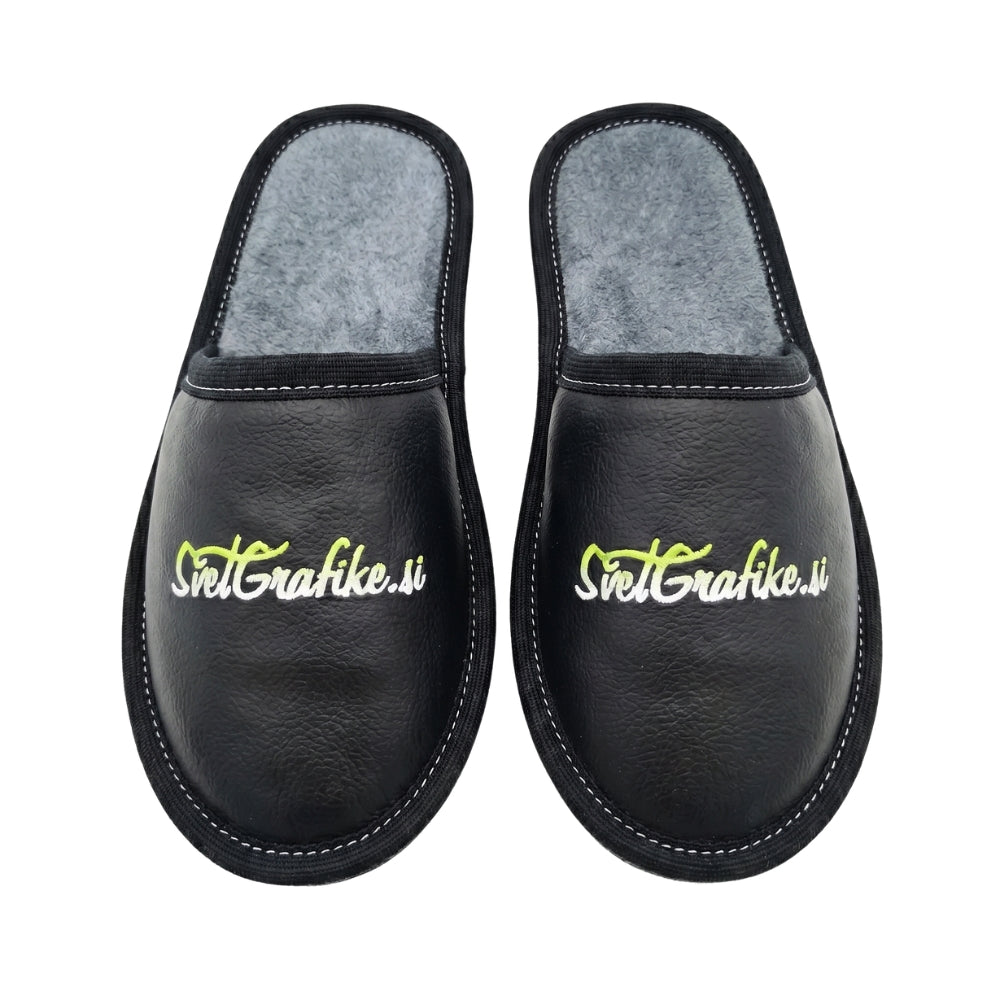
Textile slippers are lighter, easier to wash, and therefore popular for home use or as gifts for children. Personalized printed textile slippers allow children to choose their own pattern, while parents can simply put them in the washing machine, which is almost essential with toddlers.
Felt and wool are materials that we traditionally associate in Slovenia with house slippers for the colder months. A similar felt-making tradition can also be found in the unique handmade slippers from Tržič, where full-grain leather and felt are combined in products with a distinctly local, almost artisanal character.
A brief overview of what to choose depending on the occasion:
- For school and everyday use: leather slippers for their durability.
- For home and gifts for children: printed textile slippers.
- For winter and cold floors: felt or wool.
- For a special occasion or as a gift for an adult: embroidered leather slippers.
Which slipper material is best for healthy feet
Material is not merely an aesthetic choice; it affects how the foot feels after wearing it all day. Children's feet are still growing, so the material's breathability and flexibility are not minor considerations.
Leather remains one of the most recommended materials for footwear worn every day. It allows air to circulate well, gradually molds to the foot, and withstands considerably more wear than synthetic alternatives, as explanations of the differences between genuine and faux leather confirm when it comes to durability and breathability. Faux leather is cheaper, but regulates temperature less effectively and wears out more quickly.
Felt and wool act as natural insulation. In Slovenian homes with cold floors, especially in winter, these two materials keep the feet warm without causing sweating, which is important for children to help prevent colds caused by cold feet.
Textile materials are the most versatile for washing and color combinations. They are ideal for those who change slippers more often or put them in the washing machine after every day at kindergarten.
The sustainability aspect is not secondary here. Local production means a shorter journey from product to customer, less packaging, and less transportation than imported footwear, which makes even more sense with natural materials because they are less processed raw materials.
Expert advice: If you live in an older apartment with parquet or ceramic flooring without underfloor heating, choose felt or wool. Leather's breathability is not as important there as insulation from the cold floor.
How to choose the right size and slipper model
The wrong size is the most common reason for returning or exchanging slippers, so it is worth taking five minutes to measure correctly before ordering.
- Measure the foot in the evening, when it is largest due to the day's strain, to get an accurate length.
- Place the foot on a sheet of paper, trace the outline with a pencil held perpendicular to the paper, and measure the longest distance from heel to toes.
- Check the width of the foot, not just its length. Some children have wider feet, which can cause discomfort after just one hour in stiff models.
- Compare the measurement with the manufacturer's size chart, not with the usual shoe size, because sizing scales vary between brands.
- Add approximately half a centimeter of space for growth for toddlers, but not too much, because a slipper that is too loose can cause tripping.
For children who are just learning to walk or have a known need for additional arch support, it makes sense to look for a model with an anatomical insole. Such an insole helps maintain the correct position of the foot during growth, as also emphasized by advice on anatomical insoles from Slovenian manufacturers. A slipper that is too small or too stiff can affect the shape of the foot in the long term, so when in doubt, choose one size larger rather than smaller.
Personalized models with printing or embroidery make the most sense as gifts, for kindergarten groups where children exchange slippers, or when you want a unique product for a special occasion.
How to care for slippers so they stay like new for longer
Care depends on the material, and this is where most mistakes happen because of using the same approach for all slippers.
- Clean leather slippers with a soft brush and a mild, non-aggressive cleaner, never with harsh chemical agents.
- Occasional leather conditioning keeps leather water-resistant and prevents it from cracking.
- Textile slippers can generally be washed in a washing machine at a lower temperature, but dry them in the air, not in a tumble dryer.
- Clean felt and wool with a dry brush, remove stains with minimal moisture, and dry slippers away from the radiator.
Expert advice: Store slippers over the summer or winter in a breathable box, not in a plastic bag. Moisture in plastic promotes mold, even with completely dry materials.
You can find more detailed step-by-step instructions in the guide to caring for slippers at home.
Why handmade production in Slovenia matters when choosing slippers
The author of this guide, Črt, deals with the questions parents ask before buying children's slippers at Copa cop every day, from choosing the right size to finding suitable support for developing feet. His advice in the guide to slippers for toddlers and the overview of children's animal-shaped models is based on recurring customer questions, not general advice from foreign sources.
The offer is based on handmade production and natural materials, which is common practice among smaller Slovenian slipper manufacturers. It often also includes the option of an exchange or return, as well as free shipping above a certain amount, which can make the purchase less risky if the wrong size was chosen.
A parent ordering slippers for kindergarten often does not know how quickly a child outgrows a size. That is why hassle-free exchanges or returns are not merely a friendly gesture, but an essential part of deciding to buy footwear for a child.
My opinion: why handmade production really matters
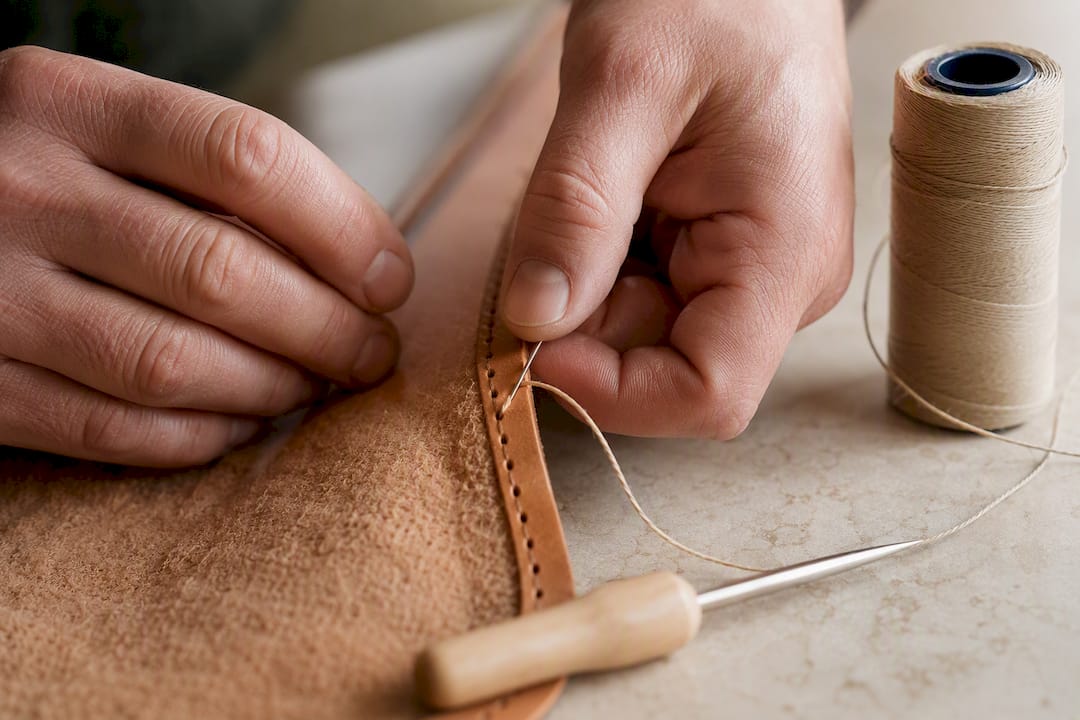
The marketing phrase “handmade” has been used everywhere in recent years, including where it means very little. With slippers, however, the difference is tangible: a hand-stitched seam on leather withstands more stress than a machine-glued edge, which starts to crack after a few months.
Buyers often look at price and color first, and only consider the sole material or insole shape last. This is the wrong order. The right priority is first the material according to the season and purpose, then the fit, and only finally the pattern or print.
Slovenian handmade production has an often-underestimated advantage: a shorter route from maker to customer also means a faster response when an exchange or repair is needed. This is almost nonexistent with footwear from large imported batches.
If you have the option of choosing between a mass-produced model and a handmade Slovenian product at a similar price, choose the latter. The difference only becomes apparent after a few months of wear, when one model still holds its shape while the other is already falling apart.
— Črt
Personalized Copa cop slippers for home, school, and gifts
If you are looking for slippers that are not only functional but also say something about the person wearing them, Copa cop personalized models are made for exactly that. 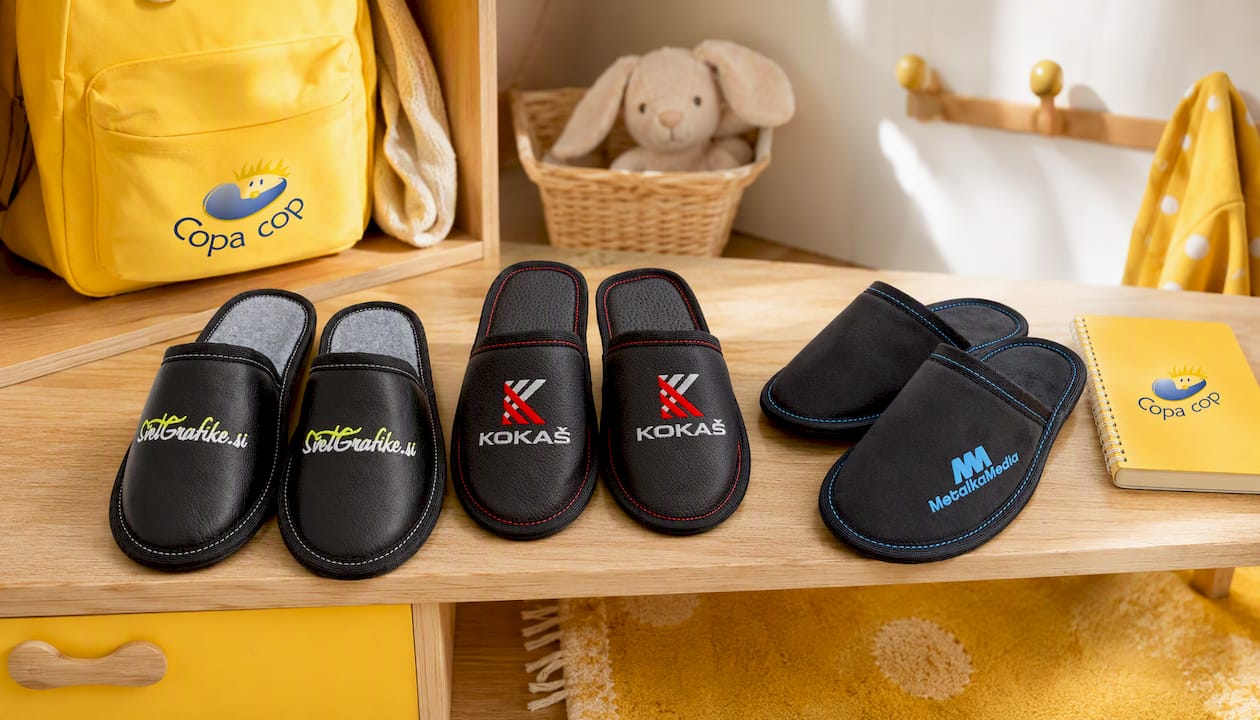
Personalized printed leather slippers are an excellent choice for those who want durable footwear with a personal design, suitable for both children and adults. For a more refined look, leather slippers with embroidery are available, while textile slippers with prints offer a lighter, washable option.
The models are handmade from natural materials, often with the option of exchange or return, and shipping may be free above a certain order value. If you are considering a gift or new slippers for preschool, browse the full selection at Copa cop and choose a model that suits your family.
Sources
For additional footwear selection tips, check out practical tips for choosing the right slippers and recommendations for breathable footwear on hot days. For a family trip where comfortable slippers will be even more useful, see ideas for family holidays in Slovenia.


